Rabbits have carried deep symbolic weight across cultures for thousands of years. In Chinese tradition, the rabbit is one of the twelve zodiac animals, associated with good luck, gentleness, and longevity. In Aztec mythology, rabbits were linked to the moon. In Celtic and Native American folklore, the rabbit was a clever trickster and a symbol of fertility and renewal. Choosing a name that means rabbit isn’t whimsical at all. It’s rooted in some of the world’s oldest symbolic traditions.
Parents drawn to these names tend to love nature, mythology, or names with quiet depth. They’re often looking for something that feels grounded in a real cultural story rather than a trend. Whether you love the soft, swift energy the rabbit represents or you’re honoring a cultural heritage where the rabbit holds sacred meaning, there’s something genuinely compelling here.
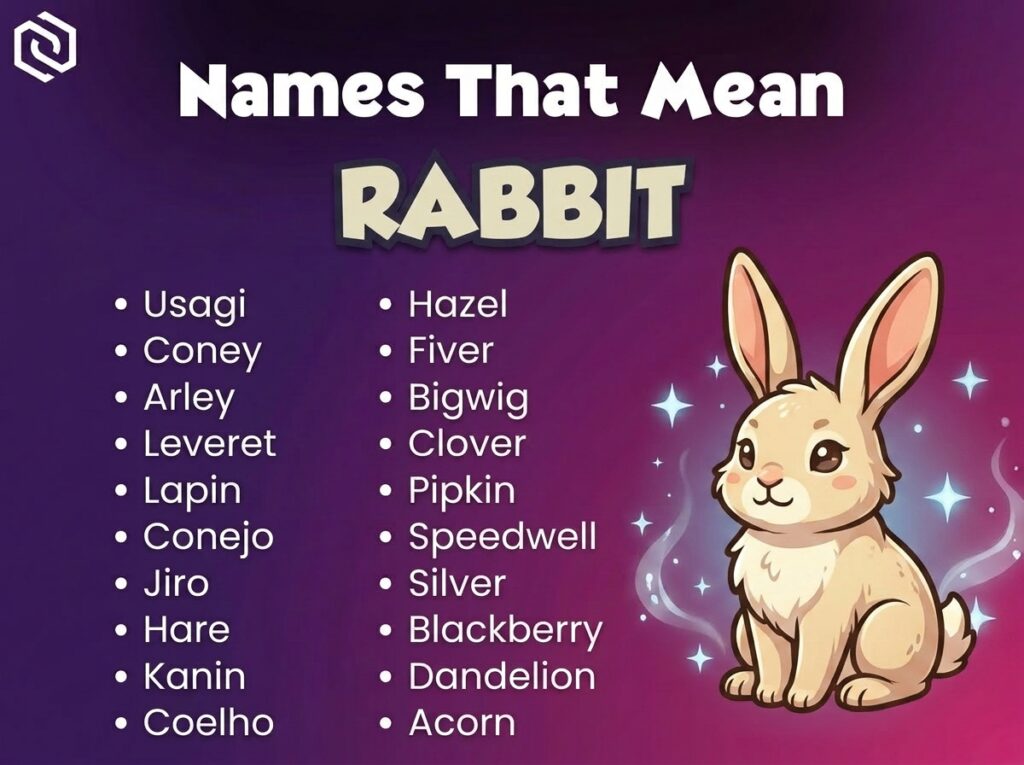
What Are Some Names That Mean Rabbit or Bunny?
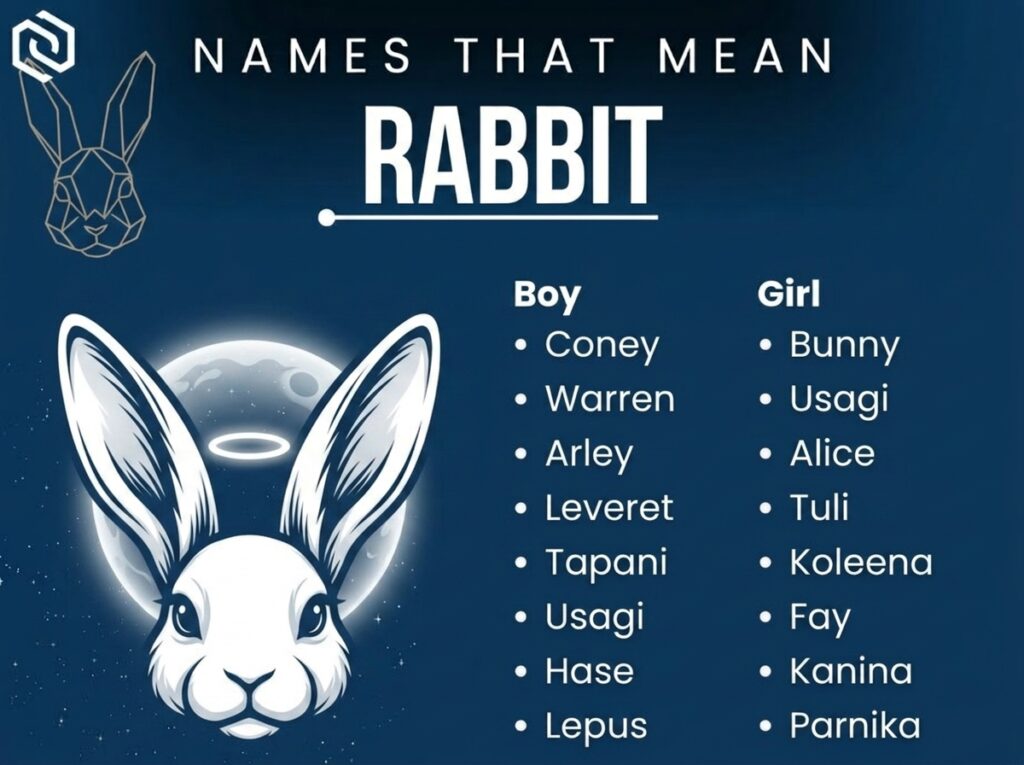
Some well-known names that mean rabbit or bunny include Usagi (Japanese, meaning rabbit), Lepus (Latin, the hare constellation), Oryctolagus inspired Arnav variants, Coney (Old English, meaning rabbit), Thumper (used informally), Lapin (French origin), and Usako (Japanese pet form of Usagi). These names come from Japanese, Latin, Old English, and Celtic traditions, reflecting just how widely the rabbit appears as a meaningful symbol across world cultures.
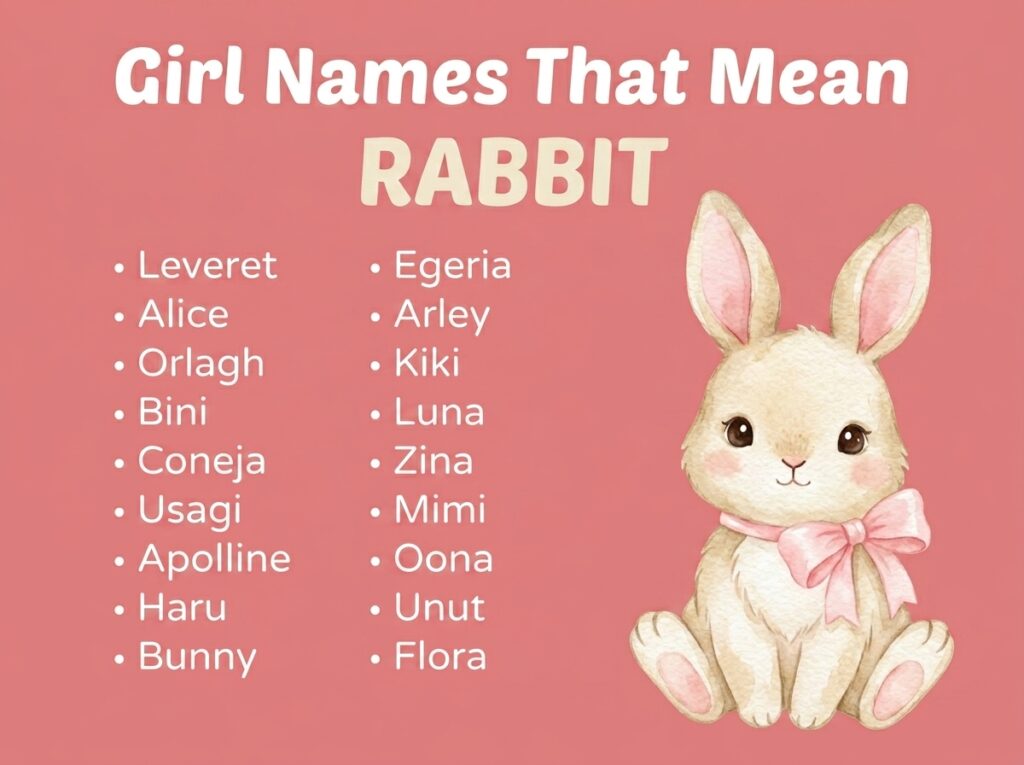
Girl Names That Mean Rabbit
Girl names connected to the rabbit carry a gentle, quick-spirited energy. Many come from Asian naming traditions, where the rabbit is considered a sign of grace, good fortune, and calm intelligence. Others trace back to Latin or Old English roots where hares were symbols of the natural world. These names feel soft but never weak.
| Name | Origin | Meaning | Pronunciation | Popularity |
|---|---|---|---|---|
| Usagi | Japanese | Rabbit | oo-SAH-gee | Trending |
| Usako | Japanese | Little rabbit | oo-SAH-koh | Rare |
| Tuyet | Vietnamese | Snow white rabbit | TWEE-et | Unique |
| Lepori | Italian/Latin | Of the hare | leh-POH-ree | Rare |
| Arnava | Sanskrit | Little hare, flowing water | ahr-NAH-vah | Soft |
| Coney | Old English | Rabbit | KOH-nee | Unique |
| Shasha | Chinese | Bunny; sand | SHAH-shah | Soft |
| Usagi-hime | Japanese | Rabbit princess | oo-SAH-gee-HEE-meh | Rare |
| Toots | English/Informal | Bunny, little one (informal) | TOOTS | Unique |
| Lapin | French | Rabbit | lah-PAN | Rare |
| Tula | Hindi/Sanskrit | Balance; also zodiac rabbit | TOO-lah | Soft |
| Velnias | Lithuanian | Connected to hare/underworld animals | VEL-nyahs | Mystic |
| Okami | Japanese | Great spirit; rabbit moon folklore | oh-KAH-mee | Mystic |
| Mao | Chinese | Cat; also bunny informally in Chinese pop culture | MAH-oh | Trending |
| Tsuki | Japanese | Moon (rabbit lives in the moon in Japanese mythology) | TSOO-kee | Trending |
| Usagiko | Japanese | Rabbit child | oo-SAH-gee-koh | Rare |
| Arnavi | Sanskrit | Little hare, movement like water | ahr-NAH-vee | Soft |
| Lepra | Latin/Archaic | Hare-like, swift | LEP-rah | Rare |
| Cushla | Irish | Pulse, rabbit-swift heartbeat | KOOSH-lah | Soft |
| Cona | Old English/Dialectal | Rabbit (dialectal variant of coney) | KOH-nah | Unique |
Naming Expert’s Note: Usagi is one of those names that has real momentum right now, partly thanks to the beloved Sailor Moon character Usagi Tsukino. But it’s worth knowing it’s a completely ordinary word in Japanese, equivalent to naming a child “Bunny” in English. If you have Japanese heritage or a genuine connection to the culture, it’s charming and meaningful. Without that context, it may feel costume-like rather than personal. Always worth thinking through.
Also Read: Names That Mean Moon for Girls, Boys, and Every Culture
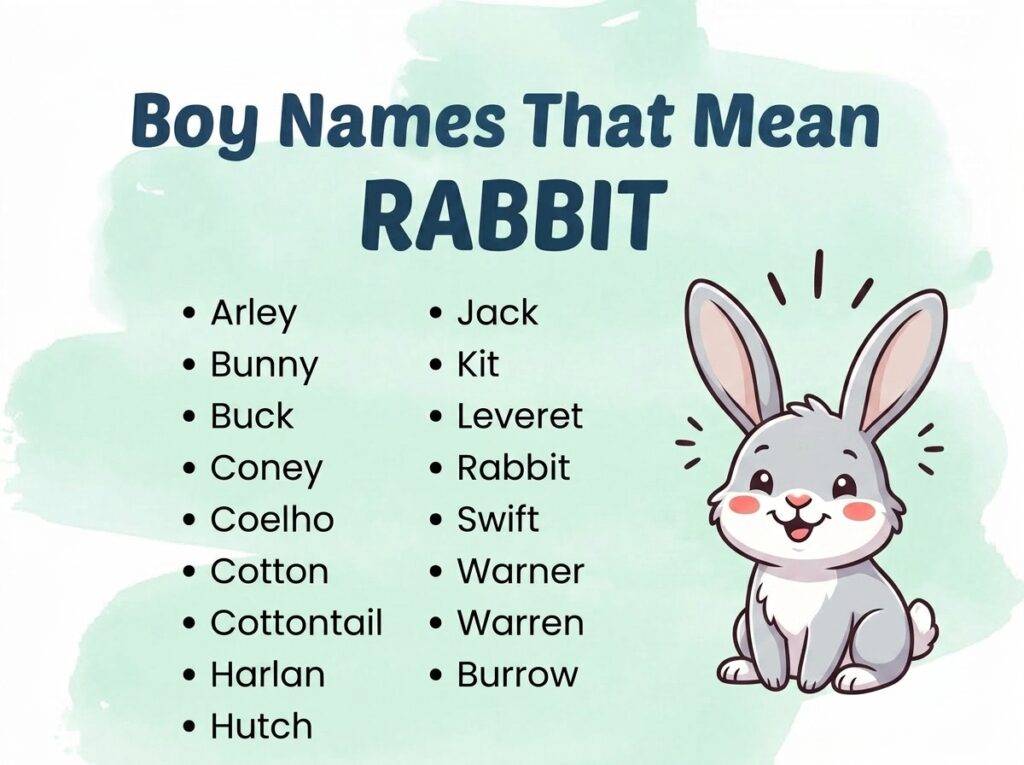
Boy Names That Mean Rabbit
Boy names rooted in rabbit symbolism carry an interesting duality. The rabbit is quick, observant, and surprisingly brave when cornered. In many mythologies, the hare was a trickster figure, clever and resourceful rather than soft. These names come from Old English, Latin, Japanese, and Native American traditions, and they wear that energy well on a boy.
| Name | Origin | Meaning | Pronunciation | Popularity |
|---|---|---|---|---|
| Lepus | Latin | Hare (constellation name) | LEE-pus | Unique |
| Arnav | Sanskrit | Ocean; also interpreted as swift-moving like a hare | AHR-nav | Trending |
| Usao | Japanese | Rabbit boy (masculine form) | oo-SAH-oh | Rare |
| Hare | Old English | Hare, male rabbit | HAIR | Classic |
| Conan | Irish/Celtic | Little hound; also connected to hare-hunting culture | KOH-nan | Classic |
| Lepori | Italian | Of the hare; surname used as first name | leh-POH-ree | Rare |
| Lapin | French | Rabbit (masculine) | lah-PAN | Rare |
| Baxter | Old English | Baker; historically associated with hare-catcher trade | BAK-ster | Trending |
| Coney | Old English | Rabbit | KOH-nee | Unique |
| Usagi | Japanese | Rabbit (used for boys in some contexts) | oo-SAH-gee | Soft |
| Lièvre | French | Hare | lee-EV-ruh | Rare |
| Kato | African/Luganda | Second of twins; rabbit is a twin symbol in some traditions | KAH-toh | Trending |
| Taweret | Egyptian | Connected to rabbit-eared goddess imagery | tah-WEH-ret | Mystic |
| Cunning | Old English | Rabbit-related dialectal term for clever, swift | KUN-ing | Dark |
| Fen | Chinese | Agile, jumping; associated with rabbit movement | FEN | Soft |
Unisex Names That Mean Rabbit
Some of the most interesting names in this category sit comfortably outside a single gender. These names work because they carry the rabbit’s qualities, swiftness, intuition, quiet strength, without leaning explicitly feminine or masculine. Several come from Japanese and Chinese traditions where gendered naming is more fluid.
| Name | Origin | Meaning | Pronunciation | Popularity |
|---|---|---|---|---|
| Usagi | Japanese | Rabbit | oo-SAH-gee | Trending |
| Mao | Chinese | Rabbit (Mao is the Chinese zodiac sign of the rabbit) | MAH-oh | Trending |
| Coney | Old English | Rabbit | KOH-nee | Unique |
| Lapin | French | Rabbit | lah-PAN | Rare |
| Lepus | Latin | Hare | LEE-pus | Unique |
| Arnav | Sanskrit | Swift-moving, hare-like | AHR-nav | Soft |
| Hare | Old English | Hare, rabbit | HAIR | Classic |
| Tuyet | Vietnamese | White rabbit | TWEE-et | Rare |
| Tsuki | Japanese | Moon (rabbit in the moon mythology) | TSOO-kee | Soft |
| Fen | Chinese | Agile, jumping; rabbit-like | FEN | Unique |
Also Read: Names That Mean Lucky From Every Language and Culture
Rabbit Names Across Cultures
The rabbit appears across nearly every major world mythology. That’s not a coincidence. As a creature tied to the moon, fertility, speed, and cleverness, rabbits carried enormous meaning for cultures that observed the natural world closely. The fact that so many languages have specific names rooted in the rabbit or hare tells you how central this animal was to human storytelling.
Japanese Names That Mean Rabbit
Japan has one of the richest traditions connecting rabbits to naming. In Japanese folklore, a rabbit lives on the moon and pounds mochi. This image, the moon rabbit or tsuki no usagi, appears in poetry, art, and children’s stories for centuries.
| Name | Meaning | Gender |
|---|---|---|
| Usagi | Rabbit | Girl/Unisex |
| Usako | Little rabbit | Girl |
| Usagiko | Rabbit child | Girl |
| Usao | Rabbit boy | Boy |
| Tsuki | Moon (rabbit in the moon) | Unisex |
| Mochitsuki | Moon-pounding rabbit | Unisex |
| Usagihime | Rabbit princess | Girl |
Chinese Names That Mean Rabbit
In Chinese culture, Mao (卯) is the fourth of the twelve Earthly Branches and directly represents the rabbit. People born in rabbit years are considered calm, artistic, and compassionate. Names connected to this zodiac sign carry real cultural intention.
| Name | Meaning | Gender |
|---|---|---|
| Mao | Rabbit (zodiac) | Unisex |
| Tu | Rabbit (classic character 兔) | Unisex |
| Shasha | Bunny; playful | Girl |
| Fen | Agile, quick like a rabbit | Unisex |
| Yutu | Jade rabbit (moon rabbit) | Girl |
Latin and Old English Names That Mean Rabbit
Latin gave us lepus, the word for hare, which became a constellation name and appears in several European surnames used as given names. Old English coney or coni referred specifically to a rabbit, and several dialectal first names carry this meaning forward.
| Name | Meaning | Gender |
|---|---|---|
| Lepus | Hare (constellation) | Boy/Unisex |
| Coney | Rabbit | Unisex |
| Cona | Rabbit (dialectal) | Girl |
| Lepori | Of the hare | Unisex |
| Hare | Hare, male rabbit | Boy |
Sanskrit Names That Mean Rabbit
Sanskrit has a specific word for rabbit, shasha, which also appears in Hindu mythology as the mark on the moon, the shadow that looks like a rabbit. Several Sanskrit-rooted names carry this connection directly.
| Name | Meaning | Gender |
|---|---|---|
| Shasha | Rabbit; also shadow on the moon | Girl |
| Arnava | Little hare, swift movement | Girl |
| Arnav | Swift like a hare | Boy |
| Arnavi | Little swift hare | Girl |
French and Italian Names That Mean Rabbit
Romance languages preserved Latin lepus into regional vocabulary and naming traditions. French lapin (rabbit) and Italian lepre (hare) both fed into surname traditions that occasionally transferred to given names, particularly in literary and artistic contexts.
| Name | Meaning | Gender |
|---|---|---|
| Lapin | Rabbit | Unisex |
| Lièvre | Hare | Boy |
| Lepori | Of the hare | Unisex |
| Lepra | Hare-like, swift | Girl |
Also Read: Names That Mean Fox With Deep Folklore Roots
Names That Mean Bunny, Hare, or Rabbit-Related Variations
Names That Mean Hare
The hare and the rabbit are closely related but culturally distinct. In European mythology, the hare was specifically associated with the moon goddess, speed, and mystery. Hare names carry a slightly more ancient, untamed feeling than rabbit names.
Some genuine hare-rooted names to consider:
- Lepus (Latin, the hare constellation)
- Hare (Old English, direct meaning)
- Lièvre (French, hare)
- Lepori (Italian surname origin, of the hare)
- Arnav (Sanskrit, swift-moving like a hare)
- Coney (Old English, wild rabbit/hare)
- Lepra (Latin/archaic, hare-swift)
- Cushla (Irish, swift as a heartbeat, connected to hare symbolism)
Names Meaning Moon Rabbit
In Japanese, Chinese, Korean, and Aztec traditions, a rabbit lives on the moon. Names connecting the moon and the rabbit carry double symbolic weight: lunar mystery plus the rabbit’s gentle energy. In Japanese folklore specifically, the moon rabbit pounds rice cakes, an image that appears in poetry dating back to the Man’yoshu (8th century).
If you love this angle, consider pairing a moon-meaning name with a rabbit-meaning name as a middle name, or look at names that carry both meanings in their cultural context:
- Tsuki (Japanese, moon; the rabbit lives here)
- Yutu (Chinese, jade rabbit of the moon)
- Usagi Tsuki (Japanese double meaning, rabbit moon)
- Mochitsuki (Japanese, moon-pounding rabbit)
- Tuyet (Vietnamese, white as moon rabbit)
Names That Mean Swift Like a Rabbit
Some names don’t directly translate as “rabbit” but carry the rabbit’s most distinctive quality: speed. In cultures where the rabbit was admired for its quickness and evasiveness, names meaning swift, fleet, or quick were sometimes metaphorically connected.
- Arnav (Sanskrit, swift-moving)
- Fen (Chinese, agile, leaping)
- Arnavi (Sanskrit, little swift one)
- Arnava (Sanskrit, movement like water, swift)
How to Choose the Right Rabbit Name
The sound of a name matters as much as its meaning. Short rabbit names like Mao, Hare, or Fen pair easily with almost any last name. Longer names like Usagiko or Mochitsuki need a shorter surname to balance.
Think honestly about cultural context. Japanese names like Usagi are beautiful, but if your family has no connection to Japanese culture, it’s worth asking whether the name feels borrowed in a way that doesn’t sit right.
- Say the name out loud with your last name, three times fast
- Check what the initials spell
- Think about natural nicknames (Usagi becomes “Sagi” or “Usa”)
- Research the cultural origin before committing
- Consider how it sounds on a child, a teenager, and a professional adult
- If you want something rare, verify current usage so you know how rare it truly is
Frequently Asked Questions
Q: What is the most popular name that means rabbit?
A: Usagi is currently the most recognized name meaning rabbit in Western naming communities, largely due to Sailor Moon character Usagi Tsukino. In Chinese naming contexts, Mao as a zodiac rabbit reference is more commonly used. Among Sanskrit names, Arnav is the most widely used name with a hare-related meaning.
Q: What does rabbit mean in different languages?
A: Rabbit translates as usagi in Japanese, tu or mao in Chinese, lapin in French, conejo in Spanish, lepre or coniglio in Italian, lepus in Latin, and shasha in Sanskrit. Each language reflects a slightly different cultural relationship with the animal, from zodiac symbol to moon mythology to natural world creature.
Q: What are some rare names that mean rabbit or hare?
A: Some genuinely rare options include Lepus (the Latin hare constellation), Lièvre (French, hare), Cona (Old English dialectal, rabbit), Usagiko (Japanese, rabbit child), and Yutu (Chinese, jade rabbit). These names appear almost never in modern birth records, making them truly distinctive choices.
Q: What is a good middle name to pair with Usagi?
A: Usagi works well with short, grounded middle names. Usagi Claire, Usagi Rose, or Usagi Jade all balance the longer Japanese first name without competing with it. You could also honor the moon rabbit mythology directly with Usagi Tsuki as a first-middle combination.
Q: Are names that mean rabbit still used today?
A: Yes, particularly in East Asian cultures. In Japan, Usagi remains a charming and recognizable choice. In China, names connected to the rabbit zodiac year see spikes in popularity during rabbit years (the next being 2035). In Western naming, rabbit-meaning names are still rare but growing in interest among parents who love nature and mythology-rooted names.
Q: Is the rabbit considered a lucky symbol in naming traditions?
A: In Chinese and Japanese cultures, absolutely. The rabbit is one of the luckiest zodiac animals in Chinese tradition, associated with prosperity, longevity, and a gentle, successful temperament. In Celtic mythology, the hare was considered magical and tied to the goddess Eostre. Naming a child after this animal carries genuine cultural weight in several traditions, not just a cute aesthetic choice.
Conclusion
From Japanese moon folklore to Latin constellation names to Sanskrit rabbit imagery, names that mean rabbit carry more depth than most people expect. They span gentle and soft, quick and clever, mystical and ancient. What makes these names endure is the same thing that made the rabbit matter across so many unconnected cultures: it’s a creature that survives through wit and swiftness, not size or force. There’s real meaning in that.
If you’re drawn to nature-rooted names with genuine mythological backing, you might also love exploring names that mean deer with roots in world mythology or names that mean moon from every culture and tradition.