Flowers hold a special place in Japanese culture. From the cherry blossoms that draw millions each spring to the chrysanthemum on the imperial seal, blooms are woven into daily life, art, and language. It makes sense that so many Japanese names draw directly from the garden.
Japanese flower names are gentle, visual, and deeply seasonal. A name like Sakura immediately calls up pink petals drifting in the wind. Others, like Ren or Kiku, carry centuries of spiritual meaning. Whether you want something widely recognized or quietly uncommon, Japanese naming traditions offer a rich collection of flower-inspired choices.
What are some Japanese names that mean flower?
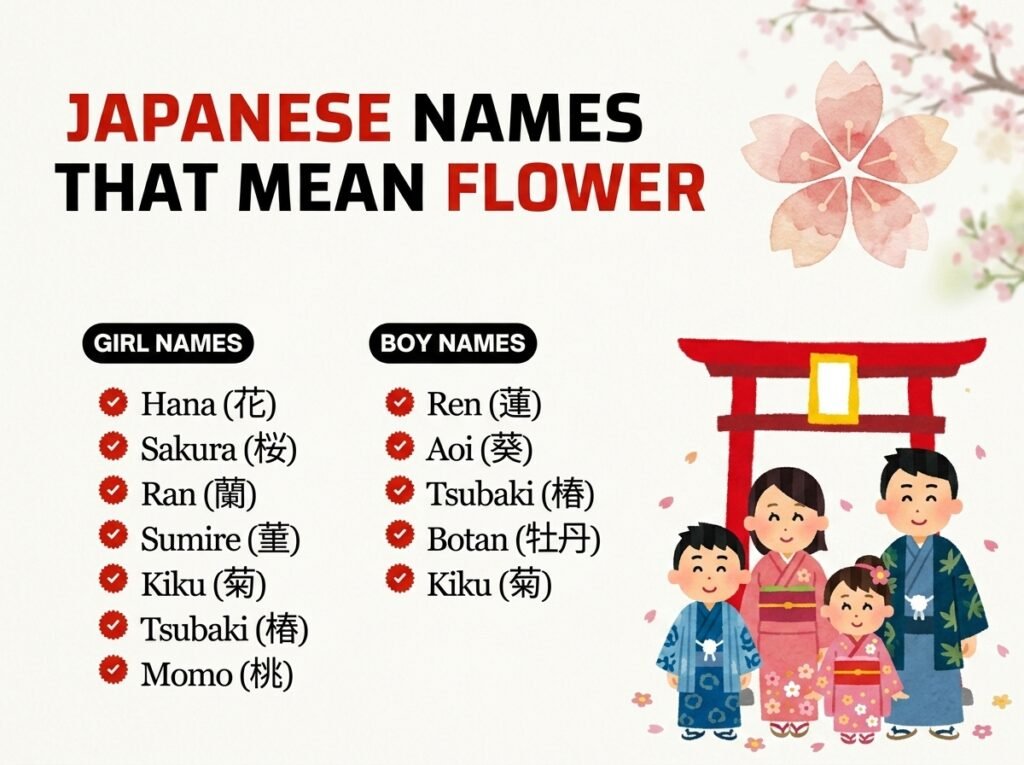
Popular Japanese names that mean flower include Hana (flower), Sakura (cherry blossom), Yuri (lily), Ren (lotus), and Ran (orchid). These names draw from Japan’s deep cultural connection to seasonal blooms and botanical imagery. Many use a single kanji character, giving them a clean, simple sound that works well across languages.
Japanese Girl Names That Mean Flower
Flower names for girls in Japan often reference specific seasonal blooms. A spring baby might be named Sakura for the cherry blossoms, while an autumn child could be Kiku after the chrysanthemum. These names feel delicate without being fragile, and most are instantly recognizable to Japanese speakers. Many use just two syllables, which gives them a natural rhythm that pairs easily with longer surnames.
| Name | Origin | Meaning | Pronunciation | Popularity |
|---|---|---|---|---|
| Hana | Japanese | Flower | HAH-nah | Classic |
| Sakura | Japanese | Cherry blossom | sah-KOO-rah | Trending |
| Yuri | Japanese | Lily | YOO-ree | Classic |
| Ran | Japanese | Orchid | RAHN | Rare |
| Kiku | Japanese | Chrysanthemum | KEE-koo | Rare |
| Tsubaki | Japanese | Camellia | tsoo-BAH-kee | Unique |
| Sumire | Japanese | Violet | soo-MEE-reh | Soft |
| Ayame | Japanese | Iris | ah-YAH-meh | Unique |
| Momo | Japanese | Peach blossom | MOH-moh | Soft |
| Ume | Japanese | Plum blossom | OO-meh | Rare |
| Botan | Japanese | Peony | BOH-tahn | Unique |
| Himawari | Japanese | Sunflower | hee-MAH-wah-ree | Rare |
| Hanako | Japanese | Flower child | HAH-nah-koh | Classic |
| Sayuri | Japanese | Small lily | sah-YOO-ree | Soft |
| Momoka | Japanese | Peach flower | moh-MOH-kah | Trending |
| Nadeshiko | Japanese | Dianthus flower | nah-DEH-shee-koh | Rare |
| Shion | Japanese | Aster flower | SHEE-ohn | Mystic |
| Renge | Japanese | Lotus flower | REN-geh | Mystic |
| Suzuran | Japanese | Lily of the valley | soo-zoo-RAHN | Unique |
| Kikyo | Japanese | Bellflower | KEE-kyoh | Mystic |
Naming Expert’s Note: Sakura is the most internationally recognized Japanese flower name, and for good reason. It sounds soft, it is easy to pronounce in English, and the cherry blossom carries genuine cultural weight in Japan. The main thing to know is that Sakura is extremely common in Japan, so if uniqueness matters to you, consider a less familiar bloom like Shion or Kikyo instead.
Japanese Boy Names That Mean Flower
Flower names for boys are less common in Japan, but they genuinely exist. The lotus (Ren) has become one of the most popular boy names in the country over the past decade, thanks to its Buddhist associations with purity and resilience. Other boy flower names often pair a bloom kanji with a masculine suffix like “taro” (first son) or “o” (man). These names feel grounded and carry a quiet strength that sets them apart from more aggressive masculine naming trends.
| Name | Origin | Meaning | Pronunciation | Popularity |
|---|---|---|---|---|
| Ren | Japanese | Lotus | REN | Trending |
| Rento | Japanese | Lotus | REN-toh | Trending |
| Renji | Japanese | Lotus | REN-jee | Unique |
| Renya | Japanese | Lotus | REN-yah | Rare |
| Kikuo | Japanese | Chrysanthemum hero | KEE-koo-oh | Rare |
| Ran | Japanese | Orchid | RAHN | Unique |
| Hanao | Japanese | Flower man | HAH-nah-oh | Rare |
| Hanataro | Japanese | Flower first son | HAH-nah-TAH-roh | Rare |
| Tsubaki | Japanese | Camellia | tsoo-BAH-kee | Unique |
| Fujio | Japanese | Wisteria man | FOO-jee-oh | Rare |
| Umeo | Japanese | Plum blossom man | OO-meh-oh | Rare |
| Botan | Japanese | Peony | BOH-tahn | Unique |
| Momotaro | Japanese | Peach boy | moh-moh-TAH-roh | Rare |
| Renma | Japanese | Lotus truth | REN-mah | Rare |
| Kiku | Japanese | Chrysanthemum | KEE-koo | Classic |
Japanese Unisex Names That Mean Flower
Some of the most interesting Japanese flower names sit comfortably between genders. Names like Aoi (hollyhock) and Kaoru (fragrance) have been used for boys and girls for generations. In modern Japan, gender-neutral naming is growing more common, and flower kanji lend themselves naturally to this trend. These names are short, nature-forward, and easy to pronounce outside of Japan.
| Name | Origin | Meaning | Pronunciation | Popularity |
|---|---|---|---|---|
| Aoi | Japanese | Hollyhock flower | AH-oh-ee | Trending |
| Kaoru | Japanese | Flower fragrance | KAH-oh-roo | Classic |
| Azami | Japanese | Thistle flower | ah-ZAH-mee | Unique |
| Shion | Japanese | Aster flower | SHEE-ohn | Mystic |
| Renge | Japanese | Lotus flower | REN-geh | Mystic |
| Saki | Japanese | Blossom, bloom | SAH-kee | Soft |
| Kana | Japanese | Flower, rapeseed | KAH-nah | Rare |
| Hanae | Japanese | Flower blessing | HAH-nah-eh | Rare |
| Sumire | Japanese | Violet | soo-MEE-reh | Soft |
| Ran | Japanese | Orchid | RAHN | Unique |
Also Read: Beautiful Names That Mean Flower From Every Culture
Flower Names Across Cultures
The impulse to name children after flowers is not unique to Japan. Nearly every culture on earth has botanical names in its naming tradition. What changes is which flowers get the spotlight. In India, the lotus reigns supreme. In the Middle East, jasmine and rose dominate. In ancient Greece, entire mythological figures were named after blooms. Here is a look at how other languages handle flower-inspired names.
Greek and Latin Names That Mean Flower
Greek mythology gave us several flower names that remain popular in the West today. These tend to sound lyrical and carry a classical weight that pairs well with European surnames.
| Name | Meaning | Gender |
|---|---|---|
| Flora | Roman goddess of flowers | Girl |
| Anthea | Flower, blossom | Girl |
| Ianthe | Violet flower | Girl |
Sanskrit Names That Mean Flower
In Sanskrit, flower names often double as spiritual symbols. The lotus and jasmine appear frequently in Hindu scripture and classical poetry, giving these names a meditative quality.
| Name | Meaning | Gender |
|---|---|---|
| Kamala | Lotus | Girl |
| Pushpa | Flower | Girl |
| Kusum | Flower, blossom | Girl |
Arabic Names That Mean Flower
Arabic flower names are short, melodic, and rich with meaning. Many connect to the gardens described in classical Arabic poetry and the Quran.
| Name | Meaning | Gender |
|---|---|---|
| Zahra | Flower, blossom | Girl |
| Yasmin | Jasmine flower | Girl |
| Warda | Rose, flower | Girl |
Hawaiian Names That Mean Flower
Hawaiian naming traditions lean heavily on the natural world. Flower names in Hawaiian often combine botanical words with spiritual or celestial elements, creating names that feel both grounded and otherworldly.
| Name | Meaning | Gender |
|---|---|---|
| Leilani | Heavenly flower | Girl |
| Pua | Flower, blossom | Unisex |
| Lokelani | Heavenly rose | Girl |
Also Read: Japanese Names That Mean Beauty for Girls and Boys
Names That Mean Blossom
Blossom names focus on the moment a flower opens rather than a specific species. They carry a sense of arrival, new beginnings, and the turning of seasons. These names work well for spring babies or families who want a name that feels fresh and forward-looking.
- Saki (Japanese)
- Florentina (Latin)
- Anthea (Greek)
- Hana (Japanese)
- Pushpa (Sanskrit)
- Zahra (Arabic)
- Blodwen (Welsh)
- Flor (Spanish)
- Pua (Hawaiian)
- Ouka (Japanese)
Names That Mean Lotus
The lotus holds deep spiritual meaning across Asia. It rises from muddy water to bloom in full sunlight, which makes it a powerful symbol of purity, resilience, and enlightenment. Lotus names appear in Japanese, Sanskrit, Chinese, and Vietnamese traditions. If you want a flower name with philosophical depth, lotus-inspired names are a strong choice.
- Ren (Japanese)
- Kamala (Sanskrit)
- Renge (Japanese)
- Padma (Sanskrit)
- Lien (Vietnamese)
- Lian (Chinese)
- Saroj (Hindi)
- Pundarika (Sanskrit)
- Hasu (Japanese)
- Nalini (Sanskrit)
Names That Mean Lily
Lily names have a clean, classic sound that translates well across languages. The lily appears in Japanese, Hebrew, and Latin naming traditions, often symbolizing purity and renewal. These names age well, sounding just as natural on a child as on an adult.
- Yuri (Japanese)
- Sayuri (Japanese)
- Liliana (Latin)
- Susanna (Hebrew)
- Shoshana (Hebrew)
- Lilia (Latin)
- Suzuran (Japanese)
- Lilian (French)
- Yuriko (Japanese)
- Kanna (Japanese)
How to Choose the Right Japanese Flower Name
Sound matters more than most parents expect. A two-syllable name like Hana flows easily with almost any surname, while a longer name like Himawari needs more room to breathe. Try saying the full name out loud several times before deciding.
Cultural connection is worth thinking about too. If your family has Japanese heritage, a traditional name like Kiku or Tsubaki may feel especially meaningful. If not, consider how the name will be received and pronounced in your community.
- Say the full name out loud with your last name
- Check the initials to avoid awkward combinations
- Think about natural nicknames your child might use
- Research the cultural origin and seasonal associations before committing
- Consider how the name sounds on both a child and an adult
- Check current popularity if you prefer something less common
Frequently Asked Questions
Q: What is the most popular Japanese name meaning flower?
A: Hana is the most widely used Japanese name that directly means “flower.” It is short, easy to pronounce in multiple languages, and has been a consistent favorite in Japan for decades. Sakura (cherry blossom) is a close second and has gained international popularity in recent years.
Q: What does flower mean in Japanese naming tradition?
A: In Japanese culture, flowers represent the passing of seasons, the beauty of impermanence, and the connection between humans and nature. The chrysanthemum (kiku) is the imperial symbol, while the cherry blossom (sakura) represents the fleeting nature of life. Naming a child after a flower is a way of wishing them beauty, grace, and a connection to the natural world.
Q: What are some rare Japanese flower names?
A: Some less common Japanese flower names include Kikyo (bellflower), Nadeshiko (dianthus), Suzuran (lily of the valley), and Shion (aster). These names are recognized in Japan but rarely given to babies today, which makes them distinctive choices for parents seeking something uncommon.
Q: What is a good middle name to pair with Sakura?
A: Sakura pairs well with short, simple middle names that do not compete with its three-syllable rhythm. Options like Sakura Mae, Sakura Jean, or Sakura Lynn create a balanced flow. If you want a Japanese middle name, Sakura Hana or Sakura Yui work naturally.
Q: Are Japanese flower names still popular?
A: Yes. Flower names remain a staple of Japanese baby naming. Hana and Sakura consistently rank among the top choices for girls in Japan. For boys, Ren (lotus) has surged in popularity over the past decade and now regularly appears in the top ten boy names nationwide.
Q: Can Japanese flower names be used for boys?
A: Absolutely. While flower names lean feminine in most cultures, Japanese naming traditions include several strong options for boys. Ren (lotus) is currently one of the most popular boy names in Japan. Other options include Rento, Kikuo, and Hanataro, all of which incorporate flower kanji with masculine readings.
Japanese flower names range from the globally beloved Sakura to the quietly striking Shion. Whether you are drawn to the lotus symbolism of Ren, the seasonal warmth of Momo, or the imperial history of Kiku, these names carry real cultural depth. Flower names endure because they connect a child to something larger than themselves: the turning of seasons, the patience of growth, and the simple beauty of a bloom. If you love nature-inspired naming, you might also enjoy exploring Japanese names that mean moon for their equally poetic imagery.

1 thought on “121+ Japanese Names Meaning Flower (With Meanings)”