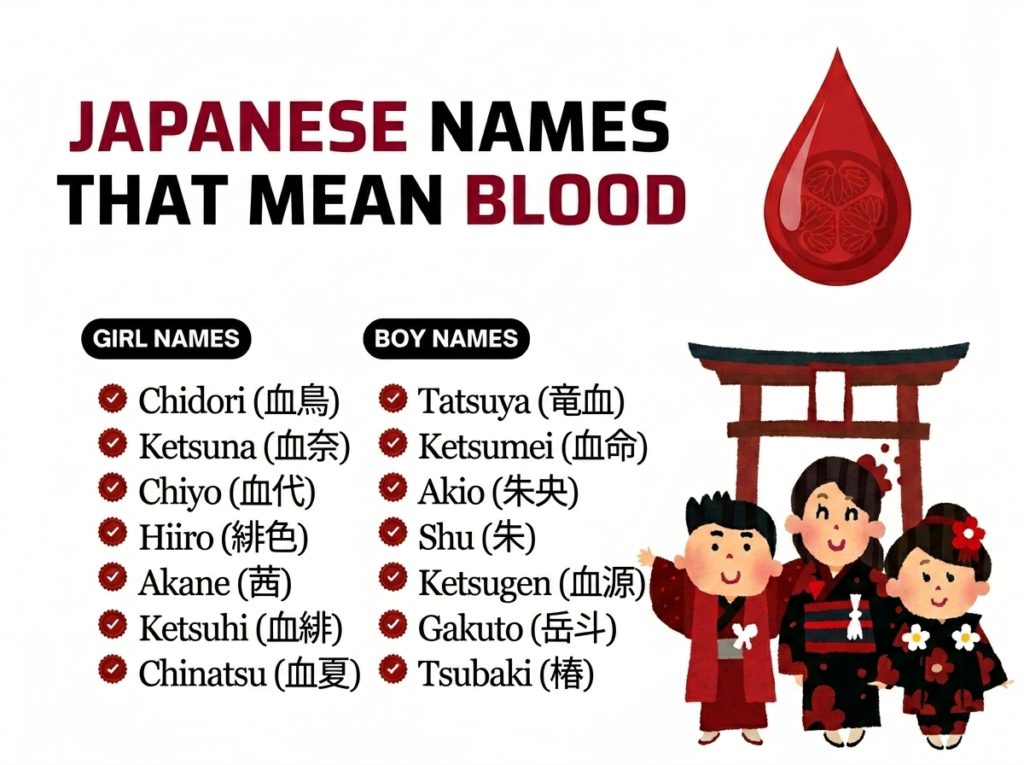
Blood holds a complicated place in Japanese naming tradition. The kanji 血 (chi) carries weight that goes far beyond the physical. It appears in ancient creation myths, samurai oaths, and modern dark fantasy. Yet you will rarely find it on a birth certificate in Tokyo or Osaka. Japanese parents overwhelmingly choose kanji with bright, hopeful meanings for their children. That makes names tied to blood some of the most unusual and striking choices in the entire Japanese naming system. This guide covers what genuinely exists, where these names come from, and why they remain so rare.
What Japanese names mean blood?
The most recognized Japanese name meaning blood is Chikage (血景 or 血影), combining the kanji for blood with “shadow” or “scenery.” Several Shinto deities including Takemikazuchi and Kuraokami were born from divine blood in the Kojiki creation myth. Genuine blood-meaning names are extremely rare in everyday Japanese use, appearing more often in mythology, literature, and modern fiction than on family registries.
Japanese Girl Names That Mean Blood
Names using the blood kanji 血 for girls carry a dark, poetic intensity that sets them apart from the soft floral and seasonal names more common in Japanese tradition. These names feel literary and bold. Most originate from fiction, folklore, or creative kanji combinations rather than centuries of everyday use. If you choose one, you are picking something genuinely uncommon.
| Name | Origin | Meaning | Pronunciation | Popularity |
|---|---|---|---|---|
| Chikage | Japanese | Blood shadow | chee-KAH-geh | Rare |
| Chigiri | Japanese | Blood oath | chee-GEE-ree | Rare |
| Chinome | Japanese | Blood eye | chee-NOH-meh | Rare |
| Chiyuki | Japanese | Blood snow | chee-YOO-kee | Rare |
| Chisaki | Japanese | Blood blossom | chee-SAH-kee | Rare |
| Chihime | Japanese | Blood princess | chee-HEE-meh | Rare |
| Chika | Japanese | Blood flower | chee-KAH | Rare |
| Chimi | Japanese | Blood beauty | chee-MEE | Rare |
| Chikage | Japanese | Blood scenery | chee-KAH-geh | Unique |
| Chizuru | Japanese | Blood crane | chee-DZOO-roo | Rare |
Naming Expert’s Note: Chikage is the most wearable name on this list by a wide margin. The “chi-KAH-geh” rhythm sounds natural in both Japanese and English, and the shadow imagery softens the bluntness of the blood kanji. If you want a Japanese name that genuinely means blood without sounding harsh, this is your strongest option. Just know that most Japanese speakers will assume you are referencing the anime character before they think of the literal meaning.
Japanese Boy Names That Mean Blood
For boys, the strongest blood-connected names in Japanese come straight from the Kojiki, the oldest surviving record of Japanese mythology. When the storm god Izanagi slew the fire deity Kagutsuchi, the blood that dripped from his sword gave birth to several powerful gods. These names carry divine weight and ancient authority. They are not casual choices. They sound like names carved into shrine stone.
| Name | Origin | Meaning | Pronunciation | Popularity |
|---|---|---|---|---|
| Takemikazuchi | Japanese | Brave thunder god born from blood | tah-keh-mee-KAH-zoo-chee | Mystic |
| Kuraokami | Japanese | Dark dragon deity born from blood | koo-rah-OH-kah-mee | Mystic |
| Iwasaku | Japanese | Rock-splitting god born from blood | ee-wah-SAH-koo | Mystic |
| Nesaku | Japanese | Root-splitting god born from blood | neh-SAH-koo | Mystic |
| Mikahayahi | Japanese | Swift fire god born from blood | mee-kah-hah-YAH-hee | Mystic |
| Hihayahi | Japanese | Swift sun god born from blood | hee-hah-YAH-hee | Mystic |
| Chikage | Japanese | Blood shadow | chee-KAH-geh | Rare |
| Chitora | Japanese | Blood tiger | chee-TOH-rah | Rare |
| Chiryū | Japanese | Blood dragon | chee-RYOO | Rare |
| Chimata | Japanese | Blood crossroads | chee-MAH-tah | Rare |
Japanese Unisex Names That Mean Blood
Gender-neutral blood names in Japanese tend to be short, sharp, and rooted in single powerful images. They work across genders because the kanji combinations focus on the concept itself rather than on traditionally masculine or feminine elements. These names feel modern and unconventional.
| Name | Origin | Meaning | Pronunciation | Popularity |
|---|---|---|---|---|
| Chikage | Japanese | Blood scenery | chee-KAH-geh | Rare |
| Chigiri | Japanese | Blood bond | chee-GEE-ree | Rare |
| Chinu | Japanese | Blood marsh | chee-NOO | Rare |
| Chisei | Japanese | Blood star | chee-SAY | Rare |
| Chikara | Japanese | Blood strength | chee-KAH-rah | Unique |
| Chitose | Japanese | Blood age | chee-TOH-seh | Rare |
| Chima | Japanese | Blood truth | chee-MAH | Rare |
Also Read: Rare Japanese Names That Mean Dark and Shadow From Every Era
The Cultural Roots of Japanese Blood Names
Blood occupies a strange space in Japanese culture. It is sacred and taboo at the same time. In Shinto tradition, blood is considered kegare (spiritual pollution), which is why it is almost never used in personal names. Yet the oldest Japanese myths are drenched in it. The creation of the world itself involves blood, violence, and transformation. This tension between reverence and avoidance explains why blood names exist in mythology but not on birth certificates.
Shinto Mythology Names Born From Blood
The Kojiki records that when Izanagi killed his son Kagutsuchi, the fire god, the blood from his sword created six deities. These are the most authentic Japanese names connected to blood.
| Name | Meaning | Gender |
|---|---|---|
| Takemikazuchi | Brave thunder born from divine blood | Boy |
| Kuraokami | Dark rain dragon born from blood | Boy |
| Iwasaku | Rock-splitting deity from blood | Boy |
| Nesaku | Root-splitting deity from blood | Boy |
| Mikahayahi | Swift fire deity from blood | Boy |
| Hihayahi | Swift sun deity from blood | Boy |
| Iwatsutsunoo | Rock-pipe male from blood | Boy |
Samurai and Feudal Era Blood Oath Names
During the Sengoku period, warriors sometimes formed blood pacts called chigiri. The word itself became associated with unbreakable loyalty sealed in blood. While not used as given names historically, chigiri appears in family crests, poetry, and later in fictional character names.
| Name | Meaning | Gender |
|---|---|---|
| Chigiri | Blood oath of loyalty | Unisex |
| Chikage | Shadow of blood | Unisex |
| Chitora | Blood tiger of the clan | Boy |
Modern Fiction and Anime Blood Names
Contemporary Japanese fiction, especially dark fantasy and horror genres, has revived blood kanji names. Series like Tokyo Ghoul, Demon Slayer, and Jujutsu Kaisen feature characters with names tied to blood, death, and combat. These names are culturally recognized even though they remain unusual in real life.
| Name | Meaning | Gender |
|---|---|---|
| Chikage | Blood shadow | Unisex |
| Chiyuki | Blood snow | Girl |
| Chinome | Blood eye | Girl |
| Chiryū | Blood dragon | Boy |
| Chisei | Blood star | Unisex |
Also Read: Powerful Japanese Names That Mean Fire From Myth and Modern Use
Names That Mean Bloodline and Blood Bond
The concept of blood in Japanese extends beyond the literal. Words like ketsuzoku (bloodline) and chigiri (blood bond) carry deep cultural meaning tied to family, loyalty, and ancestral duty. Names in this category reference the relational and symbolic weight of blood rather than the physical substance.
- Chigiri (blood oath)
- Chikage (blood shadow)
- Chinu (blood marsh, also a place name in Osaka)
- Chisei (blood star)
- Chitose (blood age, referencing lineage)
- Chikara (blood strength)
- Chima (blood truth)
- Chigusa (blood grass, very rare)
- Chihaya (blood swiftness, very rare)
- Chizuru (blood crane, symbolizing long life through lineage)
Names That Mean Crimson and Deep Red
Crimson sits right next to blood in the Japanese color spectrum. The kanji 紅 (kurenai/beni) and 朱 (shu/ake) describe the deep reds associated with blood, autumn leaves, and shrine gates. While these names do not literally translate to “blood,” they occupy the same visual and emotional space. Many parents who want the feeling of a blood name choose crimson names instead.
- Kurenai (deep crimson)
- Akane (madder red)
- Beni (crimson)
- Aka (red)
- Shu (vermillion)
- Akemi (bright red)
- Akira (bright, clear, sometimes associated with red)
- Kō (crimson light)
- Momiji (red maple leaf)
- Enji (deep scarlet)
How to Choose the Right Blood-Meaning Japanese Name
Sound matters more than you might think with these names. A name like Takemikazuchi carries incredible mythological weight but will be difficult for non-Japanese speakers to pronounce. Shorter options like Chikage or Chinu travel more easily across languages.
Cultural context is everything here. A blood-meaning name will raise eyebrows in Japan. Make sure you understand the weight of what you are choosing and that it connects to something meaningful for your family.
- Say the full name out loud with your last name several times
- Check the initials for unintended combinations
- Think about how the name sounds in both Japanese and your native language
- Research the specific kanji before committing, since readings change meaning entirely
- Consider how the name will feel on a child versus an adult
- Understand that most Japanese speakers will find a blood name unusual
Frequently Asked Questions
Q: What is the most popular Japanese name meaning blood?
A: Chikage is the most recognized Japanese name meaning blood. It appears in anime, manga, and occasionally in real life. Even so, it remains rare by any standard. No blood-meaning name ranks in popular Japanese baby name lists.
Q: Why are blood names so rare in Japanese culture?
A: In Shinto tradition, blood is considered kegare, a form of spiritual impurity. This cultural association makes the blood kanji 血 one of the least used characters in Japanese naming. Parents overwhelmingly prefer kanji connected to nature, beauty, strength, and virtue.
Q: What are some rare Japanese names connected to blood mythology?
A: The rarest and most authentic are the Kojiki deities born from divine blood: Takemikazuchi, Kuraokami, Iwasaku, Nesaku, Mikahayahi, and Hihayahi. These names are ancient, powerful, and almost never used as modern given names.
Q: What is a good middle name to pair with Chikage?
A: Chikage pairs well with short, soft middle names that balance its dark meaning. Options like Ren, Sora, or Hana create contrast. In English contexts, Chikage Rose or Chikage Mae flows naturally.
Q: Are Japanese blood names used in real life or only in fiction?
A: Primarily in fiction. Blood kanji names appear regularly in anime, manga, and light novels but are extremely uncommon on real Japanese family registries. A small number of people do carry these names, often from creative kanji choices by their parents.
Q: Can I use the blood kanji 血 in a Japanese name without negative reactions?
A: You can, but expect questions. Most Japanese people will find the choice surprising and may associate it with fictional characters. If the meaning matters deeply to your family, the name is valid. Just be prepared for curiosity.
Conclusion
Japanese names that mean blood sit at the crossroads of ancient mythology and modern taboo. From the divine blood of the Kojiki creation story to the dark poetry of contemporary fiction, these names carry a gravity that lighter meanings simply cannot match. They are not easy choices, and they are not common ones. But for families drawn to names with real mythological roots and unflinching meaning, a name like Chikage or Takemikazuchi offers something you will not find anywhere else. If you are exploring other bold Japanese naming traditions, you might also enjoy our guide to Japanese Names That Mean Death and Their Mythological Origins.