There is something quietly powerful about names that carry grief within them. Across nearly every language and culture, humans have named their children after sorrow, tears, and pain — not out of hopelessness, but out of honesty. These names acknowledge that life is layered. They hold space for the full human experience, not just the bright parts. Some of the most beloved names in history, from Mary to Tristan, carry meanings rooted in sorrow or suffering.
Parents drawn to these names tend to be thoughtful, literary, and emotionally honest. They want a name with weight. A name that says something true rather than something cheerful. Whether you are drawn to the poetic sadness of a Celtic name, the quiet melancholy of a Japanese name, or the ancient grief of a biblical one, these names carry a depth that many simpler names simply cannot match.
What Are Some Names That Mean Sad or Sorrow?
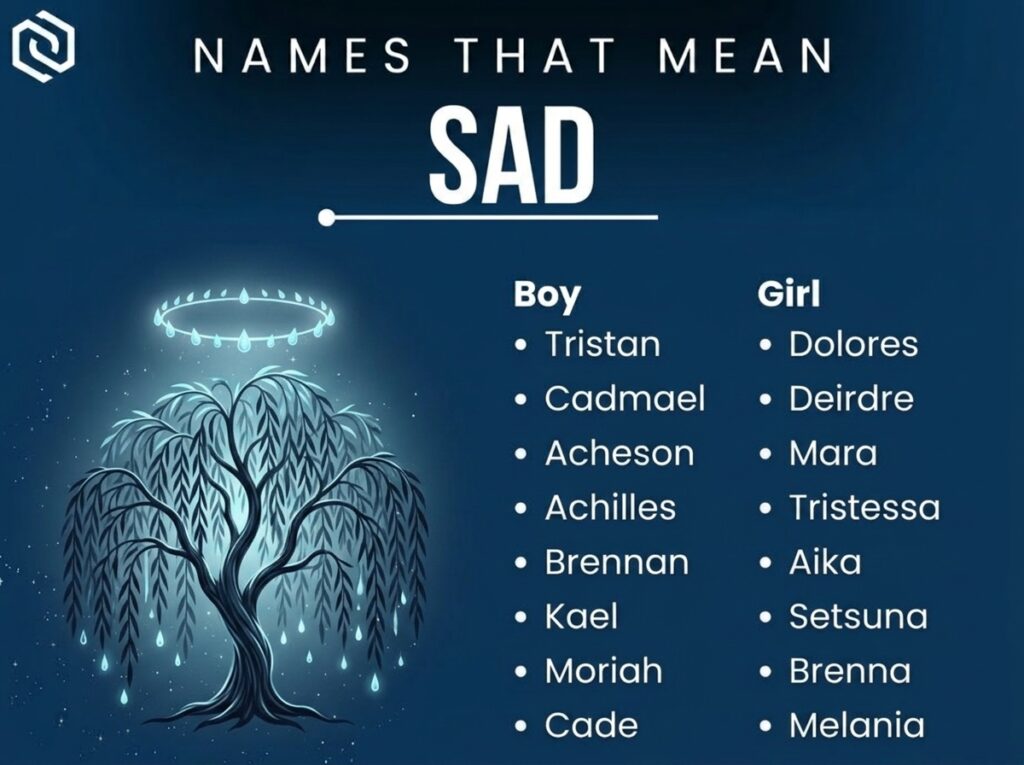
Some of the most well-known names meaning sad, sorrow, or grief include Mary (Hebrew, “bitter” or “sorrow”), Tristan (Celtic, “noise” or associated with sadness), Dolores (Spanish, “sorrows”), Desdemona (Greek, “ill-fated misery”), Lamentine (Latin, “one who laments”), Maura (Irish, linked to bitterness and sorrow), Jabez (Hebrew, “born in pain”), and Brona (Irish, “sorrow”). These names appear across Greek, Hebrew, Latin, Celtic, and Japanese traditions, showing how universally humans have honored grief through naming.
Girl Names That Mean Sad, Sorrow, or Grief
Names that carry sadness for girls often have a particular kind of haunting beauty. They tend to be lyrical and soft-sounding, which makes the weight of their meaning feel graceful rather than heavy. Many come from ancient traditions where grief was considered sacred, a mark of someone who had truly loved. These names age beautifully, carrying both fragility and strength in equal measure.
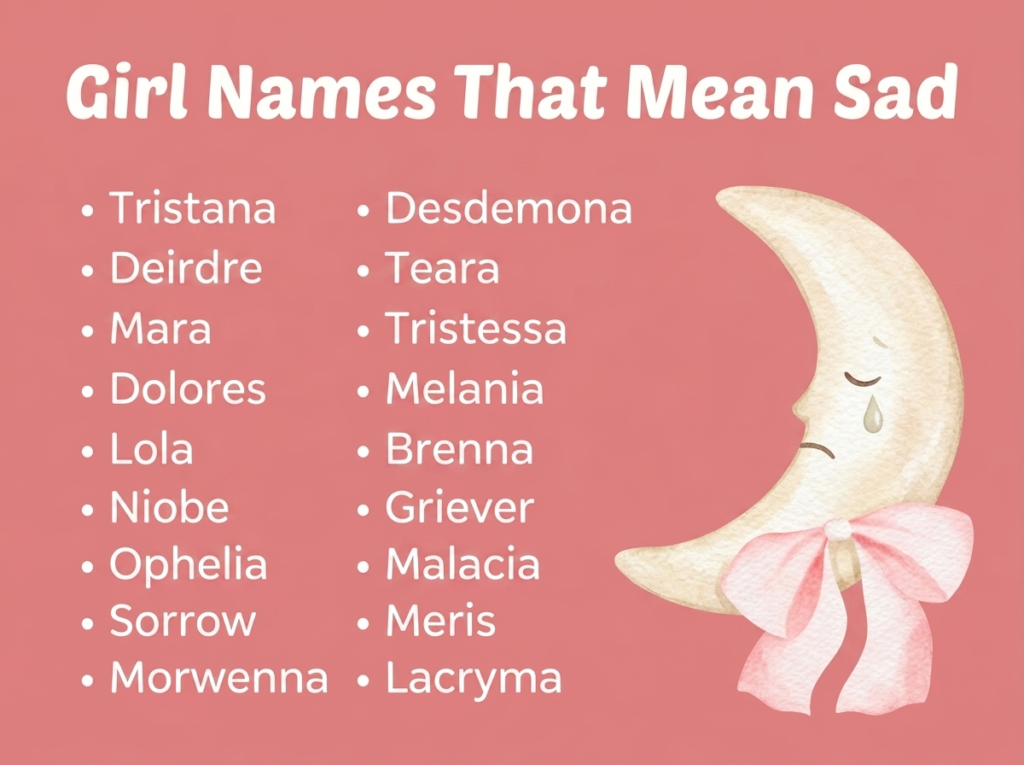
| Name | Origin | Meaning | Pronunciation | Popularity |
|---|---|---|---|---|
| Dolores | Spanish/Latin | “Sorrows” | doh-LOR-ez | Classic |
| Mary | Hebrew | “Bitterness” or “sorrow” | MAIR-ee | Classic |
| Mara | Hebrew | “Bitter,” associated with grief | MAR-ah | Trending |
| Maura | Irish | “Sorrow,” variant of Mary | MAW-rah | Soft |
| Llorona | Spanish | “The weeping one” | yoh-ROH-nah | Mystic |
| Desdemona | Greek | “Ill-fated misery” | dez-deh-MOH-nah | Dark |
| Niobe | Greek | Mythological figure of grief and tears | NYE-oh-bee | Mystic |
| Brona | Irish | “Sorrow” | BROH-nah | Rare |
| Deidre / Deirdre | Irish | “Broken-hearted,” “sorrowful” | DEER-dreh | Classic |
| Lamentine | Latin | “One who laments” | lah-MEN-teen | Unique |
| Achlys | Greek | Personification of sadness and misery | AK-lis | Mystic |
| Triste | Spanish/French | “Sad” | TREES-teh | Rare |
| Maeror | Latin | “Grief,” “sadness” | MAY-ror | Unique |
| Amaranta | Greek/Spanish | Associated with unfading sorrow | am-ah-RAN-tah | Soft |
| Lupe / Guadalupe | Spanish | “River of sorrow” | LOO-pay | Classic |
| Saudade | Portuguese | “Melancholic longing” | sow-DAH-deh | Mystic |
| Cassandra | Greek | Mythological figure doomed to unheard grief | kah-SAN-drah | Classic |
| Hecuba | Greek | Queen of Troy, figure of great sorrow | HEK-yoo-bah | Rare |
| Kyria | Greek | Derived from roots meaning painful longing | KEER-ee-ah | Soft |
| Merewyn | Welsh | “Sea sorrow,” poetic combination | MEHR-eh-win | Rare |
| Penthea | Greek | “Grief,” “lamentation” | PEN-thee-ah | Unique |
| Tristitia | Latin | “Sadness,” “sorrow” | trih-STIT-ee-ah | Dark |
Boy Names That Mean Sad, Sorrow, or Pain
Sad and sorrowful names for boys tend to carry a brooding quality that feels more introspective than gloomy. Many are rooted in mythology or ancient scripture, where a man’s capacity for grief was tied to his depth of character. Think of tragic heroes, wandering figures, and men shaped by loss. These names sound strong on the surface while quietly holding something much heavier inside.
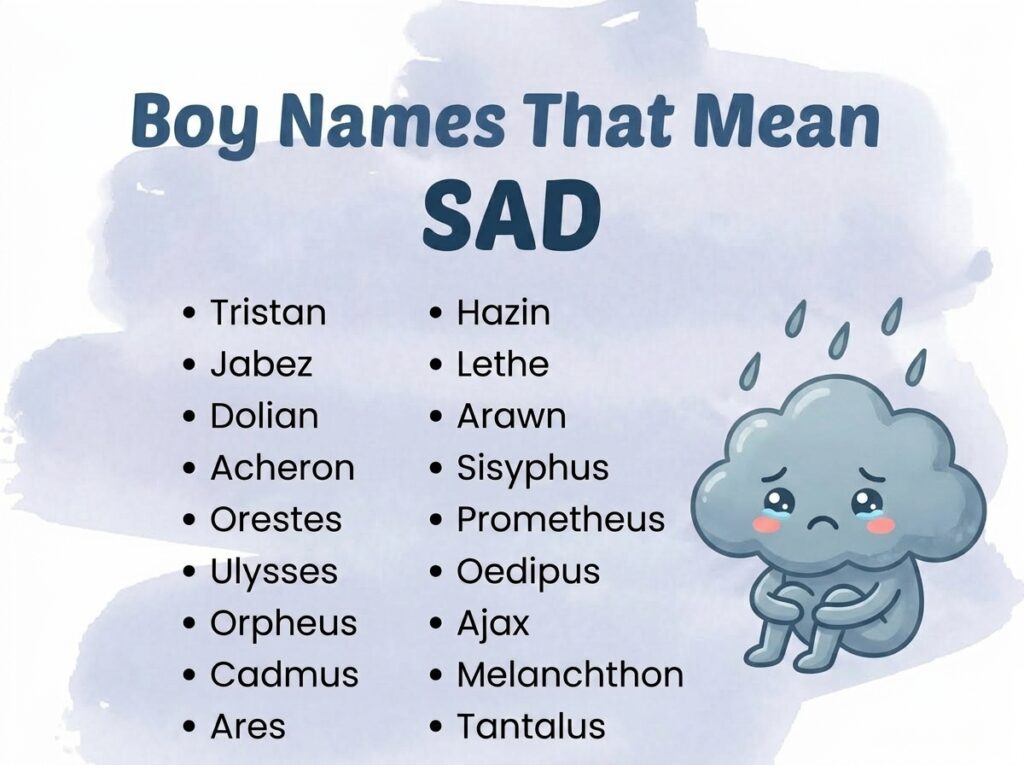
| Name | Origin | Meaning | Pronunciation | Popularity |
|---|---|---|---|---|
| Tristan | Celtic | “Noise” or traditionally linked to sadness and melancholy | TRIS-tan | Trending |
| Jabez | Hebrew | “Born in pain” | JAY-bez | Rare |
| Job | Hebrew | “Persecuted,” deeply associated with suffering | JOHB | Classic |
| Maeander | Greek | Mythological figure linked to wandering grief | may-AN-der | Mystic |
| Doloris | Latin | Masculine form of “sorrow” | doh-LOR-is | Unique |
| Acheron | Greek | River of woe in the underworld | AK-er-on | Dark |
| Pentheus | Greek | “Grief,” “sorrow” — Theban king in mythology | PEN-thee-us | Mystic |
| Lament | English/Latin | “To mourn” | lah-MENT | Dark |
| Algos | Greek | Personification of pain and sorrow | AL-gos | Mystic |
| Amos | Hebrew | “Burden” or “carried sorrow” | AY-mos | Classic |
| Dolen | Welsh | “Loop” but etymologically tied to grief in bardic tradition | DOH-len | Rare |
| Ozymandias | Greek/Egyptian | Associated with melancholy decay | oz-ee-MAN-dee-as | Powerful |
| Sorrow | English | “Deep sadness” | SOR-oh | Unique |
| Brennan | Irish Gaelic | “Sorrow” or “teardrop” | BREN-an | Trending |
| Caoilfhinn | Irish | “Narrow sorrow” in bardic etymology | KWEEL-fin | Rare |
| Maeron | Welsh | Poetic name rooted in sorrow | MAY-ron | Rare |
Unisex Names That Mean Sad, Melancholy, or Tears
Some names that carry grief sit comfortably beyond a single gender. These tend to be softer in sound, more poetic in origin, and often come from traditions where grief was considered a communal, not a gendered, experience. They feel literary and introspective on any child.
| Name | Origin | Meaning | Pronunciation | Popularity |
|---|---|---|---|---|
| Mara | Hebrew | “Bitter” or “sorrow” | MAR-ah | Trending |
| Pena | Spanish | “Pain,” “sorrow” | PAY-nah | Rare |
| Runa | Old Norse | Associated with mourning and secret sorrow in Norse tradition | ROO-nah | Soft |
| Dolor | Latin/Spanish | “Pain,” “sorrow” | DOH-lor | Dark |
| Sorrow | English | “Grief,” “sadness” | SOR-oh | Unique |
| Kyrie | Greek | From roots meaning sorrowful cry or lamentation | KEER-ee-ay | Soft |
| Caoine | Irish | “Lament,” “keening” | KWEE-neh | Mystic |
| Lamentation | Latin | “Act of mourning” | lam-en-TAY-shun | Dark |
| Brón | Irish Gaelic | “Sorrow” | BROHN | Rare |
| Algea | Greek | Personification of pain and grief | AL-jee-ah | Mystic |
Also Read: Names That Mean Death Across Cultures and Mythologies
Sorrow Names Across Cultures
The word for grief sounds different in every language, but the feeling behind it is universal. Nearly every major culture has at some point given the experience of sadness a name, a face, and a mythology. What that tells us is simple: humans have always found meaning inside pain. Naming a child after sorrow was never seen as a curse. It was often seen as a kind of sacred acknowledgment, a way of saying this child understands the world deeply.
Hebrew Names That Mean Sorrow or Pain
Hebrew naming tradition has a profound relationship with grief. Many biblical figures received names that directly reflected the suffering surrounding their birth or life. These names are historically significant and still feel recognizable today.
| Name | Meaning | Gender |
|---|---|---|
| Mara | “Bitter,” linked to grief | Female |
| Jabez | “Born in pain” | Male |
| Job | Suffering and persecution | Male |
| Marah | “Bitterness,” place of sorrow in Exodus | Female |
| Amos | “Burden,” implied sorrow | Male |
| Ichabod | “The glory has departed,” lamentation | Male |
Greek Names That Mean Sorrow or Grief
Greek mythology practically built itself on grief. The Greeks had personifications for every shade of sadness, and several of those figures carry names that are genuinely usable today. These are not manufactured names. They come directly from ancient texts.
| Name | Meaning | Gender |
|---|---|---|
| Achlys | Goddess/personification of sadness and misery | Female |
| Algos | Personification of pain and grief | Male |
| Algea | Spirits of pain and sorrow (plural) | Unisex |
| Niobe | Turned to stone while weeping for her children | Female |
| Pentheus | “Grief,” Theban king of tragedy | Male |
| Acheron | “River of woe” in the underworld | Male |
| Desdemona | “Ill-fated misery” | Female |
Irish and Celtic Names That Mean Sorrow
Celtic bardic tradition elevated sadness to an art form. Irish poets, called filid, composed formal laments called keens, and several Irish names carry the sorrow of those traditions directly in their roots.
| Name | Meaning | Gender |
|---|---|---|
| Deirdre | “Broken-hearted” or “sorrow” | Female |
| Brona | “Sorrow” | Female |
| Brón | “Sorrow” | Unisex |
| Brennan | “Sorrow” or “teardrop” | Male |
| Caoine | “Lament,” “keening” | Unisex |
| Caoilfhinn | “Narrow sorrow” (bardic use) | Male |
Spanish and Latin Names That Mean Sadness or Pain
Latin gave the world some of its most openly sorrowful names, many of which passed into Spanish and Portuguese naming traditions. These names tend to sound beautiful even when their meanings are not.
| Name | Meaning | Gender |
|---|---|---|
| Dolores | “Sorrows” | Female |
| Dolor | “Pain,” “sorrow” | Unisex |
| Tristitia | “Sadness,” “sorrow” | Female |
| Lamentine | “One who laments” | Female |
| Pena | “Pain,” “sorrow” | Unisex |
| Maeror | “Grief” | Male |
Japanese Names That Mean Sad or Melancholy
Japanese naming culture often uses kanji characters that can carry nuances of sorrow, melancholy, or longing. The concept of mono no aware, a bittersweet awareness of impermanence, shapes how Japanese names interact with sadness.
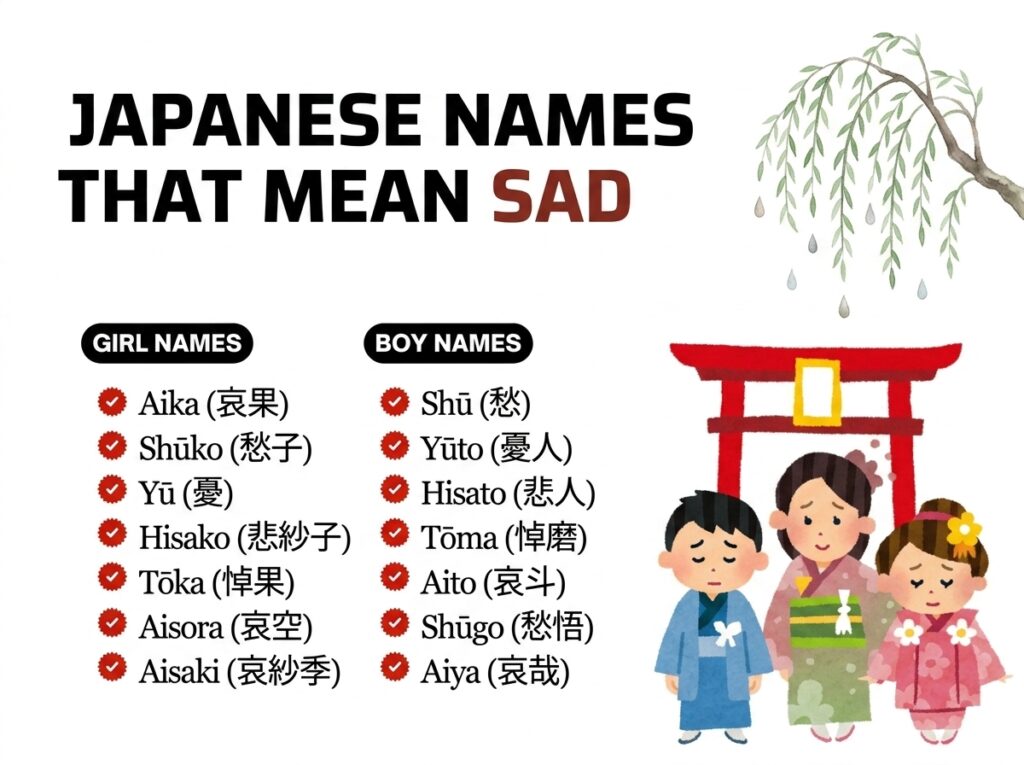
| Name | Meaning | Gender |
|---|---|---|
| Kanashimi (悲しみ) | “Sadness,” “sorrow” | Unisex |
| Nageki (嘆き) | “Lament,” “grief” | Male |
| Urami (恨み) | “Resentment,” “grief” | Female |
| Itami (痛み) | “Pain,” “ache” | Unisex |
| Aware (哀れ) | “Pathos,” “melancholy” | Unisex |
Also Read: Japanese Names That Mean Sad or Melancholy
Names That Mean Tears, Crying, and Lamentation
There is a meaningful difference between a name that means “sadness” in a broad sense and a name that specifically evokes tears or crying. The latter tend to feel more raw, more physical, and more poetic all at once. Many of these names come from mythological figures whose grief was so total that weeping became their defining act.
Names tied to tears specifically include:
- Llorona (Spanish) “The weeping one,” from Mexican folklore
- Niobe (Greek) Wept herself into stone according to myth
- Caoine (Irish) Literally means a keening lament or mourning cry
- Lacrimosa (Latin) “Full of tears,” famously used in the Requiem Mass
- Penthea (Greek) “Grief” and “lamentation” combined
- Brona (Irish) Direct meaning of “sorrow” linked to weeping tradition
- Kyrie (Greek) From the liturgical cry meaning sorrowful plea
- Brennan (Irish) “Teardrop” is one of its accepted etymological roots
- Hecuba (Greek) Mythological queen who became a symbol of overwhelming grief and tears
- Tristitia (Latin) “Sadness” in its most pure classical form
Names That Mean Despair and Suffering
Despair sits deeper than ordinary sadness. It is the kind of grief that does not pass quickly. Names that carry a direct association with despair or suffering tend to come from mythological underworld figures, biblical stories of trial, and ancient poetic traditions. They are intense, purposeful names.
Names connected to despair and suffering include:
- Acheron (Greek) The river of woe, one of the five rivers of the underworld
- Achlys (Greek) The primordial spirit of misery and sadness
- Algos (Greek) Ancient personification of pain
- Job (Hebrew) Biblical figure synonymous with suffering and endurance
- Jabez (Hebrew) Born in pain, his name acknowledged it openly
- Desdemona (Greek) Means “ill-fated misery”
- Ozymandias (Greek/Egyptian) Carries the melancholy of ruin and fallen greatness
- Dolor (Latin) Pure meaning of “pain” or “suffering”
- Tristitia (Latin) The Latin word for profound sadness or despair
- Maeron (Welsh) Bardic name associated with mourning
Names That Mean Melancholy and Longing
Melancholy is different from grief. It is slower. More introspective. A gentle ache rather than a sharp wound. Several names carry this quieter shade of sadness, often from Portuguese, Japanese, or Norse traditions where melancholy was not just accepted but celebrated as a sign of emotional depth.
Names that carry melancholy and longing include:
- Saudade (Portuguese) A cultural word-name for melancholic longing with no direct English translation
- Aware (Japanese) The concept of mono no aware, bittersweet sensitivity to impermanence
- Runa (Norse) Carries notes of mourning and hidden sorrow in Old Norse tradition
- Tristan (Celtic) Traditionally and consistently linked to melancholy in Arthurian legend
- Mara (Hebrew) Bitterness tinged with longing
- Cassandra (Greek) The grief of not being believed, a particular kind of anguished melancholy
- Dolen (Welsh) Etymologically connected to grief in bardic poetry
- Kyrie (Greek) A sorrowful, longing cry used in both liturgy and name form
- Deirdre (Irish) The legendary heroine of Irish myth whose entire story is one of love and devastating loss
Also Read: Names That Mean Lost, Lonely, and Searching
Naming Expert’s Note
Dolores deserves more credit than it gets. Yes, it has old-fashioned associations in some English-speaking countries, but in Spanish and Latin American cultures it has never lost its dignity. It means “sorrows” directly, with no ambiguity. It sounds strong, not fragile. And it carries one of the most honest meanings in the naming canon. Nickname options include Lola and Lolita, both of which feel completely fresh right now. If you want a sorrowful name that also has genuine everyday wearability, Dolores is the one to watch.
How to Choose the Right Sad or Sorrowful Name
Sound matters more than most people admit. A name that carries a heavy meaning should ideally have a sound that can carry it. Short, punchy names like Mara or Brón carry their meaning lightly. Longer names like Desdemona or Lacrimosa wear it more dramatically. Neither approach is wrong, but they create very different impressions when said aloud.
Cultural fit is worth thinking through honestly. Some of these names are deeply embedded in specific religious or mythological traditions, and using them without any connection to that background is fine for most people, but worth acknowledging.
- Say the name out loud paired with your last name
- Check the initials spell nothing unintentional
- Think about what nickname naturally forms from the full name
- Research the specific cultural origin of the name before committing
- Consider how the name sounds on both a child and a grown adult
- If rarity matters to you, check current popularity data before deciding
Frequently Asked Questions
Q: What is the most popular name that means sad or sorrow?
A: Mary is arguably the most widely used name with a sorrowful meaning, derived from the Hebrew “Marah,” meaning bitter or sorrow. Tristan and Dolores are also widely recognized across Western naming traditions. Among currently trending options, Mara is gaining significant popularity for its simplicity and emotional depth.
Q: What names mean sorrow in different languages?
A: The concept of sorrow appears in names across many languages. In Hebrew, Mara means “bitter sorrow.” In Spanish, Dolores means “sorrows.” In Irish Gaelic, Brón and Brennan both carry direct meanings of sorrow or teardrop. In Latin, Dolor and Tristitia both mean pain and sadness. In Greek, Algos and Achlys personify grief and misery respectively.
Q: What are some rare names that mean sadness or grief?
A: Some genuinely rare options include Penthea (Greek, “grief”), Achlys (Greek, personification of misery), Caoine (Irish, “lament”), Brona (Irish, “sorrow”), and Tristitia (Latin, “sadness”). These names are rarely used today, which makes them distinctive choices for parents who want something uncommon with genuine etymological depth.
Q: What is a good middle name to pair with Mara?
A: Mara pairs beautifully with middle names that are either soft and balancing or equally strong. Options like Mara Celeste, Mara Elise, Mara Josephine, or Mara Vivienne all work well. If you want to lean into the name’s melancholy feel, Mara Isolde or Mara Seraphine both carry a poetic, literary quality.
Q: Are names that mean sad or sorrow still used today?
A: Yes, though often without parents realizing the meaning. Mary, Mara, Tristan, and Dolores all remain in active use. There is also a growing trend of parents deliberately choosing names with deeper, more complex meanings rather than purely joyful ones. Names like names that mean dark and names connected to grief are increasingly appealing to parents who value emotional honesty in naming.
Q: What is the difference between names that mean sad and names that mean pain?
A: Names that mean sad or sorrowful typically reference an emotional state, like grief, melancholy, or mourning. Names that mean pain, such as Jabez (“born in pain”) or Dolor (“physical or emotional pain”), tend to reference a more acute, immediate experience. Some names, like Algos and Penthea from Greek tradition, carry both meanings simultaneously since ancient Greek did not always draw a sharp line between emotional and physical suffering.
Conclusion
Names rooted in sorrow, grief, tears, and melancholy span almost every major language and cultural tradition. From the Hebrew weight of Mara to the Irish keening of Caoine, from the Greek mythology of Niobe to the Spanish poetry of Dolores, these names share something important: they take human emotion seriously. They do not flinch. If you are drawn to names that carry emotional depth, you might also appreciate names that mean pain and despair or darker emotional themes. Names like these endure because grief is one of the most universal human experiences, and the right name can honor that truth beautifully.