Betrayal is one of the oldest human experiences. It shows up in every mythology, every religion, every great story ever told. From Judas to Delilah to Loki, the names tied to treachery and broken trust carry a weight that feels almost mythic. Some parents are drawn to that weight intentionally. Others simply love a name without knowing the darker history underneath it.
Names that mean betrayal, regret, or disappointment tend to attract parents who love names with depth and edge. People writing dark fiction. Parents honoring complex family histories. Those who simply believe a name should carry meaning, even a difficult one. These names don’t exist to curse a child. They exist because humans have always named what they lived through, including the painful parts.
What Are Some Names That Mean Betrayal?
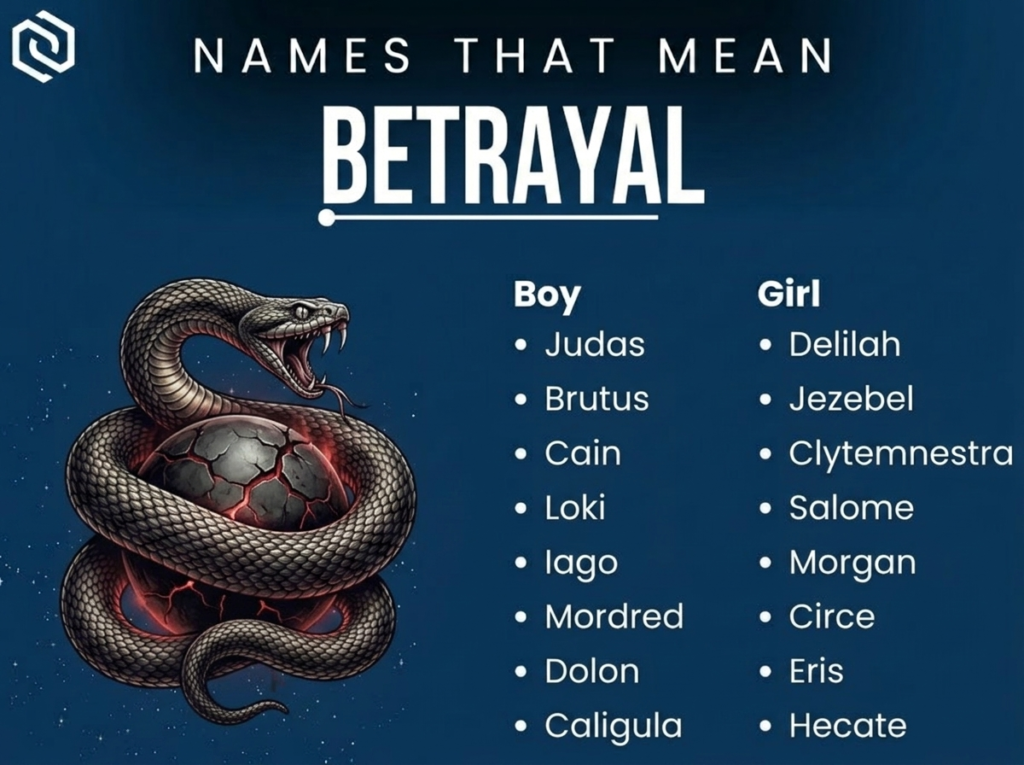
Some of the strongest names connected to betrayal come from mythology and ancient history. Judas is the most recognized, tied directly to the biblical act of betrayal. Delilah carries the meaning of “weakening” or “to weaken,” rooted in her act of treachery against Samson. Loki from Norse mythology embodies deception. Dolon from Greek myth was a Trojan spy. Ganelon is a name from French legend meaning the ultimate traitor. Other options include Cain, Brutus, and Jezebel, each tied to betrayal through ancient texts or mythology.
Girl Names That Mean Betrayal
Female names in this space tend to come from mythology and scripture, where women who betrayed, disappointed, or deceived became legendary figures. These aren’t names to fear. Delilah is now a chart-topper. Jezebel has found new fans in fiction. Many of these names carry a fierce, unforgettable quality precisely because of the stories behind them.
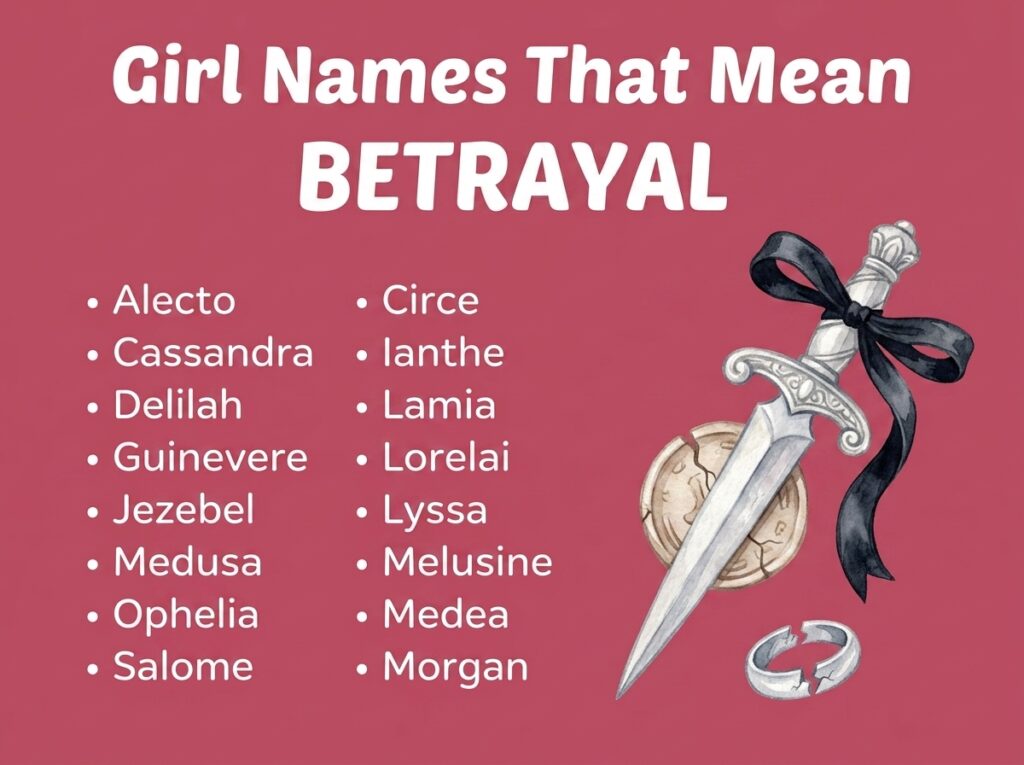
| Name | Origin | Meaning | Pronunciation | Popularity |
|---|---|---|---|---|
| Delilah | Hebrew | “To weaken” or “to diminish”; she sapped Samson’s strength through betrayal | deh-LY-lah | Trending |
| Jezebel | Hebrew | “Where is the prince?” or “not exalted”; associated with false prophecy and treachery | JEZ-uh-bel | Dark |
| Clytemnestra | Greek | Queen who betrayed and murdered her husband Agamemnon | kly-tem-NES-trah | Rare |
| Medea | Greek | Sorceress who betrayed her father and homeland for Jason, then took revenge on him | meh-DAY-ah | Mystic |
| Circe | Greek | Goddess-witch known for deception and transformation of men | SUR-see | Trending |
| Goneril | Old English/Shakespeare | One of King Lear’s treacherous daughters who betrayed her father | GON-er-il | Unique |
| Regan | Old English/Shakespeare | Lear’s second deceitful daughter; means “little king” but carries betrayal in story | REE-gan | Classic |
| Salome | Hebrew/Aramaic | “Peace,” but historically tied to the demand for John the Baptist’s head through deception | SAL-oh-may | Dark |
| Lilith | Hebrew/Akkadian | “Of the night”; associated in mythology with rebellion and betrayal of divine order | LIL-ith | Trending |
| Hecate | Greek | Goddess associated with witchcraft and crossroads; linked to deception and hidden powers | HEK-ah-tee | Mystic |
| Eris | Greek | Goddess of discord whose deception sparked the Trojan War | EE-ris | Dark |
| Pandora | Greek | “All gifts”; her curiosity and deception released suffering into the world | pan-DOR-ah | Unique |
| Morgause | Arthurian/Celtic | Arthur’s half-sister who deceived him and bore Mordred | mor-GAWZ | Rare |
| Nimue | Arthurian/Celtic | The Lady of the Lake who imprisoned Merlin through enchantment and trickery | NIM-yoo-ay | Mystic |
| Viviane | French/Arthurian | Variant of Nimue; used her magic to trap Merlin through deception | VIV-ee-en | Soft |
| Athaliah | Hebrew | Queen of Judah who murdered her grandchildren to seize power; name means “afflicted by God” | ath-ah-LY-ah | Rare |
| Deineira | Greek | Wife of Heracles who accidentally caused his death through a poisoned robe, believing she was betrayed | deh-ya-NEE-rah | Unique |
| Scylla | Greek | Monster figure born of deception and transformation; destroyer of sailors | SIL-ah | Dark |
| Arachne | Greek | Weaver who challenged Athena and was cursed; her pride became a form of cosmic betrayal | ah-RAK-nee | Rare |
| Sycorax | Shakespeare | The witch of The Tempest whose acts of dark magic represent betrayal of nature | SIK-oh-raks | Unique |
Also Read: Names That Mean Dark for Girls, Boys, and More Across Cultures
Boy Names That Mean Betrayal
Male names connected to betrayal are some of the most historically loaded names in existence. Judas shaped the very word “traitor” in Western culture. Brutus became a symbol of political betrayal so powerful that Shakespeare made it the center of a masterpiece. These names carry gravitas. Some parents choose them for fictional characters, some for the weight of the sound itself, and some knowing exactly what history attached to them.
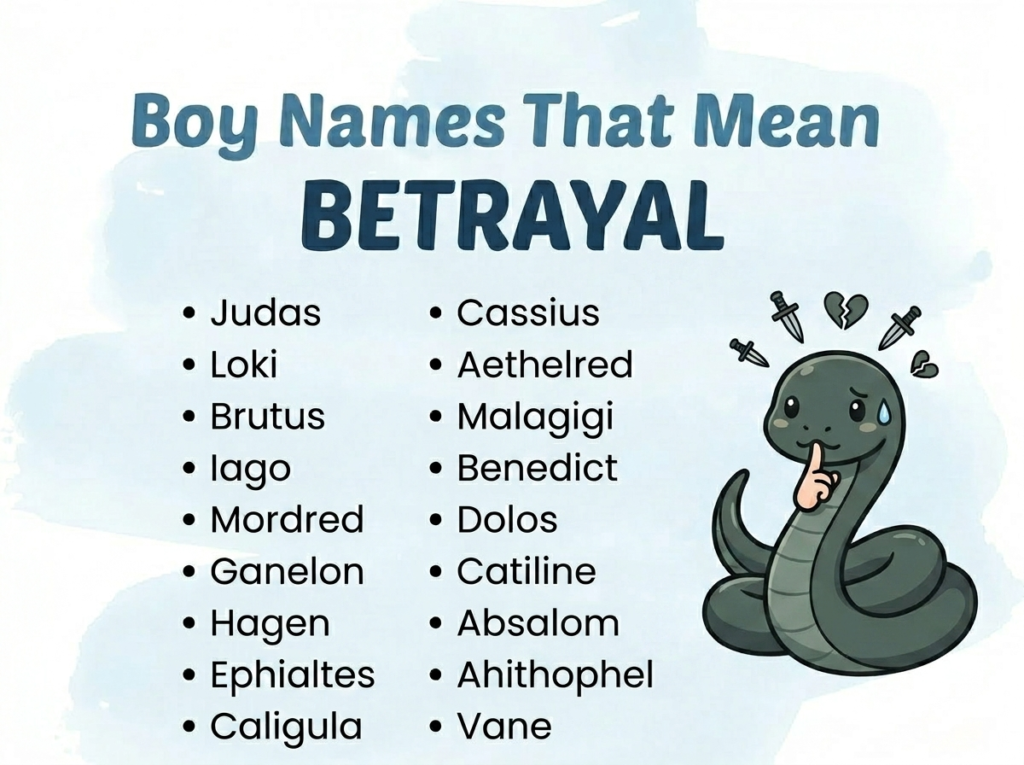
| Name | Origin | Meaning | Pronunciation | Popularity |
|---|---|---|---|---|
| Judas | Hebrew/Greek | “Praised,” but the name is synonymous worldwide with betrayal due to Judas Iscariot | JOO-das | Dark |
| Brutus | Latin | “Heavy” or “dull”; Marcus Brutus became history’s most famous political traitor | BROO-tus | Powerful |
| Loki | Old Norse | God of mischief and deception; orchestrated the death of Baldr through trickery | LOH-kee | Trending |
| Cain | Hebrew | “Acquired” or “spear”; committed the first murder in biblical tradition, a primal betrayal | KAYN | Dark |
| Ganelon | Old French/Frankish | Name of the treacherous knight in the Song of Roland who betrayed Charlemagne’s army | GAN-eh-lon | Rare |
| Dolon | Greek | Trojan spy captured and killed in the Iliad; his name evokes cunning deceit | DOH-lon | Rare |
| Achitophel | Hebrew | David’s trusted counselor who betrayed him to join Absalom’s rebellion | ah-KIT-oh-fel | Unique |
| Mordred | Arthurian/Welsh | Arthur’s illegitimate son who destroyed Camelot through betrayal; name may mean “deadly counsel” | MOR-dred | Dark |
| Iago | Spanish/Hebrew | Variant of James; immortalized as Shakespeare’s master manipulator in Othello | ee-AH-go | Mystic |
| Absalom | Hebrew | “Father of peace”; David’s son who betrayed and tried to overthrow his own father | AB-sah-lom | Classic |
| Ephialtes | Greek | Athenian traitor who showed the Persians the secret pass at Thermopylae | ef-ee-AL-teez | Rare |
| Balor | Irish/Celtic | King of the Fomorians; mythological figure of treachery and dark power | BAY-lor | Dark |
| Wayland | Old English/Norse | Legendary smith trapped and forced to serve through betrayal; his name carries a legacy of captivity and vengeance | WAY-land | Unique |
| Thersites | Greek | Cowardly, treacherous figure in the Iliad known for mockery and disloyalty | ther-SY-teez | Rare |
| Melot | Arthurian | The knight who betrayed Tristan and Isolde to King Mark | MEH-lot | Rare |
| Omri | Hebrew | King of Israel who betrayed the covenant; name means “my sheaf” | OM-ree | Unique |
| Herod | Greek/Hebrew | “Hero-like”; the name tied to political massacre and the betrayal of innocents | HEH-rod | Classic |
| Procrustes | Greek | Mythological figure of forced conformity and deceit who trapped travelers | pro-KRUS-teez | Mystic |
| Iscariot | Aramaic | The surname of Judas meaning “man of Kerioth”; used as a standalone name in fiction | is-KAIR-ee-ot | Dark |
| Quirinus | Latin/Roman | Associated with Romulus after fratricidal betrayal and murder of Remus | kwih-RY-nus | Rare |
Also Read: Names That Mean Trickster for Boys, Girls, and More
Unisex Names That Mean Betrayal
Gender-neutral names in this category are the rarest of all. Most betrayal-coded names come from gendered mythological or historical figures. But a handful of names exist that carry themes of deception, treachery, or moral darkness without being tied to one gender specifically.
| Name | Origin | Meaning | Pronunciation | Popularity |
|---|---|---|---|---|
| Dolos | Greek | The personified spirit of trickery and deception in Greek mythology | DOH-los | Mystic |
| Apate | Greek | The goddess of deceit and fraud; a primordial personification of betrayal | ah-PAH-tay | Rare |
| Lethe | Greek | “Oblivion” or “forgetfulness”; the river of the underworld associated with loss and erased loyalty | LEE-thee | Mystic |
| Nemesis | Greek | Goddess of retribution, often invoked in response to betrayal and injustice | NEM-eh-sis | Dark |
| Keres | Greek | Spirits of violent or cruel death; associated with broken fates and betrayal by destiny | KEH-reez | Rare |
| Morrigan | Irish/Celtic | Goddess of fate and strife; associated with illusion, war, and treacherous prophecy | MOR-ih-gan | Dark |
| Tanith | Phoenician | Goddess associated with destruction and broken divine covenants | TAY-nith | Unique |
| Ate | Greek | Goddess of reckless behavior and moral blindness that leads to ruin; personification of fatal error | AY-tee | Rare |
| Zeal | Hebrew-influenced | “Jealousy” or “passion to the point of destruction”; in Scripture, jealousy is tied to betrayal | ZEEL | Rare |
| Strife | Old English | Direct word name; used in mythology contexts for discord and broken trust | STRYF | Unique |
Betrayal Names Across Cultures
When you look at names tied to betrayal across different traditions, something striking emerges. Every major civilization encoded treachery into their naming history. Whether through gods, warriors, or rulers, betrayal was not hidden from language. It was named directly, sometimes to warn, sometimes to remember, sometimes simply to acknowledge that it happened.
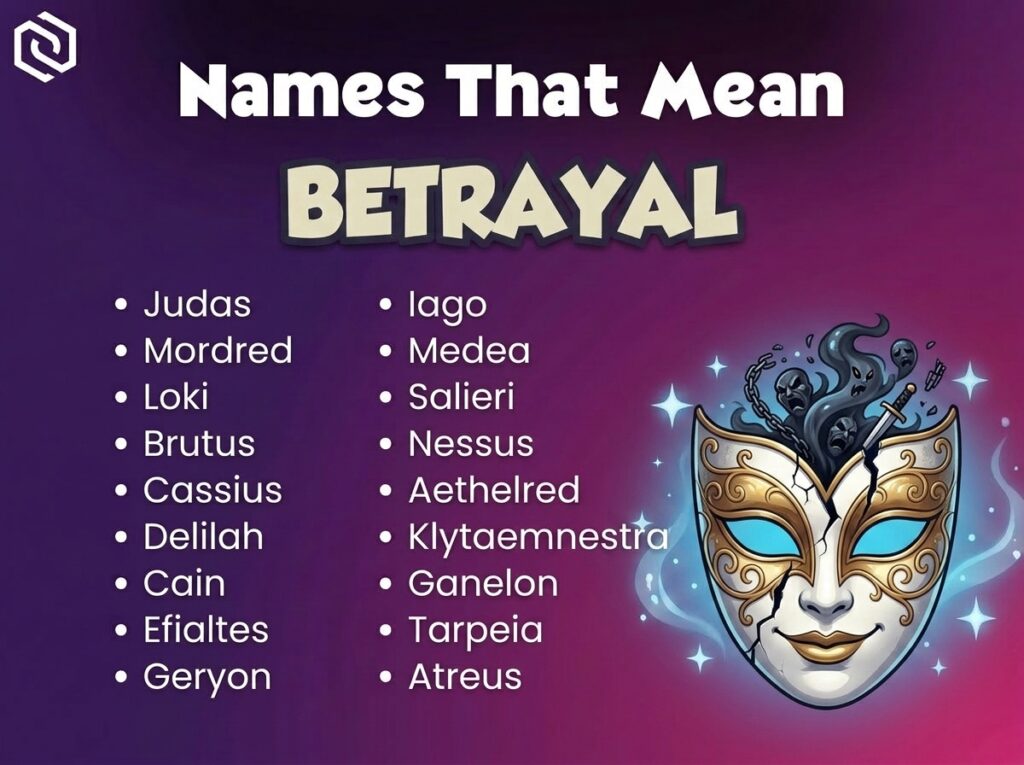
Greek Names That Mean Betrayal
Greek mythology gave us more betrayal archetypes than perhaps any other tradition. The Greeks believed that understanding treachery was part of understanding humanity itself.
| Name | Meaning | Gender |
|---|---|---|
| Medea | Betrayed homeland and father for love, then was herself betrayed | Girl |
| Dolon | Trojan spy; name associated with cunning treachery | Boy |
| Ephialtes | The historical traitor at Thermopylae | Boy |
| Eris | Goddess of discord who sparked betrayal at Troy | Girl |
| Apate | Personified spirit of deceit | Unisex |
| Ate | Goddess of moral blindness leading to ruin | Unisex |
| Dolos | Spirit of trickery and deception | Unisex |
| Clytemnestra | Betrayed and murdered her returning husband | Girl |
| Thersites | Treacherous coward in the Iliad | Boy |
| Procrustes | Mythological deceiver who trapped travelers | Boy |
Hebrew and Biblical Names That Mean Betrayal
The Hebrew tradition contains some of the most recognizable names in this space. These names come directly from scripture, where the acts of betrayal they represent were treated as world-changing events.
| Name | Meaning | Gender |
|---|---|---|
| Judas | “Praised”; forever associated with betraying Jesus | Boy |
| Delilah | “To weaken”; betrayed Samson to the Philistines | Girl |
| Cain | “Acquired”; committed the first murder, a primal betrayal | Boy |
| Jezebel | Associated with false prophecy and treachery in Kings | Girl |
| Absalom | Betrayed his father David | Boy |
| Achitophel | David’s counselor who turned traitor | Boy |
| Salome | Deceptively requested John the Baptist’s death | Girl |
| Athaliah | Murdered her grandchildren to seize power | Girl |
Arthurian and Celtic Names That Mean Betrayal
Arthurian legend built its entire tragedy around betrayal. Mordred, Morgause, Nimue, and Ganelon are names that feel medieval and literary, with a darkness that sounds unexpectedly beautiful when spoken aloud.
| Name | Meaning | Gender |
|---|---|---|
| Mordred | Likely “deadly counsel”; destroyed Camelot | Boy |
| Morgause | Deceived Arthur; mother of his betrayer | Girl |
| Nimue | Imprisoned Merlin through enchantment | Girl |
| Viviane | Alternate of Nimue; the enchantress who trapped Merlin | Girl |
| Melot | Knight who betrayed Tristan and Isolde | Boy |
| Morrigan | Irish goddess of illusion and strife | Unisex |
| Balor | Fomorian king; embodies treacherous dark power | Boy |
Norse Names That Mean Betrayal
In Norse mythology, deception was woven into the fate of the gods themselves. Loki’s treachery was not just personal. It triggered Ragnarok, the end of everything.
| Name | Meaning | Gender |
|---|---|---|
| Loki | God of mischief and deception | Boy |
| Wayland | Legendary smith betrayed into servitude | Boy |
| Fenrir | Loki’s son; bound through deception by the gods | Boy |
Also Read: Names That Mean Revenge for Girls, Boys, and More
Names That Mean Regret
Regret and betrayal often travel together. These names don’t necessarily mean active treachery, but they carry the emotional weight of something lost or wrongly done. They tend to feel softer and more melancholy than the sharper names above.
These names suit characters or children whose parents value emotional depth in language. Regret-coded names often come from words meaning sorrow, repentance, or grief. They’re rarely obvious in their darkness, which is part of their appeal.
- Ruth (Hebrew) “Compassion” but carried by a woman shaped entirely by grief and loss
- Dolores (Spanish/Latin) “Sorrows”; directly from dolor, meaning pain
- Lamentus (Latin) Derived from lamentum, a cry of grief or mourning
- Tristan (Celtic) From drest meaning “noise” or associated with tristis, Latin for “sad”
- Desmond (Irish) “One from South Munster”; used in dark fiction for tragic, regretful characters
- Niobe (Greek) Queen who boasted above the gods and lost all her children; name carries devastating regret
- Cassandra (Greek) Gifted with prophecy but cursed to never be believed; she foresaw betrayal and could not stop it
- Acantha (Greek) “Thorn”; not regret directly, but pain that lingers like a thorn
- Melpomene (Greek) Muse of tragedy; her name means “to sing” but she governs grief and regret in art
- Sorrow (English word name) Used in literary naming traditions
Names That Mean Disappointment
These names carry the quieter weight of something that fell short. Disappointment sits between hope and loss. These names come from roots meaning failure, broken things, or crushed expectations.
Disappointment-coded names appeal to writers creating morally complex characters. They also show up in cultures where names are meant to acknowledge hardship, not just celebrate joy.
- Naomi (Hebrew) Originally means “pleasant” but Naomi herself declared “Call me Mara,” meaning bitter, after losing everything
- Mara (Hebrew) “Bitter”; directly tied to the experience of failed hope
- Ichabod (Hebrew) “Where is the glory?” or “the glory has departed”; a name of profound disappointment
- Jabez (Hebrew) “He will cause pain”; his mother named him for the pain of his birth
- Leah (Hebrew) Possibly “weary” or “tired”; traditionally said to be the unloved wife, a name shaped by disappointment
- Gomer (Hebrew) A prophet’s unfaithful wife; her name became synonymous with broken promise
- Calamity (English) Used as a word name in literary tradition; means disaster or great misfortune
- Ruin (English word name) Used in dark fiction for characters shaped by broken lives
- Morana (Slavic) Goddess of death and winter; associated with the fading and failing of all things
- Alastor (Greek) “Avenger of evil” but the name carries weight of sin, punishment, and moral failure
📝 Naming Expert’s Note
Delilah deserves a special mention here. It’s the only name on this entire list that has genuinely crossed from “dark history” to mainstream popularity. It currently sits inside the US Top 100. Most parents choosing it today don’t think about betrayal at all. They hear the Tom Jones song, or they love the soft, flowing sound. That’s a fascinating case of a name fully shedding its etymology in public perception. If you want a name with a betrayal story that no one will immediately notice, Delilah is your most socially wearable option.
How to Choose the Right Betrayal Name
Sound matters more than most people admit. A name like Mordred sounds medieval and heavy. A name like Delilah sounds light and musical. Both carry betrayal in their history, but they wear it completely differently. Think about how the name sounds when you say it out loud with your last name attached.
Cultural fit matters too. A name like Judas carries so much Western religious weight that it will provoke a reaction almost universally. Names like Dolon or Achitophel carry the same darkness with far less public recognition, which may be exactly what you want.
- Say the name aloud with your surname before deciding
- Check the initials for unintended combinations
- Research the specific mythology or history before committing
- Think about how the name sounds on a child and also on an adult
- Consider how much of the name’s history you want to explain to others
- If you love the sound but not the baggage, look for lesser-known variants
Frequently Asked Questions
Q: What is the most well-known name that means betrayal?
A: Judas is the most universally recognized name tied to betrayal. In Western culture, the name has become almost synonymous with the act itself, used in multiple languages to describe a traitor. Brutus is a close second in the realm of political betrayal.
Q: Are any names that mean betrayal actually used as baby names today?
A: Yes, several are. Delilah is the most popular example and currently ranks inside the US Top 100 despite its biblical betrayal story. Loki has also risen sharply in use, particularly after the Marvel films. Lilith, Medea, and Circe all appear in modern birth records.
Q: What are some rare names connected to betrayal?
A: Some of the rarest include Ganelon from French medieval legend, Dolon from Greek mythology, Achitophel from the Hebrew Bible, and Ephialtes from ancient Greek history. These names carry deep betrayal associations but remain almost entirely unused in modern naming.
Q: What names mean regret or disappointment?
A: Mara directly means “bitter” in Hebrew and is tied to the experience of loss and disappointment. Naomi’s own declaration “Call me Mara” makes that connection explicit. Ichabod means “the glory has departed.” Jabez means “he will cause pain.” Dolores means “sorrows” in Spanish.
Q: Is Loki considered a betrayal name?
A: Yes, in Norse mythology. Loki engineered the death of Baldr, the most beloved of the gods, through deliberate deception and trickery. His actions ultimately set Ragnarok in motion. That makes him one of the most mythologically significant betrayal figures in any tradition.
Q: Can names that mean betrayal be used for fictional characters?
A: Absolutely, and they’re most commonly used in that context. Names like Iago, Mordred, Medea, and Judas carry instant narrative weight in fiction. Writers building morally complex antagonists or tragic characters often reach for names with this kind of layered history because the name does part of the storytelling work on its own.
Conclusion
Names tied to betrayal, regret, and disappointment come from the oldest and richest storytelling traditions humans have. From Greek tragedy to Arthurian legend to the Hebrew Bible, these names carry real history. Some, like Delilah, have shaken off their past and become everyday favorites. Others, like Ephialtes or Achitophel, remain deeply obscure but astonishingly powerful. What keeps all of them interesting is that they hold a story inside the sound. For those interested in names that carry emotional depth, exploring names that mean sad across cultures and languages offers a natural next step into this same territory.