The word “princess” carries weight across cultures. It speaks to lineage, respect, and a certain kind of strength that comes wrapped in grace. In many languages, princess names weren’t just titles but held meaning tied to nobility, divine favor, or leadership within a family line. These names carry that same sense of inheritance today, offering a way to honor heritage or simply bestow a name that feels elevated and timeless.
Parents drawn to these names often value tradition without stuffiness. They want something that sounds dignified but not distant. A princess name doesn’t have to feel formal. Many of these names carry warmth and familiarity while keeping their royal roots intact, making them equally suited to a toddler and an adult.
What Are Some Girl Names That Mean Princess?
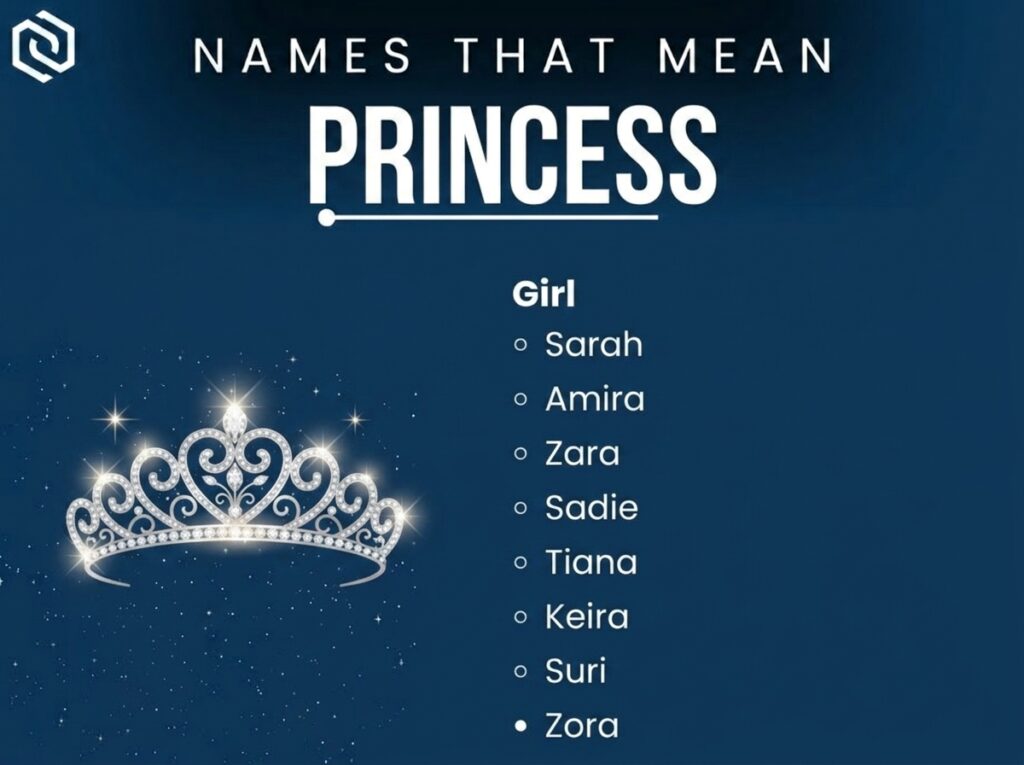
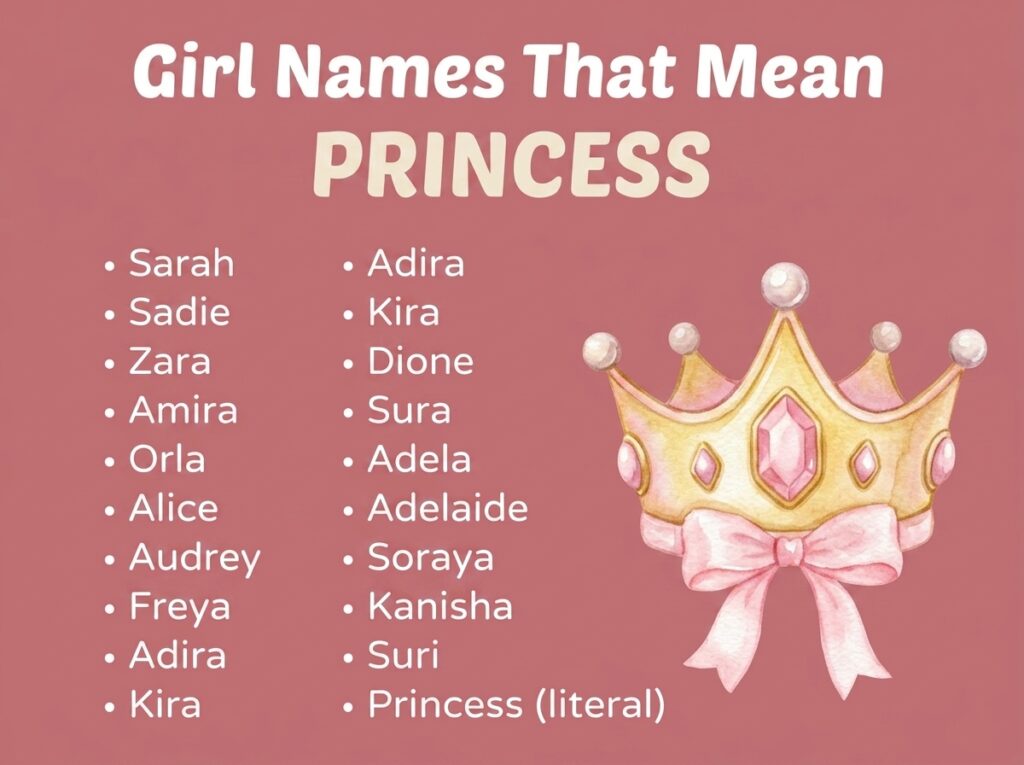
Classic choices include Sarah, which means “princess” in Hebrew, and Sara, its streamlined counterpart. Sadie emerged as a nickname for Sarah but stands alone now. Amira means “princess” in Arabic, while Putri carries the same meaning in Indonesian. Zara has royal ties through both Hebrew and Arabic roots. Sarai, the original form of Sarah, means “my princess” and feels both ancient and fresh.
Girl Names That Mean Princess
These names carry royal meaning in their bones. Some have been spoken for thousands of years, passed through biblical texts and royal courts. Others come from languages where princess isn’t just a fairy tale role but a genuine expression of respect, heritage, and family honor. Each one here holds that title authentically, whether through ancient Hebrew, flowing Arabic, or other linguistic traditions that valued the concept of noble daughters.
| Name | Origin | Meaning | Pronunciation | Popularity |
|---|---|---|---|---|
| Sarah | Hebrew | Princess | SAIR-uh | Classic |
| Sara | Hebrew | Princess | SAH-ruh | Classic |
| Sarai | Hebrew | My princess | sah-RYE | Rare |
| Sadie | Hebrew | Princess (diminutive of Sarah) | SAY-dee | Trending |
| Amira | Arabic | Princess, commander | ah-MEER-ah | Trending |
| Amirah | Arabic | Princess | ah-MEER-ah | Unique |
| Putri | Indonesian | Princess | POO-tree | Rare |
| Saraswati | Sanskrit | Princess of waters (goddess name) | sah-rahs-WAH-tee | Mystic |
| Zara | Hebrew/Arabic | Princess, blooming flower | ZAH-rah | Trending |
| Zahra | Arabic | Princess, radiant | ZAH-rah | Soft |
| Soraya | Persian | Princess, Pleiades constellation | soh-RYE-ah | Unique |
| Sarita | Sanskrit/Spanish | Princess, little river | sah-REE-tah | Soft |
| Sharifah | Arabic | Noble, princess | shah-REE-fah | Rare |
| Shahzadi | Persian/Urdu | Princess, daughter of a king | shah-ZAH-dee | Rare |
| Kumari | Sanskrit | Princess, young girl | koo-MAH-ree | Mystic |
| Rani | Sanskrit | Queen, princess | RAH-nee | Unique |
| Maharani | Sanskrit | Great queen, empress | mah-hah-RAH-nee | Powerful |
| Nesrin | Turkish | Wild rose, princess | nes-REEN | Soft |
| Mira | Sanskrit/Slavic | Princess, peace | MEER-ah | Trending |
| Tiana | Greek/Latin | Princess (popularized by Disney) | tee-AH-nah | Classic |
| Sallie | Hebrew | Princess (variation of Sarah) | SAL-ee | Classic |
| Sari | Hebrew | Princess | SAH-ree | Soft |
| Ameerah | Arabic | Princess, leader | ah-MEER-ah | Rare |
| Saira | Arabic/Hebrew | Princess, traveler | sah-EE-rah | Unique |
| Rajkumari | Sanskrit | Princess, royal daughter | rahj-koo-MAH-ree | Rare |
Also Read: Names That Mean Royalty: Royal and Regal Baby Names
Princess Names Across Cultures
Royalty isn’t a western concept. Cultures around the world developed their own words for daughters born into nobility, and many of those words became names. Some sound familiar because they’ve traveled globally. Others remain rooted in their original languages, carrying the weight of history and cultural pride. These names reflect how different societies viewed noble birth and the roles of women within royal structures.
Hebrew Names That Mean Princess
Hebrew gave us Sarah, one of the oldest continuously used princess names in history. The biblical matriarch Sarah was originally called Sarai, which means “my princess,” before God renamed her. These names have endured through millennia, used across Jewish, Christian, and secular communities. Their simplicity makes them adaptable, but their meaning remains clear.
| Name | Meaning | Gender |
|---|---|---|
| Sarah | Princess | Girl |
| Sara | Princess | Girl |
| Sarai | My princess | Girl |
| Sadie | Princess | Girl |
| Sallie | Princess | Girl |
| Sari | Princess | Girl |
| Sarita | Princess | Girl |
| Sally | Princess | Girl |
| Zadie | Princess | Girl |
| Sorcha | Bright princess (Irish form) | Girl |
Arabic Names That Mean Princess
Arabic offers some of the most melodic princess names, many of which have spread beyond the Arab world. Amira has become particularly popular in the West, valued for its sound and its meaning. In Arabic-speaking cultures, these names weren’t just pretty words. They held social meaning and often indicated family status or aspirations for a daughter’s character.
| Name | Meaning | Gender |
|---|---|---|
| Amira | Princess, commander | Girl |
| Amirah | Princess | Girl |
| Zahra | Princess, radiant | Girl |
| Sharifah | Noble princess | Girl |
| Ameerah | Princess, leader | Girl |
| Saira | Princess, traveler | Girl |
| Zara | Princess, blooming flower | Girl |
| Amera | Princess | Girl |
| Mira | Princess | Girl |
| Zahirah | Radiant princess | Girl |
Sanskrit Names That Mean Princess
Sanskrit names often carry layered meanings. Kumari means princess but also refers to a young unmarried woman. In Nepal, the Kumari is a living goddess, a young girl chosen to embody the divine feminine. Rani means queen, but in casual use can also mean princess. These names reflect a culture where royalty and spirituality often intertwined.
| Name | Meaning | Gender |
|---|---|---|
| Kumari | Princess, young girl | Girl |
| Rani | Queen, princess | Girl |
| Rajkumari | Princess, royal daughter | Girl |
| Maharani | Great queen, empress | Girl |
| Saraswati | Princess of waters | Girl |
| Rajeshwari | Queen of kings, princess | Girl |
| Yuvarani | Young princess | Girl |
| Raniya | Princess | Girl |
| Rajani | Night princess | Girl |
| Ranjana | Delighting, princess | Girl |
Persian Names That Mean Princess
Persian culture has a long tradition of poetic, meaningful names. Soraya, which means princess and also refers to the Pleiades star cluster, was the name of the last Empress of Iran. Persian princess names often blend earthly nobility with celestial imagery, reflecting a culture that valued both beauty and intellect in royal women.
| Name | Meaning | Gender |
|---|---|---|
| Soraya | Princess, Pleiades | Girl |
| Shahzadi | Princess, daughter of a king | Girl |
| Shirin | Sweet princess | Girl |
| Darya | Princess of the sea | Girl |
| Mehr | Princess, sun | Girl |
| Pari | Princess, fairy | Girl |
| Parisa | Like a fairy, princess | Girl |
| Azadeh | Princess, free | Girl |
| Farrah | Princess, joy | Girl |
| Shahnaz | Pride of the king, princess | Girl |
Indonesian Names That Mean Princess
Putri is the Indonesian word for princess and remains a common name throughout Indonesia and Malaysia. In these cultures, names often reflect natural elements alongside titles. Putri can stand alone or combine with other words to create compound names that carry multiple layers of meaning.
| Name | Meaning | Gender |
|---|---|---|
| Putri | Princess | Girl |
| Puteri | Princess (alternate spelling) | Girl |
| Dewi | Princess, goddess | Girl |
| Ratu | Queen, princess | Girl |
| Permaisuri | Queen, empress | Girl |
| Dyah | Princess, noble lady | Girl |
| Gusti | Princess, noble one | Girl |
| Tuan | Princess, lady | Girl |
| Suri | Princess (Sanskrit influence) | Girl |
| Ratna | Princess, jewel | Girl |
Names That Mean Royal Princess
Some names go beyond princess to emphasize the full weight of royal heritage. These names often combine words to mean “royal princess,” “king’s daughter,” or “daughter of nobility.” They tend to sound more formal but carry undeniable presence.
Royal princess names speak to lineage. They’re the names given to daughters who would inherit not just titles but responsibilities. In modern use, they work best for families who want a name that commands respect without requiring a crown to back it up.
- Rajkumari (Sanskrit: royal princess, literally “king’s daughter”)
- Shahzadi (Persian: princess, daughter of a shah)
- Maharani (Sanskrit: great queen, empress)
- Sharifah (Arabic: noble princess, honored one)
- Rajeshwari (Sanskrit: queen of kings, supreme princess)
- Yuvarani (Sanskrit: young princess, crown princess)
- Permaisuri (Indonesian: queen, empress, royal consort)
- Sultana (Arabic: queen, ruler, princess of the sultan)
- Ameerah (Arabic: princess, commander, leader)
- Malika (Arabic: queen, ruling princess)
Names That Mean Little Princess
These names add affection to royalty. They’re often diminutives or terms of endearment that combine “princess” with “little,” “beloved,” or “my.” In many cultures, calling a daughter “my little princess” wasn’t just doting, it was a way to express hope for her character and future.
Little princess names feel intimate. They work beautifully as full given names or as nicknames that stick. Many parents choose these because they want the royal meaning without the formality of a longer, more imposing name.
- Sadie (Hebrew: little princess, diminutive of Sarah)
- Sarita (Sanskrit/Spanish: little princess, little river)
- Sarai (Hebrew: my princess, original form of Sarah)
- Sari (Hebrew: my princess)
- Kumari (Sanskrit: young princess, maiden)
- Zadie (Hebrew: little princess, variation of Sadie)
- Putri (Indonesian: princess, often used affectionately)
- Rajkumari (Sanskrit: little royal princess in some contexts)
- Shayna (Yiddish: beautiful princess, lovely one)
- Mira (Sanskrit: little princess, ocean)
Naming Expert’s Note
Sarai deserves more attention. It’s the original form of Sarah, used in the Bible before God’s renaming, and it carries both history and distinction. While Sarah has become so common it sometimes feels neutral, Sarai keeps the princess meaning front and center. The “my princess” translation makes it even more personal. It sounds vintage without feeling dated, and it pairs beautifully with both traditional and modern middle names. For parents who want a biblical name that doesn’t show up three times in every preschool class, Sarai offers substance and rarity in equal measure.
How to Choose the Right Princess Name
Sound matters more than you think. A three-syllable princess name like Amira or Soraya flows differently than a one-syllable name like Zara or Rani. Say the full name aloud with your last name. Does it feel balanced? Does one overpower the other? Short last names often pair well with longer first names, while long surnames can handle something crisp.
Cultural fit doesn’t mean you need heritage to use a name, but it does mean understanding what you’re choosing. If you’re drawn to Shahzadi or Rajkumari, research their pronunciation and cultural context. Some names carry religious or regional significance that goes beyond their dictionary meaning.
- Say it out loud with your last name at least ten times
- Check the initials for unintended acronyms
- Think about natural nicknames (will Amira become Mira?)
- Research the cultural origin before committing to a name outside your heritage
- Consider how it sounds on a child and an adult alike
- Check current popularity if you want something less common
Frequently Asked Questions
Q: What is the most popular name meaning princess?
A: Sarah remains the most widely used princess name globally, with millions of bearers across cultures and centuries. Amira has gained significant popularity in recent years, particularly in the United States and Europe, appreciated for its sound and cross-cultural appeal. Zara has also surged, partly due to royal associations and celebrity use.
Q: What does princess mean in different languages?
A: Princess translates to “Sarah” in Hebrew, “Amira” in Arabic, “Putri” in Indonesian, “Rajkumari” in Sanskrit, “Shahzadi” in Persian, “Princesse” in French, “Principessa” in Italian, and “Prinsesa” in Filipino. Each language developed its own word for royal daughters, and many of those words became given names in their respective cultures.
Q: What are some rare princess names?
A: Sarai, Shahzadi, Rajkumari, and Maharani are rarely used outside their cultural contexts. Sharifah and Ameerah remain uncommon in Western countries despite their beautiful sound. Kumari, while meaningful in Hindu and Buddhist traditions, appears infrequently on birth certificates. These names offer princess meaning without mainstream popularity.
Q: What is a good middle name to pair with Sarah?
A: Classic middle names like Sarah Elizabeth, Sarah Grace, or Sarah Rose balance the simplicity of Sarah with traditional elegance. More unique options include Sarah Juliet, Sarah Mireille, or Sarah Corinne. Single-syllable middles like Sarah Jane or Sarah Claire create a crisp, timeless combination.
Q: Are princess names still popular?
A: Yes, but the style has shifted. While Sarah peaked in the 1980s and 90s, newer princess names like Amira, Zara, and Soraya have gained traction. Parents still value the meaning but often prefer names that feel less common or carry multicultural appeal. The desire for names with noble meanings hasn’t faded; it’s just found new expressions.
Q: Can I use a princess name from a culture different from my own?
A: You can, but approach it thoughtfully. Names like Sarah and Zara have become so universal that they transcend their origins. Names like Amira and Soraya, while culturally specific, have gained acceptance across communities. More culturally embedded names like Shahzadi or Rajkumari deserve extra care. Research pronunciation, understand the cultural weight, and consider whether you can honor the name’s heritage respectfully. When in doubt, choose a name with cross-cultural roots or consult someone from that culture.
Conclusion
Princess names span continents and centuries, from the biblical Sarah to the Arabic Amira to the Indonesian Putri. Each one carries genuine royal meaning, not through association but through etymology. These names have endured because they balance dignity with warmth, offering a way to honor heritage or simply give a daughter a name that feels elevated without being untouchable. Whether you choose a classic like Sarah or venture toward something rarer like Soraya, you’re selecting a name with history, meaning, and presence. That kind of foundation never goes out of style.
Also Read: Names That Mean Beautiful: Lovely Names Across Cultures