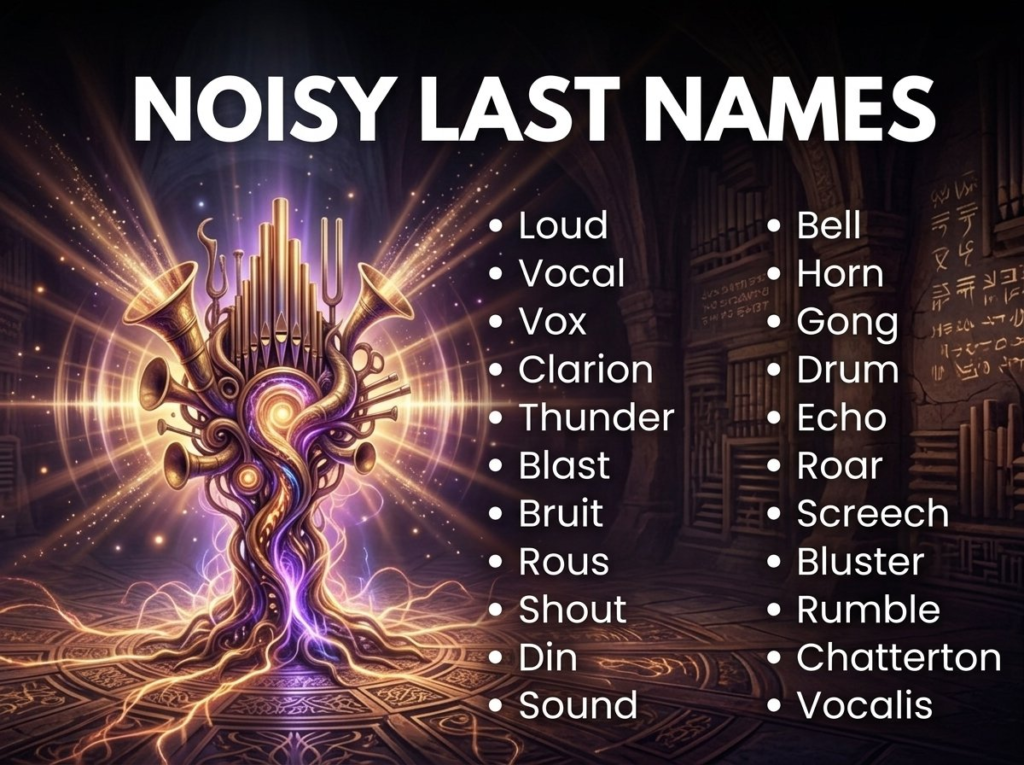
Most surnames trace back to occupations, landscapes, or family patriarchs. But some families earned their name simply because they were hard to ignore. Last names that mean noisy grew out of a world where sound carried real weight in daily life.
The town crier, the bell ringer, the trumpet player on the village green — these were people whose voices and instruments shaped entire communities. Over centuries, those loud roles hardened into permanent family names passed down through generations. Today they offer a surprisingly vivid window into medieval life.
What are some last names that mean noisy?
Surnames like Loud, Bell, Barker, Holler, and Din carry direct ties to noise and loudness. Many originated as occupational names for town criers, bell ringers, and musicians whose work was defined by volume. Others began as nicknames for particularly boisterous individuals in medieval English and German communities.
Last Names That Mean Noisy
Surnames rooted in noise tell a story about communities that paid attention to sound. In medieval villages, the loudest person often held the most important job. These names carry a bold, unapologetic energy that still feels distinctive centuries later.
| Surname | Origin | Meaning | Notable Bearers | Popularity |
|---|---|---|---|---|
| Loud | English | Noisy, loud-voiced person | John Loud, inventor | Rare |
| Bell | English | Bell ringer, one who makes loud sound | Alexander Graham Bell | Classic |
| Barker | English | Town crier who barks announcements | Bob Barker, Travis Barker | Classic |
| Horn | English, German | Horn blower, loud instrument player | Tom Horn, frontier scout | Classic |
| Trump | Old French, German | Trumpet player | Donald Trump | Trending |
| Pfeiffer | German | Piper, fife player | Michelle Pfeiffer | Classic |
| Fifer | Scottish, English | Fife player, loud wind instrument | John Fifer, Civil War soldier | Rare |
| Holler | English | One who shouts or cries out | The Holler family, Appalachia | Rare |
| Ringer | English | Bell ringer | Various English families | Rare |
| Din | English | Loud noise, clamor | Din family, Yorkshire | Unique |
| Rumble | English | Boisterous, rumbling sound | Various English families | Unique |
| Crier | English, French | Town crier, public announcer | Various medieval families | Rare |
| Schall | German | Sound, noise, echo | Various German families | Rare |
| Klang | German | Sound, ring, clang | Various German families | Unique |
| Tromp | Dutch | Trumpet player | Maarten Tromp, Dutch admiral | Rare |
| Drum | English | Drummer, percussion player | Various English families | Rare |
| Toll | English | Bell tolling, loud ringing | Various English families | Rare |
| Knell | English | Sound of a funeral bell | Various English families | Rare |
| Bang | Danish, Norwegian | Hammering, loud noise | Claus Bang, Danish educator | Unique |
| Bellow | English | Loud shouter, boisterous person | Saul Bellow, Nobel laureate | Rare |
Naming Expert’s Note: The surname Loud is one of the most direct and honest surnames in the English language. While most family names hint at their meaning through layers of Old French or Latin, Loud does exactly what it says. If you encounter this name in genealogical research, it almost certainly started as a medieval nickname for someone whose voice carried across the entire village.
Noisy Surnames Across Cultures
Sound-related surnames appear most heavily in English and German naming traditions, where occupational naming was especially common. The pattern makes sense when you consider how medieval towns functioned. Before printed newspapers or digital alerts, noise was information. The person making the most noise was often the person delivering the most important news.
English Surnames That Mean Noisy
English naming traditions produced the highest concentration of noise-related surnames, largely because of the town crier system and the prominence of church bell ringing in daily life.
| Surname | Meaning | Gender |
|---|---|---|
| Loud | Noisy person | All |
| Bell | Bell ringer | All |
| Barker | Town crier | All |
| Holler | One who shouts | All |
| Ringer | Bell ringer | All |
| Din | Loud clamor | All |
| Rumble | Boisterous person | All |
| Crier | Public announcer | All |
| Drum | Drummer | All |
| Toll | Bell tolling | All |
German Surnames That Mean Noisy
German surnames related to noise often connect to musical instruments and the concept of “Schall,” the German word for sound or echo that appears in several family names.
| Surname | Meaning | Gender |
|---|---|---|
| Schall | Sound, noise, echo | All |
| Klang | Ring, clang, sound | All |
| Pfeiffer | Piper, fife player | All |
| Schreier | One who shouts | All |
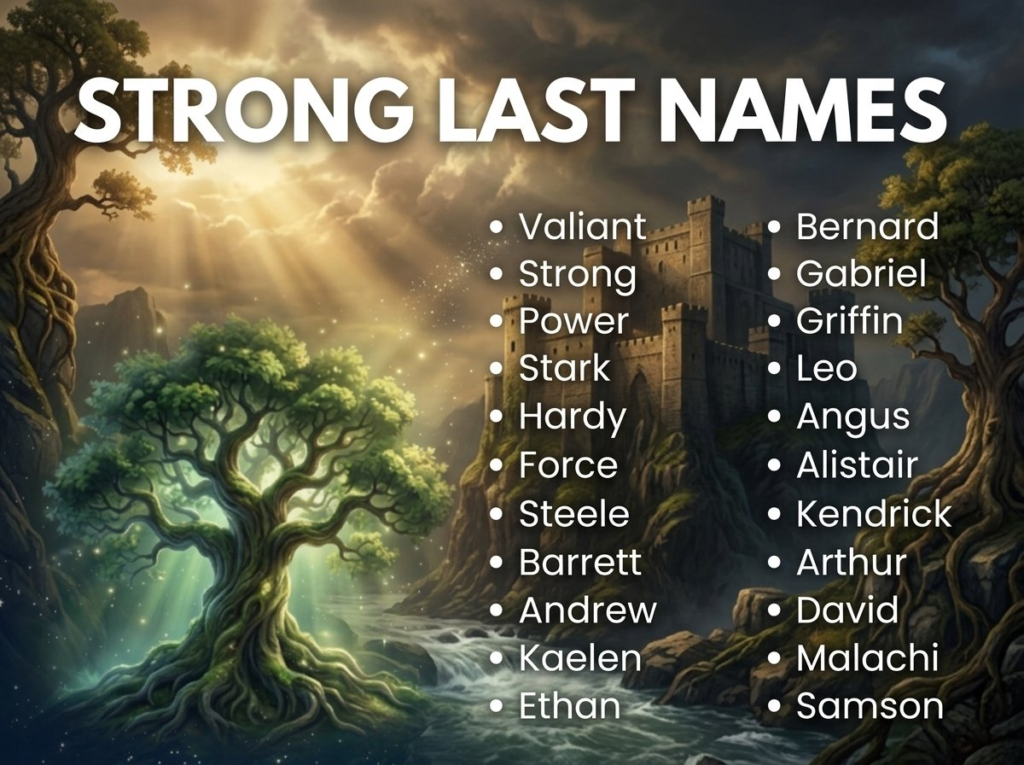
Also Read: Strong Last Names With Powerful Meanings and Origins
Dutch and Scandinavian Surnames That Mean Noisy
Dutch and Scandinavian naming traditions contributed fewer noise-related surnames, but the ones that exist carry strong maritime and military connections.
| Surname | Meaning | Gender |
|---|---|---|
| Tromp | Trumpet player | All |
| Bang | Hammering, loud noise | All |
| Tamboer | Drummer | All |
Last Names Related to Loudness and Sound
Surnames connected to loudness often overlap with musical and occupational traditions. These variations capture different shades of the same noisy concept.
Last Names That Mean Loud
“Loud” surnames tend to be the most straightforward. They usually started as blunt medieval nicknames for people who simply could not keep their voices down.
- Loud
- Bellow
- Holler
- Shout
- Yell
- Roar
- Howl
- Clamor
- Rumble
- Din
Last Names Related to Sound and Music
Musical surnames form a large subset of noise-related names. These families earned their names from instruments that were, by nature, impossible to ignore. You can explore more about names connected to music and melody in our dedicated guide.
- Pfeiffer
- Fifer
- Trump
- Tromp
- Drum
- Horn
- Bell
- Ringer
- Toll
- Knell
Last Names That Mean Clamor or Outcry
Clamor-related surnames are the rarest group. They tend to come from Old French and Middle English words describing public commotion or urgent noise.
- Clamor
- Crier
- Din
- Schall
- Schreier
- Barker
- Klang
- Bang
- Rumble
- Toll
Also Read: Last Names That Mean Power and Authority
How to Choose the Right Noisy Surname
Sound and rhythm matter more than most people realize when evaluating a surname. A name like Bell flows easily with almost any first name, while something like Knell carries a heavier, more dramatic weight that pairs better with shorter given names.
Cultural origin can also guide your choice, especially if you are researching family history or naming a character. A German surname like Schall carries a different texture than the blunt English directness of Loud.
- Say the full name out loud to test the rhythm
- Check how the surname sounds in formal and casual settings
- Consider whether the noise-related meaning adds character or distraction
- Research the specific regional origin before committing
- Think about how the name reads on paper versus spoken aloud
- Look into whether the surname has strong modern associations
Frequently Asked Questions
Q: What is the most common last name that means noisy?
A: Bell is by far the most widespread surname connected to noise. It ranks among the most common surnames in English-speaking countries, largely because bell ringing was such a central part of medieval community life.
Q: What does “noisy” mean in different surname traditions?
A: In English, noisy surnames often come from occupations like bell ringing or town crying. In German, they tend to derive from words like “Schall” (echo) or “Klang” (clang). Dutch and Scandinavian traditions contribute names tied to trumpet playing and drumming.
Q: What are some rare last names that mean noisy?
A: Din, Knell, Schall, and Clamor are all genuinely rare surnames with direct connections to noise. You will not find many families carrying these names today, which makes them especially interesting for genealogical research.
Q: Is Barker really a noisy surname?
A: Yes, though it has multiple origins. One well-documented meaning of Barker is “town crier,” the person who shouted public announcements through medieval streets. The other common origin relates to leather tanning using tree bark.
Q: Are noise-related surnames still common today?
A: Some are extremely common (Bell, Barker, Horn) while others are nearly extinct (Knell, Din, Clamor). The occupational names survived best because they were already widespread before surnames became fixed in the 14th and 15th centuries.
Q: Can noisy surnames also relate to storm names?
A: There is some overlap. Surnames connected to thunder and loud weather events share the same conceptual space as noise-related names. Our guide to last names tied to storms and weather covers that connection in more depth.
Conclusion
Noise-related surnames span a surprisingly wide range of origins, from the blunt honesty of Loud to the musical heritage of Pfeiffer and Tromp. These names survived centuries because the people who first carried them played roles their communities could not function without. The loudest voices in the village became the most permanent names in the record books. If your family carries one of these surnames, you are connected to a long tradition of people who made sure they were heard.