Lust, desire, and passion are among the oldest forces in human mythology. Every ancient culture gave them a name, a face, a story. From Eros drawing back his bow to Kama striking with his flower arrows, the personification of longing and craving is woven into the founding myths of civilizations across the world. These aren’t dark or shameful ideas in their original context. They are powerful, primal, and deeply human.
Parents drawn to these names usually want something that carries real weight. Something with fire behind it. These names suit characters in fiction, babies born into bold families, and anyone who believes a name should mean something more than just “pleasant.” Names rooted in desire and passion tend to be sensory and rhythmic, with sounds that feel as charged as their meanings.
What Are the Best Names That Mean Lust or Desire?
Some of the strongest names meaning lust, desire, or passion come straight from mythology. Eros (Greek god of desire), Kama (Sanskrit, meaning desire and the Hindu god of love), Pothos (Greek, meaning longing), Venus (Roman goddess of love and desire), Ishtar (Babylonian goddess of desire), Amorette (Latin, meaning little love and longing), and Himeros (Greek, meaning desire) are among the most authentic. These names don’t just gesture at the theme — they are the theme, rooted in thousands of years of cultural history.
Girl Names That Mean Lust, Desire, or Passion
Names in this space for girls tend to lean toward the mythological and the lyrical. Many come from ancient goddesses of love and desire, figures who embodied not just romance but raw, overwhelming want. They sound beautiful without being soft. There’s an undeniable charge to them, an energy that goes beyond pretty.

| Name | Origin | Meaning | Pronunciation | Popularity |
|---|---|---|---|---|
| Venus | Latin | Goddess of love, desire, and sensual pleasure | VEE-nus | Classic |
| Ishtar | Akkadian/Babylonian | Goddess of love, desire, and war | ISH-tar | Mystic |
| Amorette | Latin/French | Little love, longing | am-oh-RET | Rare |
| Phaedra | Greek | Means “bright,” but she is mythologically defined by her consuming, destructive desire | FEE-dra | Unique |
| Volupta | Latin | Pleasure and sensual desire | vo-LUP-tah | Rare |
| Voluptas | Latin | Roman goddess of pleasure and desire | vo-LUP-tas | Mystic |
| Ananga | Sanskrit | Bodiless; name used for Kama, the god of desire | ah-NAHN-gah | Rare |
| Ratri | Sanskrit | Night; also a name connected to Rati, goddess of passion | RAH-tree | Rare |
| Rati | Sanskrit | Goddess of love, passion, and carnal desire; wife of Kama | RAH-tee | Mystic |
| Aisha | Arabic | Living, full of life; associated with vibrant longing and vitality | eye-EE-shah | Trending |
| Inanna | Sumerian | Goddess of love, desire, and war | ih-NAH-nah | Unique |
| Astarte | Phoenician | Goddess of love, desire, and fertility | ah-STAR-tay | Mystic |
| Lilith | Hebrew/Akkadian | Night creature; mythologically associated with uncontrolled desire | LIL-ith | Trending |
| Shulamite | Hebrew | The beloved one; associated in the Song of Solomon with passionate longing | SHOO-lah-mite | Rare |
| Himari | Japanese | Warm, sunlit desire; associated with warmth and longing | hee-MAH-ree | Soft |
| Merete | Norse/Danish | Pearl of desire; longing | meh-REH-teh | Rare |
| Amara | Latin/African | Eternal longing, grace | ah-MAH-rah | Trending |
| Raga | Sanskrit | Passion, desire, emotional color in music | RAH-gah | Unique |
| Crave | Old English/Modern | To long for intensely | KRAYV | Dark |
| Ardea | Latin | Burning, ardent desire | AR-dee-ah | Rare |
| Isadora | Greek | Gift of Isis (goddess of desire and magic) | iz-ah-DOR-ah | Classic |
| Desi | Latin | Longing, desire | DEZ-ee | Soft |
| Desideria | Latin | She who is desired; full of longing | deh-sid-EH-ree-ah | Rare |
| Yen | Vietnamese | Longing, desire, craving | YEN | Unique |
Also Read: Names That Mean Passion, Desire, and Love From Every Culture
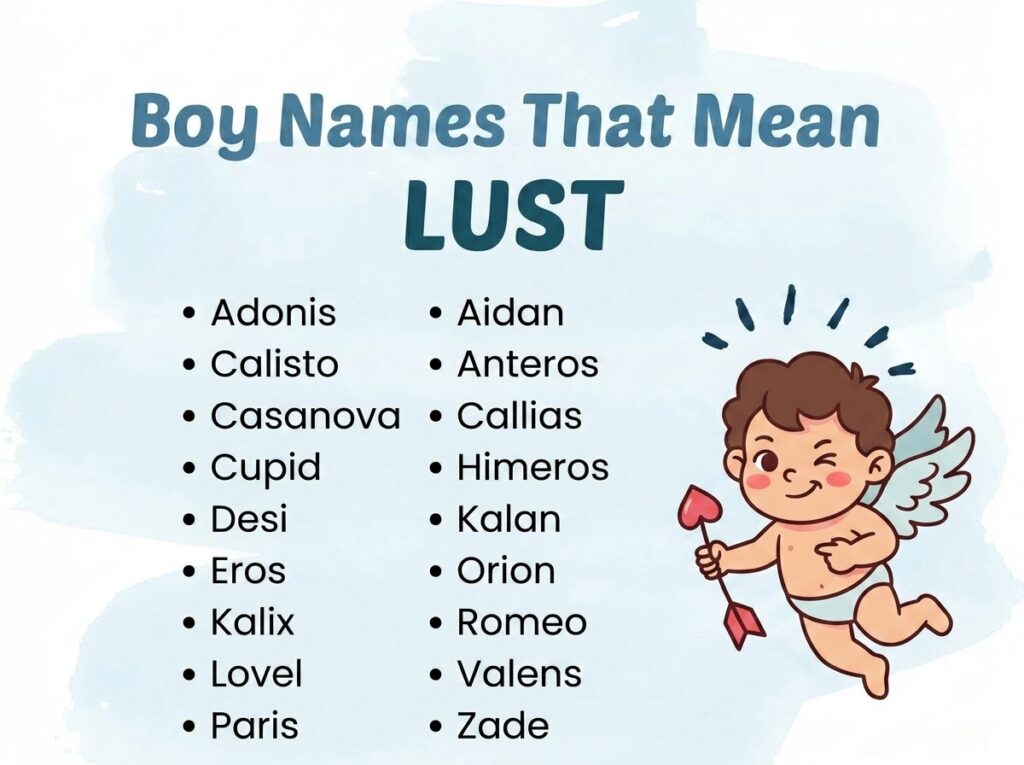
Boy Names That Mean Lust, Desire, or Passion
Male names rooted in desire and passion often feel muscular and mythic at the same time. Many of them come directly from gods, male personifications of erotic longing that ancient cultures took completely seriously. These names don’t whisper. They announce.
| Name | Origin | Meaning | Pronunciation | Popularity |
|---|---|---|---|---|
| Eros | Greek | God of love and erotic desire | EH-ros | Mystic |
| Kama | Sanskrit | Desire; Hindu god of love and passion | KAH-mah | Unique |
| Pothos | Greek | Longing, yearning, one of the Erotes (gods of desire) | POH-thos | Rare |
| Himeros | Greek | Desire, one of the Erotes accompanying Aphrodite | HIM-er-os | Rare |
| Anteros | Greek | God of requited love and returned desire | AN-ter-os | Dark |
| Cupid | Latin | Desire; Roman god of love and longing | KYOO-pid | Classic |
| Kamadeva | Sanskrit | God of desire and love; “Kama” means desire | kah-mah-DAY-vah | Mystic |
| Desiderio | Latin/Spanish | Longing, desire, one who is desired | deh-sid-EH-ree-oh | Rare |
| Ardent | Latin | Burning desire, passionate longing | AR-dent | Powerful |
| Lust | Old English/Germanic | Desire, pleasure | LUST | Dark |
| Shushan | Hebrew/Persian | Lily; associated with desire and beauty in ancient poetry | SHOO-shan | Rare |
| Rogan | Gaelic | Red-haired; associated with fiery, passionate nature | ROH-gan | Unique |
| Aroon | Irish | Desire, darling, beloved one | ah-ROON | Soft |
| Oberon | Germanic/Old French | Noble; mythologically linked to desire and enchantment | OH-ber-on | Classic |
| Faunus | Latin | Roman god of wildness, desire, and fertility | FAW-nus | Mystic |
Unisex Names That Mean Lust, Desire, or Passion
Gender-neutral names in this space tend to be quieter carriers of the meaning. Many are rooted in Sanskrit or Latin and feel poetic rather than overtly charged. They carry the concept of longing and craving without tying it to a mythological gender role.
| Name | Origin | Meaning | Pronunciation | Popularity |
|---|---|---|---|---|
| Desi | Latin | Longing, desire | DEZ-ee | Soft |
| Raga | Sanskrit | Desire, passion, emotional longing | RAH-gah | Unique |
| Ardor | Latin | Burning desire, passionate fire | AR-dor | Powerful |
| Yen | Vietnamese | Longing, craving | YEN | Rare |
| Kama | Sanskrit | Desire (used in both genders across South Asia) | KAH-mah | Mystic |
| Amor | Latin | Love and desire | ah-MOR | Classic |
| Desiderata | Latin | Things longed for, desired things | deh-sid-eh-RAH-tah | Rare |
| Rati | Sanskrit | Passion, desire (used in various South Asian cultures for both genders) | RAH-tee | Unique |
| Ananga | Sanskrit | Bodiless one; another name for Kama | ah-NAHN-gah | Rare |
| Seren | Welsh | Star; used in contexts of longing and aspiration | SEH-ren | Soft |
Also Read: Names That Mean Passion and Fire for Boys and Girls
Lust and Desire Names Across Cultures
The concept of desire is universal. Every culture built stories around it, worshipped figures who embodied it, and crafted words for the ache of wanting something just out of reach. That’s why names rooted in lust and longing appear in Greek, Latin, Sanskrit, Babylonian, and Japanese traditions alike. The feeling is human. The names just give it a face.

Greek Names That Mean Desire or Lust
Greek mythology gave desire its own divine family. The Erotes were a group of winged gods each personifying a different shade of love and longing.
| Name | Meaning | Gender |
|---|---|---|
| Eros | God of erotic love and desire | Boy |
| Pothos | Longing, yearning | Boy |
| Himeros | Desire, one of the Erotes | Boy |
| Anteros | God of requited desire | Boy |
| Phaedra | Mythologically consumed by forbidden desire | Girl |
| Hedone | Pleasure, sensual delight | Girl |
| Aphrodisia | Of Aphrodite; desire and love | Girl |
Latin and Roman Names That Mean Desire or Passion
Roman culture inherited Greek ideas about desire and gave them new names. Latin produced some of the most linguistically direct names for longing in any language.
| Name | Meaning | Gender |
|---|---|---|
| Cupid | Desire; Roman god of love | Boy |
| Voluptas | Goddess of pleasure and desire | Girl |
| Desideria | She who is desired; longing | Girl |
| Desiderio | Longing, desire | Boy |
| Ardor | Burning desire | Unisex |
| Amor | Love and desire | Unisex |
| Desi | Longing, desire (short form of Desiderius/Desideria) | Unisex |
Sanskrit Names That Mean Desire or Passion
Sanskrit has some of the richest vocabulary for desire in any ancient language. The Hindu tradition didn’t suppress the concept. It worshipped it in the form of Kama, the god of desire.
| Name | Meaning | Gender |
|---|---|---|
| Kama | Desire; the Hindu god of love | Unisex |
| Rati | Passion, carnal desire; wife of Kama | Girl |
| Kamadeva | God of desire | Boy |
| Raga | Desire, passion, emotional color | Unisex |
| Ananga | Bodiless; name for Kama | Unisex |
| Manmatha | One who churns the mind; name for the god of desire | Boy |
Babylonian and Sumerian Names That Mean Desire
The oldest recorded mythologies in human history — from Mesopotamia — featured powerful goddesses of desire. These names carry extraordinary depth and age.
| Name | Meaning | Gender |
|---|---|---|
| Inanna | Queen of heaven; goddess of love and desire | Girl |
| Ishtar | Goddess of love, desire, and war | Girl |
| Astarte | Goddess of desire and fertility (Phoenician cousin of Ishtar) | Girl |
Hebrew and Biblical Names Connected to Desire
Some Hebrew names and figures carry connotations of deep longing and passion, especially in the poetry of the Song of Solomon.
| Name | Meaning | Gender |
|---|---|---|
| Shulamite | The beloved one; associated with passionate desire | Girl |
| Lilith | Night creature; associated in myth with uncontrolled desire | Girl |
| Dodi | My beloved, my desired one | Boy |
Names That Mean Longing and Yearning
Longing is desire at a distance. It’s the ache of wanting something you can’t quite reach. These names carry that emotional charge without being as overtly intense as names tied directly to lust or passion.
Names rooted in longing tend to feel more poetic and melancholy. They suit characters in literature and real people who carry a certain emotional depth. They’re the quieter sibling of the bold mythological names above.
- Pothos (Greek) — literally means “longing”; one of the Erotes
- Desideria (Latin) — she who is longed for
- Aroon (Irish) — beloved one, the one who is yearned for
- Yen (Vietnamese) — to long for, to crave
- Shulamite (Hebrew) — the desired one in ancient poetry
- Himeros (Greek) — unfulfilled desire, yearning
- Merete (Norse/Danish) — pearl; linked to longing
- Raga (Sanskrit) — the emotional color of longing in music
- Desi (Latin) — to long for
- Amor (Latin) — love born of deep desire
Names That Mean Passion and Burning Desire
Passion is desire with heat added. These names don’t just mean “want” — they mean want so badly it burns. Many are rooted in fire imagery, and several of them double as names that mean fire or intensity.
There’s a reason naming traditions reach for fire when they’re describing passion. The two ideas are ancient companions. A name like Ardor or Rogan carries both heat and longing in a single syllable cluster.
- Ardor (Latin) — burning desire, passionate fire
- Ardent (Latin) — burning, passionate
- Ardea (Latin) — ardent, burning with desire
- Rati (Sanskrit) — passionate love and physical desire
- Kama (Sanskrit) — desire as a force of nature
- Faunus (Latin) — wild, passionate, unrestrained desire
- Inanna (Sumerian) — goddess of passionate love and war
- Ishtar (Akkadian) — goddess of burning desire
- Voluptas (Latin) — passionate pleasure and desire
- Phaedra (Greek) — mythologically consumed by devastating passion
Names That Mean Sensual Desire or Erotic Love
This is the most mythologically specific category. Ancient cultures understood that erotic desire was its own force, separate from general love or affection. They named gods after it and gave those gods children, companions, and stories.
These names sit in that specific space. They’re bold choices. They have real mythological authority behind them.
- Eros (Greek) — god of erotic love specifically; not just any love
- Aphrodisia (Greek) — of Aphrodite, goddess of erotic love
- Hedone (Greek) — pleasure, sensual delight; root of the English word “hedonism”
- Voluptas (Latin) — Roman goddess of pleasure, born from Eros and Psyche
- Volupta (Latin) — variant of Voluptas
- Cupid (Latin) — from cupere, to desire
- Kamadeva (Sanskrit) — the Hindu god of sensual desire
- Lilith (Hebrew/Akkadian) — mythologically tied to uncontrolled erotic desire
- Astarte (Phoenician) — goddess of sensual love and desire
- Ishtar (Akkadian) — goddess of desire with erotic and martial power
Also Read: Names That Mean Mystery, Desire, and Hidden Depths
How to Choose the Right Lust or Desire Name
Sound matters here more than almost anywhere else. Names rooted in desire and passion tend to work best when they flow easily off the tongue. Short, punchy names like Eros or Kama feel charged on their own. Longer names like Desideria or Kamadeva need room to breathe and often pair best with short last names.
Cultural origin matters too. A name like Kama or Rati carries the full weight of Hindu mythology. If that tradition isn’t part of your family story, research the context before committing.
- Say it out loud with your last name at least ten times
- Check what the initials spell
- Think about natural nicknames — Desideria shortens to Desi, which is sweet and wearable
- Research the mythological figure if the name comes from one
- Consider how the name reads on a child versus a professional adult
- Check current popularity if you want something that won’t be shared with three classmates
Naming Expert’s Note
Rati is the name most deserving of wider recognition in this space. She’s the Sanskrit goddess of passion and desire, wife of Kama, and her name directly means “love, passion, and carnal delight” in Sanskrit. It’s a two-syllable name that sounds warm and approachable, carries extraordinary mythological depth, and remains genuinely rare in Western naming. Unlike Eros or Venus, which everyone recognizes immediately, Rati offers the same mythological authority with none of the familiarity. That’s a rare combination in naming.
Frequently Asked Questions
Q: What is the most well-known name that means desire or lust?
A: Eros is probably the most recognized globally. As the Greek god of erotic love and desire, his name is directly synonymous with the concept. Kama is equally significant in South Asian traditions, where he is the Hindu god of desire and his name literally means “desire” in Sanskrit.
Q: What does lust or desire mean in different languages?
A: In Greek, desire is expressed through names like Eros and Pothos. In Sanskrit, Kama means desire. In Latin, cupido (root of Cupid) means to desire or crave, and desiderium means longing. In Vietnamese, yen means to long for. In Hebrew, the word translated as desire appears throughout the Song of Solomon.
Q: What are some rare names that mean desire?
A: Some genuinely rare options include Pothos (Greek, longing), Himeros (Greek, desire), Desideria (Latin, she who is desired), Ananga (Sanskrit, name for the god of desire), and Voluptas (Latin, goddess of pleasure and desire). None of these appear in any major popularity charts, making them distinctive choices.
Q: What is a good middle name to pair with Eros?
A: Eros pairs well with short, grounded middle names that balance its mythological weight. Eros Julian, Eros Sebastian, or Eros Finnian all work well. Avoid multi-syllable names starting with a vowel, as they clash with the final “s” sound.
Q: Are names meaning desire or passion still popular?
A: Some are experiencing a quiet rise. Lilith has surged significantly over the past decade, partly because of its mysterious mythological associations. Venus reappears on charts periodically. Names like Eros and Kama remain rare in Western countries but are increasingly considered as parents seek meaningful mythological names over conventional choices.
Q: What is the difference between names that mean lust versus names that mean love?
A: Names that mean love often reference affection, devotion, and tenderness. Names that mean lust or desire specifically reference craving, passion, and erotic longing. For example, Eros (desire) and Pothos (yearning) are distinct from Agape (unconditional love) or Caritas (charity). The mythological tradition understood these as genuinely different forces and gave each its own deity.
Conclusion
Names rooted in lust, desire, and passion come from some of the oldest storytelling traditions on earth. Greek, Latin, Sanskrit, Babylonian, and Hebrew cultures all recognized that longing was powerful enough to deserve a name. What’s striking is how many of these names feel completely wearable today — Eros, Rati, Venus, Kama, Desi — they carry weight without feeling heavy. If you’re drawn to names with deeper mythological roots, you might also find something meaningful in these names that mean passion and fire or these names rooted in deep longing and love. A name that means something ancient tends to age well.