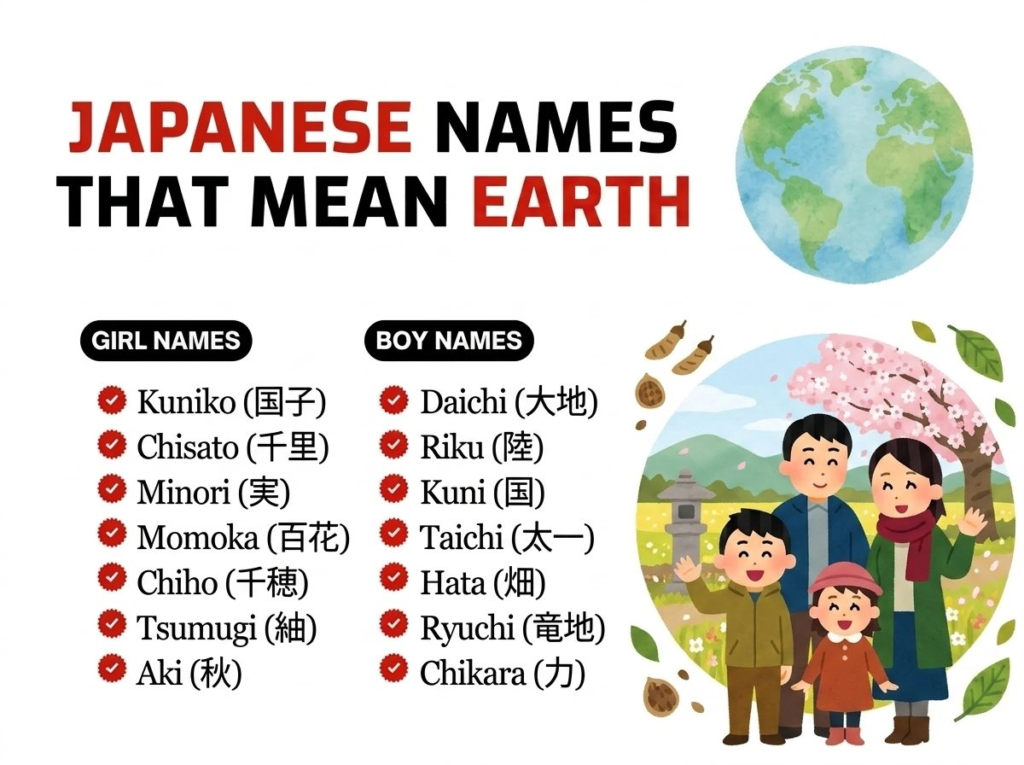
Earth holds a quiet power in Japanese naming tradition. The kanji 地 (chi) and 土 (do) carry connotations of stability, rootedness, and connection to the natural world that many parents find deeply appealing. Unlike flashier nature names tied to storms or fire, earth names feel steady and grounded.
Japanese parents often choose these names to express a wish for their child to grow up strong, dependable, and close to the land. Whether you have Japanese heritage or simply love the sound and substance of these names, this guide covers the most authentic options available.
What Are Some Japanese Names That Mean Earth?
The most recognized Japanese names meaning earth include Daichi (great earth), Riku (land), Chika (earth flower), Chie (earth blessing), and Chisato (earth hometown). These names draw from the kanji 地 (chi), 土 (do), and 陸 (riku), each carrying a distinct shade of meaning related to ground, soil, and terrain. Japanese earth names tend to feel grounded and calm, making them a quiet but powerful choice for parents drawn to nature-inspired naming.
Japanese Girl Names That Mean Earth
Names built around the kanji 地 (chi) give girls a sense of quiet strength rooted in the natural world. These names pair the earth element with softer second kanji like “flower,” “blessing,” or “spring,” creating a balance between solidity and grace. They tend to sound gentle in conversation while carrying real weight in their written form.
| Name | Origin | Meaning | Pronunciation | Popularity |
|---|---|---|---|---|
| Chika | Japanese | Earth, flower (地花) | CHEE-kah | Classic |
| Chie | Japanese | Earth, blessing (地恵) | CHEE-eh | Classic |
| Chiharu | Japanese | Earth, spring (地春) | chee-HAH-roo | Soft |
| Chika | Japanese | Earth, fragrance (地香) | CHEE-kah | Rare |
| Chisato | Japanese | Earth, hometown (地郷) | chee-SAH-toh | Classic |
| Chitose | Japanese | Earth, generation (地世) | chee-TOH-seh | Rare |
| Chiyoko | Japanese | Earth, generation, child (地代子) | chee-YOH-koh | Classic |
| Chiyo | Japanese | Earth, generation (地代) | CHEE-yoh | Rare |
| Chizuru | Japanese | Earth, crane (地鶴) | chee-ZOO-roo | Mystic |
| Chikage | Japanese | Earth, scenery (地景) | chee-KAH-geh | Unique |
| Chiyomi | Japanese | Earth, generation, beauty (地代美) | chee-YOH-mee | Soft |
| Chika | Japanese | Earth, excellence (地佳) | CHEE-kah | Rare |
| Chise | Japanese | Earth, world (地世) | CHEE-seh | Trending |
| Chizuko | Japanese | Earth, longevity, child (地寿子) | chee-ZOO-koh | Classic |
| Chihana | Japanese | Earth, flower (地花) | chee-HAH-nah | Soft |
Also Read: Beautiful Japanese Names That Mean Water for Girls and Boys
Japanese Boy Names That Mean Earth
Boy names connected to earth in Japanese tend to feel bold and grounded. Daichi, using the kanji 大地 for “great earth,” is one of the most popular nature names in modern Japan. Names built with 陸 (riku), meaning “land,” carry a similar steadiness with a slightly more contemporary edge. These names suit parents who want something strong without being aggressive.
| Name | Origin | Meaning | Pronunciation | Popularity |
|---|---|---|---|---|
| Daichi | Japanese | Great earth (大地) | DAH-ee-chee | Trending |
| Riku | Japanese | Land (陸) | REE-koo | Trending |
| Chikara | Japanese | Earth, strength (地力) | chee-KAH-rah | Powerful |
| Chihiro | Japanese | Earth, extensive (地博) | chee-HEE-roh | Classic |
| Chikao | Japanese | Earth, hero (地雄) | chee-KAH-oh | Rare |
| Chisei | Japanese | Earth, star (地星) | chee-SAY | Unique |
| Chiharu | Japanese | Earth, clear sky (地晴) | chee-HAH-roo | Soft |
| Chiyuki | Japanese | Earth, happiness (地幸) | chee-YOO-kee | Rare |
| Chitose | Japanese | Earth, longevity (地寿) | chee-TOH-seh | Classic |
| Rikuto | Japanese | Land, Big Dipper (陸斗) | ree-KOO-toh | Trending |
| Rikuya | Japanese | Land, to be (陸也) | ree-KOO-yah | Unique |
| Chikage | Japanese | Earth, landscape (地景) | chee-KAH-geh | Rare |
| Kunio | Japanese | Land, man (国男) | KOO-nee-oh | Classic |
| Rikuji | Japanese | Land, ruler (陸司) | ree-KOO-jee | Powerful |
| Daizen | Japanese | Great earth, virtue (大地善) | dah-ee-ZEN | Rare |
Japanese Unisex Names That Mean Earth
Some Japanese earth names cross gender lines naturally, especially shorter names and those ending in neutral sounds like -ru or -to. These names work well for parents who prefer flexibility or who want a name that feels modern and adaptable. The kanji remain the same regardless of gender, so the meaning stays consistent.
| Name | Origin | Meaning | Pronunciation | Popularity |
|---|---|---|---|---|
| Riku | Japanese | Land (陸) | REE-koo | Trending |
| Chi | Japanese | Earth (地) | CHEE | Rare |
| Chiharu | Japanese | Earth, spring (地春) | chee-HAH-roo | Soft |
| Chisato | Japanese | Earth, village (地郷) | chee-SAH-toh | Classic |
| Chise | Japanese | Earth, world (地世) | CHEE-seh | Trending |
| Chitose | Japanese | Earth, generation (地世) | chee-TOH-seh | Rare |
| Chihiro | Japanese | Earth, fathom (地尋) | chee-HEE-roh | Unique |
| Rikuto | Japanese | Land, person (陸人) | ree-KOO-toh | Trending |
| Kuni | Japanese | Land, country (国) | KOO-nee | Rare |
| Daichi | Japanese | Great earth (大地) | DAH-ee-chee | Powerful |
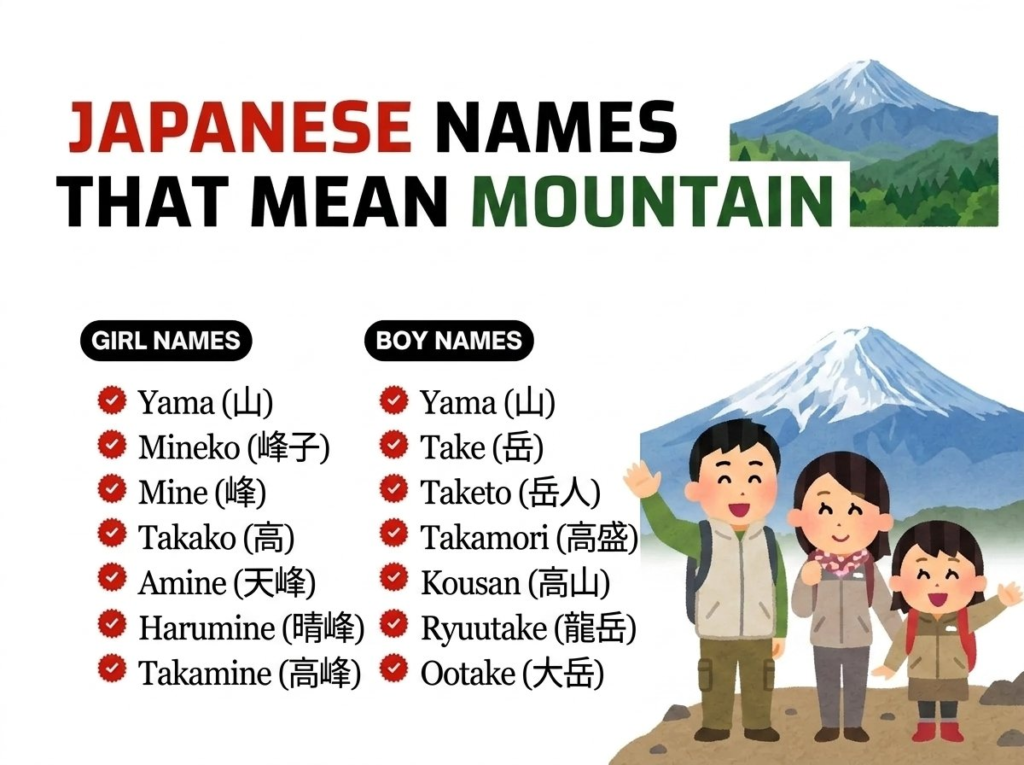
Also Read: Strong Japanese Names That Mean Mountain for Your Baby
Earth Names Across Cultures
The concept of earth as a naming inspiration shows up in nearly every language on the planet. That makes sense. Before humans named their children after stars or virtues, they named them after the ground beneath their feet. Earth meant survival, fertility, and home. Here is how different cultures have turned soil and land into names that still resonate today.
Greek Names That Mean Earth
Greek mythology gives us some of the oldest earth names in the Western world. Gaia herself was the primordial goddess of the earth, and her name still feels fresh thousands of years later.
| Name | Meaning | Gender |
|---|---|---|
| Gaia | Earth goddess | Girl |
| Demetra | Earth mother | Girl |
| Terra | Earth (Latin-influenced Greek usage) | Girl |
| Chthonia | Of the earth | Girl |
| Erato | Earthly, lovely | Girl |
| Gaea | Earth (alternate spelling) | Girl |
Latin Names That Mean Earth
Latin gives us the word “terra,” which has become one of the most recognizable earth names globally. Roman culture also personified the earth as Tellus, a goddess of fertility and the ground.
| Name | Meaning | Gender |
|---|---|---|
| Terra | Earth, land | Girl |
| Terrance | From the earth | Boy |
| Tellus | Earth goddess | Girl |
| Terran | Of the earth | Unisex |
| Terren | Earth, ground | Boy |
Sanskrit Names That Mean Earth
In Sanskrit, the earth is called Bhumi or Prithvi, and both have deep roots in Hindu tradition. Prithvi is a Vedic goddess, and Bhumi appears throughout sacred texts as the embodiment of the physical world.
| Name | Meaning | Gender |
|---|---|---|
| Bhumi | Earth, soil | Girl |
| Prithvi | Earth, the vast one | Girl |
| Avani | Earth | Girl |
| Dharani | Earth, ground | Girl |
| Bhuvan | Earth, world | Boy |
| Dhara | Earth, flowing | Girl |
Arabic Names That Mean Earth
Arabic naming traditions connect earth to concepts of foundation and origin. The word “ard” means earth or land, and several names build on this root.
| Name | Meaning | Gender |
|---|---|---|
| Ardi | My earth | Boy |
| Arda | Earth, land | Unisex |
| Turab | Soil, earth | Boy |
Hebrew Names That Mean Earth
In Hebrew, the word “adamah” means earth or ground, and it is the root of the name Adam. This connection between humanity and soil runs through the entire Genesis narrative.
| Name | Meaning | Gender |
|---|---|---|
| Adam | From the earth, red ground | Boy |
| Adama | Earth, ground | Girl |
| Adamah | Red earth | Girl |
Names That Mean Land
Land names overlap with earth names but carry a slightly broader feel. They suggest territory, belonging, and open space rather than the physical soil itself. In Japanese, the kanji 陸 (riku) captures this distinction beautifully.
- Riku (Japanese)
- Landen (English)
- Landon (English)
- Arda (Turkish/Arabic)
- Terran (Latin)
- Kuni (Japanese)
- Bhuvan (Sanskrit)
- Orin (Irish)
- Ilan (Hebrew, connected to land and tree)
- Taran (Welsh, related to land and thunder)
Names That Mean Ground
Ground names feel even more elemental than earth names. They point to the literal surface we walk on, the foundation of everything built above it. These names are rarer but carry a raw, honest quality.
- Daichi (Japanese, great ground)
- Terra (Latin)
- Bhumi (Sanskrit)
- Turab (Arabic)
- Adamah (Hebrew)
- Grund (Old Norse)
- Dharani (Sanskrit)
- Chise (Japanese)
- Tellus (Latin)
- Avani (Sanskrit)
Names That Mean Soil
Soil names are the most specific subset of earth names. They reference the fertile, living layer of the ground rather than the planet or terrain as a whole. These are uncommon as given names but deeply meaningful in agricultural cultures.
- Turab (Arabic)
- Bhumi (Sanskrit)
- Tsuchi (Japanese, rarely used as a given name)
- Doman (Slavic, related to soil and home)
- Adam (Hebrew, red soil)
- Ardi (Arabic)
- Prithvi (Sanskrit)
- Chitose (Japanese, earth generation)
- Adama (Hebrew)
- Jora (Hebrew, related to rain on soil)
Also Read: Japanese Names That Mean Sun and Sunshine for Your Baby
How to Choose the Right Earth Name
Sound matters more than most parents expect. A name like Daichi has a bold, percussive rhythm that pairs well with short surnames, while Chisato flows more softly and suits longer last names. Try saying the full name out loud several times before deciding.
Cultural connection is worth thinking about too. If your family has Japanese roots, a name like Riku or Chie will feel natural and meaningful. If you are choosing from outside the culture, take time to understand the kanji and what the name signals to native speakers.
- Say the full name out loud with your last name
- Check the initials to avoid unintended combinations
- Think about natural nicknames your child might prefer
- Research the cultural origin and kanji before committing
- Consider how the name sounds on both a child and an adult
- Check current popularity if you want something less common
Frequently Asked Questions
Q: What is the most popular Japanese name meaning earth?
A: Daichi (大地), meaning “great earth,” is the most popular Japanese name directly connected to earth. It has been a consistent favorite for boys in Japan for decades and remains widely used today. Riku (陸), meaning “land,” is a close second and has been trending upward in recent years.
Q: What does earth mean in Japanese naming tradition?
A: In Japanese, earth is most commonly represented by the kanji 地 (chi), 土 (do or tsuchi), and 陸 (riku). The character 地 appears in many given names and conveys stability, foundation, and connection to the natural world. It carries a quieter energy compared to kanji for fire or storm.
Q: What are some rare Japanese earth names?
A: Chizuru (地鶴, earth crane), Chikage (地景, earth scenery), and Kunio (国男, land man) are all uncommon choices that still carry authentic earth meanings. Chise (地世, earth world) is rare but has been gaining attention in modern Japan.
Q: What is a good middle name to pair with Daichi?
A: Daichi pairs well with short, clean middle names. Daichi Ken, Daichi Ren, or Daichi Sora all flow naturally. If you prefer a Western middle name, Daichi James or Daichi Owen work because the two-syllable rhythm complements the three-syllable first name.
Q: Are Japanese earth names still popular in modern Japan?
A: Yes. Daichi and Riku both appear regularly in Japanese baby name rankings. Earth-related names have held steady because they feel timeless rather than trendy. Parents in Japan continue to value nature kanji, and earth names sit comfortably alongside names connected to water and sky.
Q: Can Japanese earth names be used for girls?
A: Absolutely. Names like Chika (地花), Chie (地恵), and Chisato (地郷) are established girl names in Japan that incorporate the earth kanji 地. They tend to pair the grounded earth element with softer second characters like “flower” or “blessing,” creating a balanced feel.
Conclusion
Japanese earth names offer a rare combination of quiet strength and natural beauty. From the bold simplicity of Daichi to the gentle warmth of Chie, these names connect a child to something ancient and enduring. The ground beneath our feet does not demand attention, but it holds everything up. If you love names rooted in the natural world, you might also enjoy exploring Japanese names that mean moon for a complementary celestial feel.
Naming Expert’s Note: Daichi is the name I recommend most often to parents who want a Japanese earth name that works across cultures. It is easy to pronounce in English, immediately recognizable in Japan, and the kanji 大地 (“great earth”) is visually striking. The only thing to watch for is that it has become quite popular in Japan over the last twenty years, so it will not feel rare to Japanese speakers.

1 thought on “92+ Japanese Names Meaning Earth (With Meanings)”