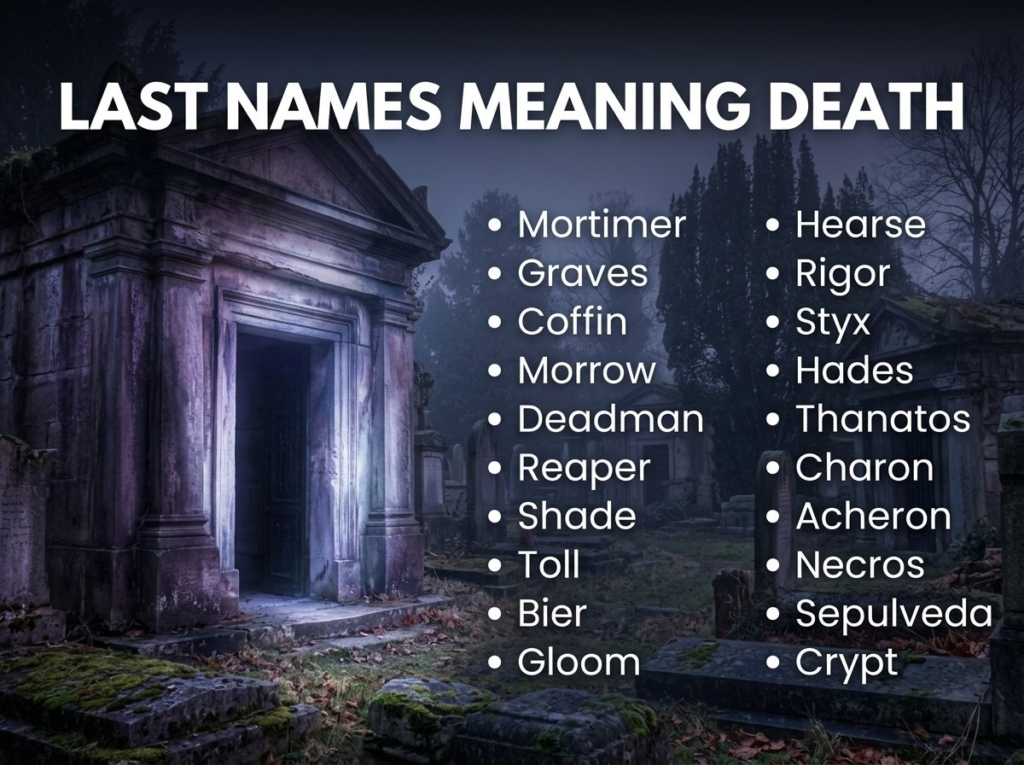
Surnames tied to death are far rarer than you might expect. Most cultures actively avoided embedding mortality into family names, which makes the ones that survived genuinely fascinating. These surnames often started as nicknames, occupational labels, or references to burial grounds rather than literal declarations of doom.
If you are researching a family name or building a character with a surname that carries real weight, this guide covers the most authentic death-related surnames across European and other traditions. The stories behind these names are stranger and more human than the meaning alone suggests.
What are some last names that mean death?
The most well-documented surnames meaning death include Mort, Morte, Mortimer, De’ath, Lemort, Dood, and Sepulveda. Most trace back to Latin “mors” (death) or Old French “mort” (dead). Others reference burial grounds, tombs, or plague. True death surnames are uncommon because most naming traditions avoided the subject entirely.
Last Names That Mean Death
Surnames connected to death carry a gravity that few other family names can match. They tend to be short, blunt, and rooted in medieval European life, where mortality was a daily presence rather than an abstraction. Many began as theatrical nicknames for actors who played Death in mystery plays, or as place names tied to old burial grounds.
| Surname | Origin | Meaning | Notable Bearers | Popularity |
|---|---|---|---|---|
| Mort | French / Latin | Death | John Mort, English MP | Rare |
| Morte | Italian | Death | Rare Italian lineage | Dark |
| Mortimer | Old French | Dead sea or dead marsh | Roger Mortimer, Earl of March | Classic |
| De’ath | English | Death, possibly from mystery play roles | Charles De’ath, British records | Rare |
| Death | English | Death, nickname or place name | Rare English surname | Dark |
| Deadman | English | Dead man, descriptive nickname | Documented in Norfolk parish records | Rare |
| Lemort | French | The dead | French Huguenot families | Rare |
| Amort | Old French | To death | Bavarian and French records | Unique |
| Dood | Dutch | Death | Rare Dutch surname | Dark |
| Mortlock | Old French / English | Dead place | Mortlock family of Cambridgeshire | Rare |
| Graves | English | Burial ground or grove | Robert Graves, poet and novelist | Classic |
| Grave | English | Burial place | Scandinavian and English branches | Rare |
| Coffin | Old French | Small chest, later burial casket | Tristram Coffin, Nantucket founder | Unique |
| Slaughter | Old English | Slaughter or killing | Enos Slaughter, Hall of Fame baseball player | Dark |
| Sepulveda | Spanish | From “sepulcrum,” meaning tomb | Juan Ginés de Sepúlveda, philosopher | Classic |
| Tombs | English | Tombs, burial monuments | Thomas Tombs, English clergy | Rare |
| Reaper | English | Harvester, symbolically the Grim Reaper | Rare occupational surname | Mystic |
| Grimm | Germanic | Fierce, stern (Grim Reaper association) | Brothers Grimm, Jacob and Wilhelm | Powerful |
| Morbidelli | Italian | From “morbo,” plague or disease | Franco Morbidelli, MotoGP racer | Unique |
| Bones | English | Skeletal remains, nickname for a thin person | Various English parish records | Dark |
Naming Expert’s Note: Mortimer is the most wearable surname on this list by a wide margin. The “mort” root genuinely means dead in Old French, but centuries of use have softened it into something that sounds distinguished rather than morbid. If you are choosing a death-meaning surname for a fictional character who needs to pass in polite society, Mortimer is your best bet. It signals old money and old secrets without raising eyebrows.
Also Read: Rare Last Names That Mean Evil and Their Hidden Origins
The Cultural Roots of Death Surnames
Death-related surnames cluster heavily in Western Europe, and there is a clear reason for that. Medieval Christian culture surrounded daily life with reminders of mortality. Plague, war, and infant death were constant realities. Surnames referencing death often emerged from that environment as practical identifiers rather than poetic choices.
French and Latin Surnames Meaning Death
Latin “mors” and its Old French descendant “mort” form the backbone of most European death surnames. French naming traditions were more willing to use blunt descriptors than many other cultures, which is why names like Mort, Lemort, and Amort survived in parish records.
| Surname | Meaning | Region |
|---|---|---|
| Mort | Death | Normandy, Paris |
| Lemort | The dead | Southern France |
| Amort | To death | Provence |
| Mortlock | Dead place | Northern France to England |
| Morte | Death | Northern Italy (French influence) |
English Surnames Meaning Death
English death surnames often trace back to medieval mystery plays, where actors portraying Death were sometimes nicknamed after their role. Others come from place names near churchyards or ancient burial mounds.
| Surname | Meaning | Region |
|---|---|---|
| De’ath | Death | Southeast England |
| Death | Death | Kent, Sussex |
| Deadman | Dead man | Norfolk, East Anglia |
| Graves | Burial ground | Yorkshire, Lancashire |
| Coffin | Burial chest | Devon, Cornwall |
| Tombs | Burial monuments | West Midlands |
Germanic and Dutch Surnames Meaning Death
Germanic languages gave us “Tod” (German for death) and “dood” (Dutch for death), though surnames built directly on these words are extremely rare. The more common Germanic contribution is Grimm, which means fierce but became permanently linked to death through the Grim Reaper figure.
| Surname | Meaning | Region |
|---|---|---|
| Dood | Death | Netherlands |
| Grimm | Fierce, stern | Germany, Switzerland |
| Slaughter | Slaughter | England (Germanic root) |
Spanish and Italian Surnames Meaning Death
In Spanish and Italian traditions, death surnames tend to reference burial sites rather than death itself. Sepulveda is the strongest example, deriving directly from the Latin word for tomb.
| Surname | Meaning | Region |
|---|---|---|
| Sepulveda | Tomb, sepulcher | Castile, Spain |
| Morte | Death | Southern Italy |
| Morbidelli | Plague, disease | Central Italy |
Japanese Last Names That Mean Death
This is where honesty matters most. In Japanese naming tradition, the kanji for death (死, shi) is considered deeply unlucky. It is one of the most avoided characters in all of Japanese onomastics. You will not find common or even uncommon Japanese surnames that use this kanji. The cultural taboo is so strong that the number four (四, also pronounced “shi”) is avoided in hospitals and hotels. If you encounter a list of “Japanese last names meaning death” online, treat it with serious skepticism. Most such lists confuse anime terminology with real surnames. For authentic Japanese names that mean death in given names, the situation is slightly different but still extremely limited.
Also Read: Dark and Powerful Last Names That Mean Night
Last Names Related to Burial, Mortality, and the Reaper
Death surnames branch into several related themes. Understanding these variations helps you find names that carry the right shade of meaning, whether you want something literal or something more symbolic.
Last Names Connected to Burial and Tombs
Burial-related surnames are more common than direct death surnames because they reference places rather than the act of dying. A family living near a churchyard might pick up the name Graves without any morbid intent. These names feel grounded and historical rather than theatrical.
- Graves
- Grave
- Tombs
- Sepulveda
- Bury
- Churchyard
- Barrow
- Cairn
- Crypt
- Tombes
Last Names Tied to Plague and Disease
Plague surnames emerged from the devastating epidemics that swept Europe between the 14th and 17th centuries. They reference the cause of mass death rather than death itself, which gives them a slightly different emotional weight. These names feel more historical and specific.
- Morbidelli
- Pestalozzi
- Plague
- Pester
- Morbey
- Mortlock
- Amort
- Dood
- Lemort
- Slaughter
Last Names Associated with the Grim Reaper
The Grim Reaper as a cultural figure gave rise to a small cluster of surnames that evoke death symbolically rather than literally. These names carry a darker, more atmospheric quality and work well for fictional characters or creative projects.
- Reaper
- Grimm
- Bones
- Scythe
- Shade
- Wraith
- Hollow
- Black
- Pale
- Croft
How to Choose the Right Death-Related Surname
Sound matters more than meaning when a surname needs to function in daily life. A name like Mortimer flows easily in conversation, while De’ath requires constant spelling explanations. Consider syllable count and how the name pairs with a first name.
Cultural origin should match the context you are using it in. A Spanish surname like Sepulveda fits a different setting than a blunt English name like Deadman.
- Say the full name out loud to test rhythm and flow
- Check whether the name requires frequent spelling corrections
- Consider how the meaning reads in the cultural context you need
- Research the actual etymology before assuming a name means death
- Think about whether the name needs to feel subtle or overt
- Verify that the surname is historically documented, not invented
Also Read: Strong Last Names That Mean Dragon Across Cultures
Frequently Asked Questions
Q: What is the most common last name that means death?
A: Mortimer is the most widely recognized surname with a genuine death connection. The “mort” element comes from Old French meaning “dead,” though the full name likely refers to a “dead sea” or still marsh. Graves is also relatively common, though its meaning splits between burial grounds and groves.
Q: Are there Japanese last names that mean death?
A: Genuine Japanese surnames meaning death are essentially nonexistent. The kanji for death (死, shi) is considered extremely unlucky in Japanese culture and is avoided in naming. Most online lists of Japanese death surnames confuse anime vocabulary with real family names.
Q: What are some rare last names meaning death?
A: Some of the rarest documented death surnames include Lemort (French, “the dead”), Dood (Dutch, “death”), Amort (Old French, “to death”), and Deadman (English, descriptive nickname). These appear in historical parish records but are almost never encountered today.
Q: Does the surname Grimm mean death?
A: Not directly. Grimm comes from Old High German “grim,” meaning fierce or stern. Its association with death comes from the Grim Reaper figure in European folklore. The Brothers Grimm popularized the name, but their family name originally described a personality trait, not mortality.
Q: What is a good first name to pair with the surname Mortimer?
A: Short, classic first names balance Mortimer’s three syllables well. Edmund Mortimer, Clara Mortimer, and James Mortimer all have a natural rhythm. Avoid first names ending in “er” to prevent a repetitive sound.
Q: Are death-related surnames still used today?
A: Yes, though many have been softened by centuries of use. Graves, Mortimer, and Sepulveda are all active surnames carried by living families. Blunter names like Death and Deadman still exist in English records but are extremely rare.
Conclusion
Surnames meaning death are a small, strange corner of naming history. They survived not because families chose them for their darkness, but because medieval life made mortality impossible to ignore. Whether you are tracing your own genealogy or searching for a name with genuine historical weight, the surnames on this list carry real etymological roots rather than internet mythology. If you want to explore the lighter side of this spectrum, you might enjoy reading about last names that mean light and illumination.