Names tied to demons, devils, and dark spirits carry an undeniable intensity. They appear across mythologies, folklore, and ancient religious texts—often representing rebellion, transformation, or the untamed forces that exist beyond human control. These aren’t names of villains only. In many traditions, demon figures served as protectors, challengers of the status quo, or embodiments of natural chaos.
Parents drawn to these names tend to value boldness over convention. They might appreciate the mythological depth, the phonetic strength, or the subversive edge that comes with claiming a name steeped in shadow. Some want a name that defies easy categorization. Others are captivated by the stories behind these figures and the complex roles they played in ancient belief systems.
What Are Some Names That Mean Demon?
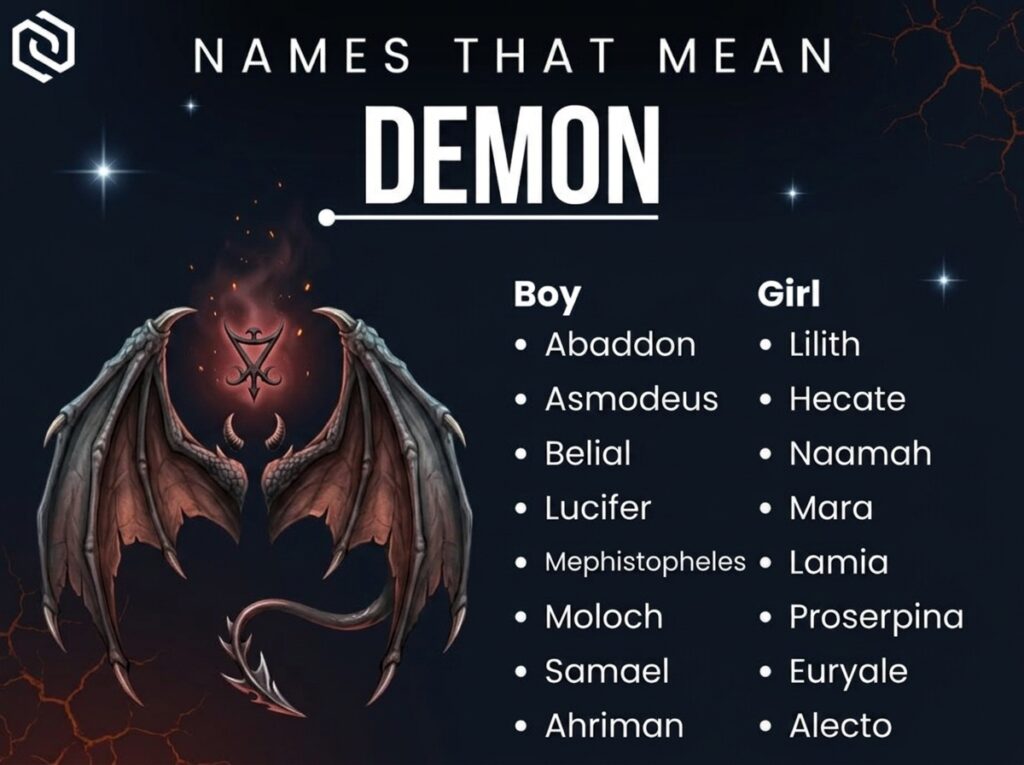
Names that genuinely mean demon include Lilith (Hebrew night demon), Azazel (fallen angel and desert demon), Kali (Hindu goddess of destruction often associated with demonic energy), Iblis (Islamic Satan figure), and Draven (linked to dark spirits in fiction and folklore). Many come from religious texts, mythology, and cultural stories where demons represented forces of chaos, temptation, or transformation. These names carry weight and complexity, not simple good-versus-evil narratives.
Girl Names That Mean Demon
These names carry fierce mythological roots. They belong to figures who defied, destroyed, or ruled from the margins. Some were demonized by patriarchal traditions precisely because they embodied power that couldn’t be controlled. The sound of these names ranges from elegant to sharp, but all share a certain gravitas.
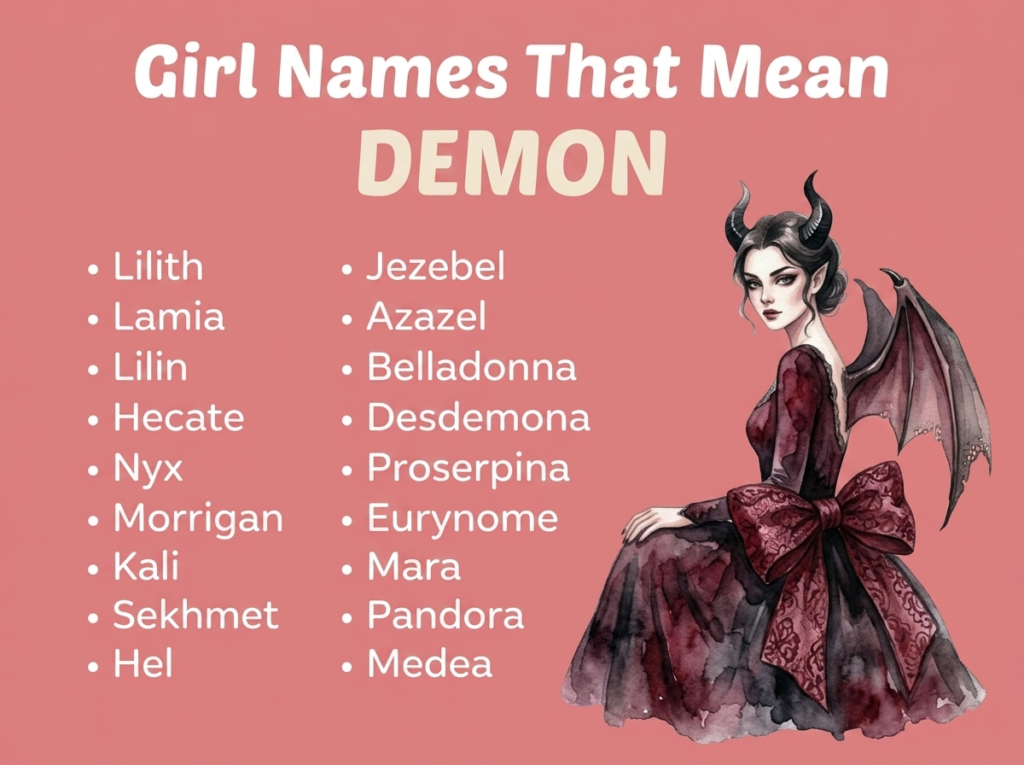
| Name | Origin | Meaning | Pronunciation | Popularity |
|---|---|---|---|---|
| Lilith | Hebrew | Night demon, storm demon | LIL-ith | Trending |
| Kali | Sanskrit | Black, time, death; Hindu goddess of destruction | KAH-lee | Unique |
| Lamia | Greek | Devouring monster, child-eating demon | lah-MEE-ah | Rare |
| Hecate | Greek | Goddess of witchcraft, associated with underworld spirits | HEK-ah-tee | Mystic |
| Abyzou | Hebrew/Coptic | Female demon of miscarriage | ah-bih-ZOO | Rare |
| Empusa | Greek | Vampiric demon in Greek myth | em-POO-sah | Dark |
| Pandora | Greek | Unleashed evil and demons upon the world | pan-DOR-ah | Classic |
| Mania | Greek | Spirit of madness and insanity | MAY-nee-ah | Unique |
| Eris | Greek | Goddess of chaos and discord | AIR-iss | Powerful |
| Mara | Sanskrit/Hebrew | Demon who brings nightmares and death | MAH-rah | Soft |
| Jezebel | Hebrew | Associated with idolatry and wickedness | JEZ-uh-bel | Dark |
| Medusa | Greek | Gorgon, monstrous figure turned demonic | meh-DOO-sah | Powerful |
| Proserpina | Latin | Queen of the underworld, tied to darkness | proh-SUR-pih-nah | Mystic |
| Morrigan | Irish | Phantom queen, goddess of war and death | MOR-ih-gan | Trending |
| Succuba | Latin | Female demon who seduces men | suh-KYOO-bah | Rare |
| Agrat | Hebrew | Demon queen in Jewish mythology | ah-GRAHT | Unique |
| Naamah | Hebrew | Demon of seduction and prostitution | nah-ah-MAH | Rare |
| Anat | Canaanite | Violent war goddess with demonic attributes | ah-NAHT | Powerful |
| Tiamat | Babylonian | Primordial chaos dragon, mother of demons | tee-AH-mat | Dark |
| Rangda | Balinese | Queen of the leyaks, demon witch | RAHNG-dah | Mystic |
| Puck | English | Mischievous demon sprite | PUK | Soft |
| Ala | Slavic | Storm demon who brings hail and disease | AH-lah | Unique |
| Gello | Greek | Female demon who harms children | GEL-oh | Rare |
| Bushyasta | Persian | Demoness of sloth and laziness | boo-shee-AHS-tah | Dark |
Boy Names That Mean Demon
Demon names for boys often belong to fallen angels, trickster spirits, and figures who challenged divine authority. They sound commanding and mythologically rich. Many carry connotations of rebellion, intellect, and transformation rather than pure malevolence.
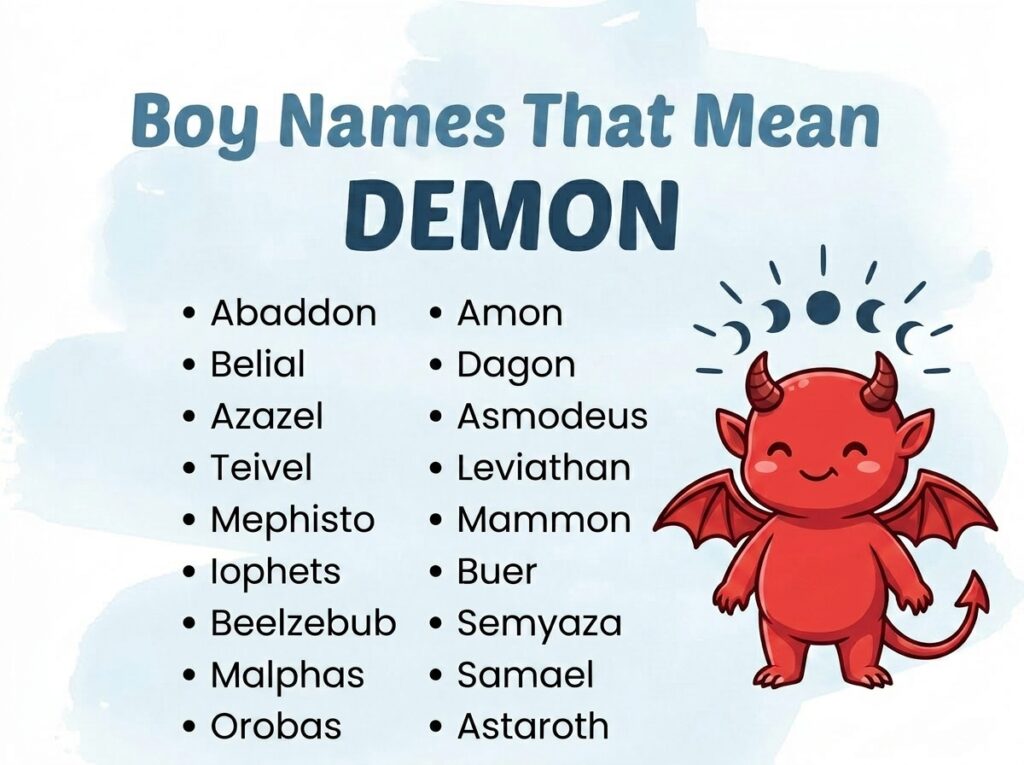
| Name | Origin | Meaning | Pronunciation | Popularity |
|---|---|---|---|---|
| Azazel | Hebrew | Scapegoat demon, fallen angel | ah-ZAY-zel | Trending |
| Iblis | Arabic | Islamic equivalent of Satan | IB-liss | Unique |
| Abaddon | Hebrew | Angel of the abyss, destruction | ah-BAD-on | Dark |
| Belial | Hebrew | Worthless demon, lawlessness | BEE-lee-al | Rare |
| Lucifer | Latin | Light-bearer, fallen angel | LOO-sih-fur | Powerful |
| Samael | Hebrew | Venom of God, angel of death | SAM-ay-el | Mystic |
| Asmodeus | Hebrew | Demon of wrath and lust | az-moh-DAY-us | Dark |
| Beelzebub | Hebrew | Lord of the flies, demon prince | beel-ZEH-bub | Rare |
| Draven | English | Modern invention tied to dark spirits | DRAY-ven | Trending |
| Malphas | Demonology | Demon appearing as a crow | MAL-fas | Unique |
| Leviathan | Hebrew | Sea monster, chaos creature | leh-VY-ah-than | Powerful |
| Bael | Demonology | King of Hell in occult texts | BAY-el | Rare |
| Moloch | Hebrew | Demon associated with child sacrifice | MOH-lok | Dark |
| Aamon | Egyptian/Demonology | Grand marquis of Hell | AY-mon | Unique |
| Dagon | Philistine | Fish demon, false god | DAY-gon | Mystic |
| Apollyon | Greek | Destroyer, angel of the abyss | ah-POL-ee-on | Rare |
| Mastema | Hebrew | Angel of hostility and evil | mas-TEH-mah | Dark |
| Belphegor | Assyrian | Demon of sloth and discovery | bel-FEE-gor | Unique |
| Pazuzu | Mesopotamian | King of wind demons | pah-ZOO-zoo | Mystic |
| Ronove | Demonology | Demon of knowledge and rhetoric | roh-NOH-vay | Rare |
| Forneus | Demonology | Marquis of Hell, teaches rhetoric | FOR-nay-us | Dark |
Unisex Names That Mean Demon
Gender-neutral demon names often come from abstract concepts, spirits, or mythological beings not tied to a single form. They sound modern and flexible while retaining mythological weight.
| Name | Origin | Meaning | Pronunciation | Popularity |
|---|---|---|---|---|
| Chaos | Greek | Primordial void, origin of demons | KAY-oss | Trending |
| Nyx | Greek | Goddess of night, mother of dark spirits | NIKS | Unique |
| Raven | English | Associated with death, omen, and darkness | RAY-ven | Soft |
| Shade | English | Ghost, shadow spirit | SHAYD | Mystic |
| Keres | Greek | Death spirits, bringers of violent death | KAIR-eez | Dark |
| Jinx | English | Curse, bad luck spirit | JINKS | Trending |
| Erebus | Greek | Personification of deep darkness | AIR-eh-bus | Powerful |
| Mortis | Latin | Death, mortality | MOR-tis | Dark |
| Tempest | English | Violent storm, chaos force | TEM-pest | Unique |
| Banshee | Irish | Wailing spirit, death omen | BAN-shee | Mystic |
| Shiva | Sanskrit | Hindu god of destruction and transformation | SHEE-vah | Powerful |
| Wraith | Scottish | Ghost, specter | RAYTH | Rare |
Also Read: Names That Mean Chaos for Bold and Fearless Babies
Demon Names Across Cultures
Demons aren’t universal villains. Across cultures, these figures represent everything from disease and drought to rebellion and cosmic balance. Understanding their origins helps clarify what these names truly mean.
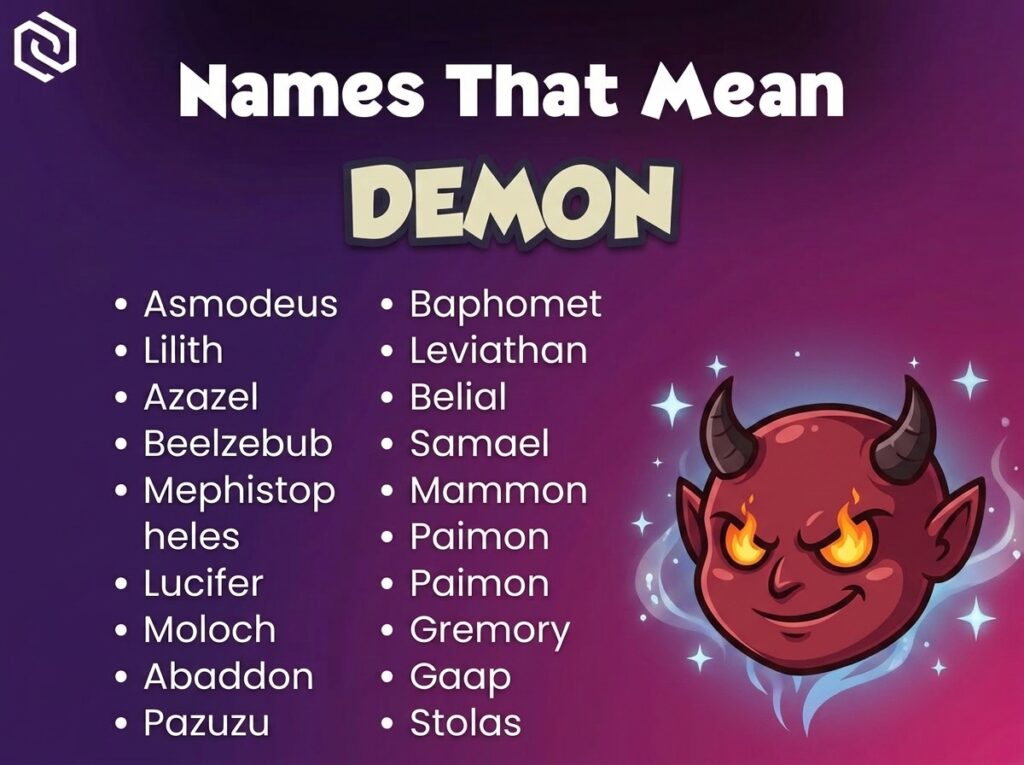
Hebrew and Christian Demon Names
In Judeo-Christian texts, demons often began as angels. Their fall from grace gives these names layers of tragedy and defiance.
| Name | Meaning | Gender |
|---|---|---|
| Lilith | Night demon, Adam’s first wife | Girl |
| Azazel | Scapegoat demon | Boy |
| Abaddon | Angel of destruction | Boy |
| Belial | Demon of worthlessness | Boy |
| Samael | Venom of God | Boy |
| Leviathan | Sea monster of chaos | Boy |
| Asmodeus | Demon of lust | Boy |
| Naamah | Seduction demon | Girl |
| Agrat | Queen of demons | Girl |
| Mastema | Angel of hostility | Boy |
Greek and Roman Demon Names
Greek daimones weren’t always evil. Some were protective spirits. Others embodied destructive natural forces or human emotions.
| Name | Meaning | Gender |
|---|---|---|
| Lamia | Child-eating demon | Girl |
| Empusa | Shape-shifting demon | Girl |
| Hecate | Goddess of witchcraft and spirits | Girl |
| Eris | Goddess of discord | Girl |
| Keres | Death spirits | Unisex |
| Pandora | Unleashed demons upon humanity | Girl |
| Mania | Spirit of madness | Girl |
| Erebus | Primordial darkness | Unisex |
| Nyx | Night goddess, mother of demons | Unisex |
| Medusa | Gorgon turned monstrous | Girl |
Arabic and Islamic Demon Names
In Islamic tradition, demons are called jinn or shayatin. Iblis is the most famous, a jinn who refused to bow to Adam.
| Name | Meaning | Gender |
|---|---|---|
| Iblis | Islamic Satan | Boy |
| Jinn | Supernatural fire spirit | Unisex |
| Shaitan | Devil, adversary | Boy |
| Ifrit | Powerful fire demon | Boy |
| Ghul | Desert demon, corpse eater | Unisex |
| Marid | Rebellious jinn | Boy |
Hindu and Sanskrit Demon Names
In Hindu cosmology, demons (asuras and rakshasas) often oppose gods but aren’t purely evil. Many were wise, powerful, and complex.
| Name | Meaning | Gender |
|---|---|---|
| Kali | Goddess of destruction and time | Girl |
| Ravana | Ten-headed demon king | Boy |
| Kumbhakarna | Giant demon of sloth | Boy |
| Putana | Demoness who poisoned infants | Girl |
| Mara | Demon of death and temptation | Girl |
| Vritra | Serpent demon of drought | Boy |
| Shiva | God of destruction (sometimes demon-like) | Unisex |
Mesopotamian and Babylonian Demon Names
Ancient Mesopotamia teemed with demons. Many represented illness, storms, and the dangers of the natural world.
| Name | Meaning | Gender |
|---|---|---|
| Pazuzu | King of wind demons | Boy |
| Lamashtu | Demon who killed infants | Girl |
| Tiamat | Primordial chaos dragon | Girl |
| Asag | Demon causing sickness | Boy |
| Lilitu | Night demon (precursor to Lilith) | Girl |
Names That Mean Devil
While “demon” and “devil” overlap, devil names specifically reference the supreme adversary or chief tempter in religious traditions. These names are rarer and carry even heavier theological weight.
Lucifer remains the most famous, meaning “light-bearer” before his fall. Iblis serves the same role in Islam. Beelzebub, “lord of the flies,” appears in Christian demonology as a high-ranking devil. Mephistopheles, popularized by the Faust legend, represents the devil as cunning bargainer. Satan itself comes from Hebrew, meaning “adversary.”
Other devil-associated names include:
- Belial (Hebrew, personification of wickedness)
- Old Scratch (American folklore for the devil)
- Diabolos (Greek, slanderer)
- Shaitan (Arabic, devil figure)
- Ahriman (Persian, spirit of evil and chaos)
- Angra Mainyu (Zoroastrian devil)
- Set (Egyptian god of chaos and disorder)
- Apollyon (Greek, destroyer)
- Abaddon (Hebrew, angel of the abyss)
- Mammon (demon of greed and wealth)
Also Read: Names That Mean Death: Bold and Mythological Choices
Names That Mean Monster
Monster names blur the line between demon, beast, and myth. These figures inspire fear but also fascination. Many were protectors or guardians twisted by narrative into villains.
Grendel, the creature from Beowulf, embodies monstrous isolation. Medusa was a beautiful woman cursed into monstrosity. Typhon, in Greek myth, fathered many monsters and challenged Zeus himself. Charybdis was a sea monster who devoured ships. Fenrir, the Norse wolf, will devour the sun during Ragnarok.
Other monster-inspired names:
- Kraken (Scandinavian sea monster)
- Scylla (Greek sea monster)
- Basilisk (serpent king, deadly gaze)
- Chimera (fire-breathing hybrid monster)
- Hydra (many-headed serpent)
- Cerberus (three-headed hellhound)
- Minotaur (half-man, half-bull)
- Banshee (wailing spirit)
- Golem (animated clay creature)
- Rakshasa (Hindu demon warrior)
- Oni (Japanese ogre demon)
Names That Mean Nightmare
Nightmare names evoke fear, sleeplessness, and visions from the dark side of the subconscious. Some come from actual nightmare demons in folklore.
Mara is perhaps the most direct, a Slavic and Scandinavian demon who sits on sleeping chests and brings bad dreams. Incubus and Succubus are nighttime demons who torment sleepers. Ephialtes, in Greek, personified nightmares. Baku, ironically, is a Japanese creature that devours nightmares but can also symbolize them.
Other nightmare-related names:
- Mara (demon of bad dreams)
- Alp (German nightmare demon)
- Mare (Old English nightmare spirit)
- Nightmare (literal use)
- Oneiros (Greek personification of dreams, including dark ones)
- Phantasos (Greek god of surreal dreams)
- Morpheus (god of dreams, can bring nightmares)
- Hypnos (god of sleep, associated with dark rest)
- Thanatos (personification of death, dream-like)
- Noctis (Latin for night, tied to night terrors)
How to Choose the Right Demon Name
Sound matters as much as meaning. Say the name aloud with your last name. Does it flow or clash? Does it sound too theatrical or just bold enough? Shorter last names often pair well with longer mythological names. Single-syllable surnames can handle the weight of something like Azazel or Lilith.
Cultural origin matters too. If your family has ties to Greek heritage, a name like Hecate might feel rooted. If not, it might feel appropriated or costumey. Research the name’s full story before committing.
- Say it out loud with your last name
- Check the initials
- Think about natural nicknames (Lily for Lilith, Raven for Ravana)
- Research the cultural origin before committing
- Consider how it sounds on a child and an adult
- Be prepared to explain it. These names spark questions.
Naming Expert’s Note: Lilith has skyrocketed in popularity over the last decade, but it still startles people who know the mythology. It’s one of those names that works beautifully in sound—soft, lyrical, nickname-friendly—but carries a story many parents don’t fully grasp. If you choose it, own the origin. It’s not a name you can play off as coincidence.
Frequently Asked Questions
Q: What is the most popular name meaning demon?
A: Lilith is currently the most popular demon-related name, especially in the U.S. It ranks in the top 200 girl names. The name sounds soft and familiar despite its dark mythological roots as a night demon and rebellious first wife of Adam in Hebrew texts.
Q: What does “demon” mean in different languages?
A: In Greek, daimon originally meant spirit or divine power, not inherently evil. In Arabic, demons are jinn or shayatin. In Sanskrit, they’re asura or rakshasa. In Hebrew, terms like shed or sair refer to demons. Each language carries its own cultural nuance about what demons represent.
Q: What are some rare demon names?
A: Rare demon names include Agrat (Hebrew demon queen), Gello (Greek child-harming demon), Bushyasta (Persian sloth demon), Ronove (demon of rhetoric), and Forneus (marquis of Hell). These names appear in obscure demonology texts and are almost never used in modern naming.
Q: What is a good middle name to pair with Lilith?
A: Pair Lilith with something softer or classic to balance its edge. Lilith Rose, Lilith Mae, Lilith Grace, or Lilith Claire all work. Avoid other dark or heavy names unless you want a fully gothic aesthetic. The contrast makes Lilith feel less theatrical and more wearable.
Q: Are demon names still popular?
A: Demon names are increasingly popular in alternative, gothic, and mythologically-minded naming circles. Lilith, Draven, and Raven have all trended upward. Parents today are less concerned with traditionally “safe” meanings and more interested in names with narrative weight, even if that narrative is dark.
Q: Can I use a demon name if I’m religious?
A: That depends entirely on your personal beliefs and your religious community. Some religious families see reclaiming these names as an act of defiance or transformation. Others view it as inappropriate. If you’re uncertain, consult with your faith leader or reflect on what the name represents to you personally.
Conclusion
Demon names span mythologies, religions, and centuries. They belong to figures who defied, destroyed, protected, or simply existed outside human order. Choosing one of these names means choosing complexity over simplicity, boldness over blandness. Whether you’re drawn to the elegance of Lilith, the gravitas of Azazel, or the chaos of Eris, these names refuse to fade quietly into the background. If that resonates with you, trust it.
Also Read: Names That Mean Dark: Mysterious and Powerful Baby Name Ideas