Wind holds a special place in Japanese culture. It shows up in poetry, seasonal traditions, and the very structure of the Japanese language. The kanji 風 (kaze) appears in hundreds of words and names, carrying ideas of movement, change, and invisible strength.
Japanese naming traditions let parents build meaning through kanji combinations. A single sound like "Fūka" can shift in meaning depending on which characters are chosen. This flexibility makes Japanese wind names unusually rich. You get to decide whether the wind in your child's name is a gentle breeze or a powerful gale.
Quick answer: names that mean wind
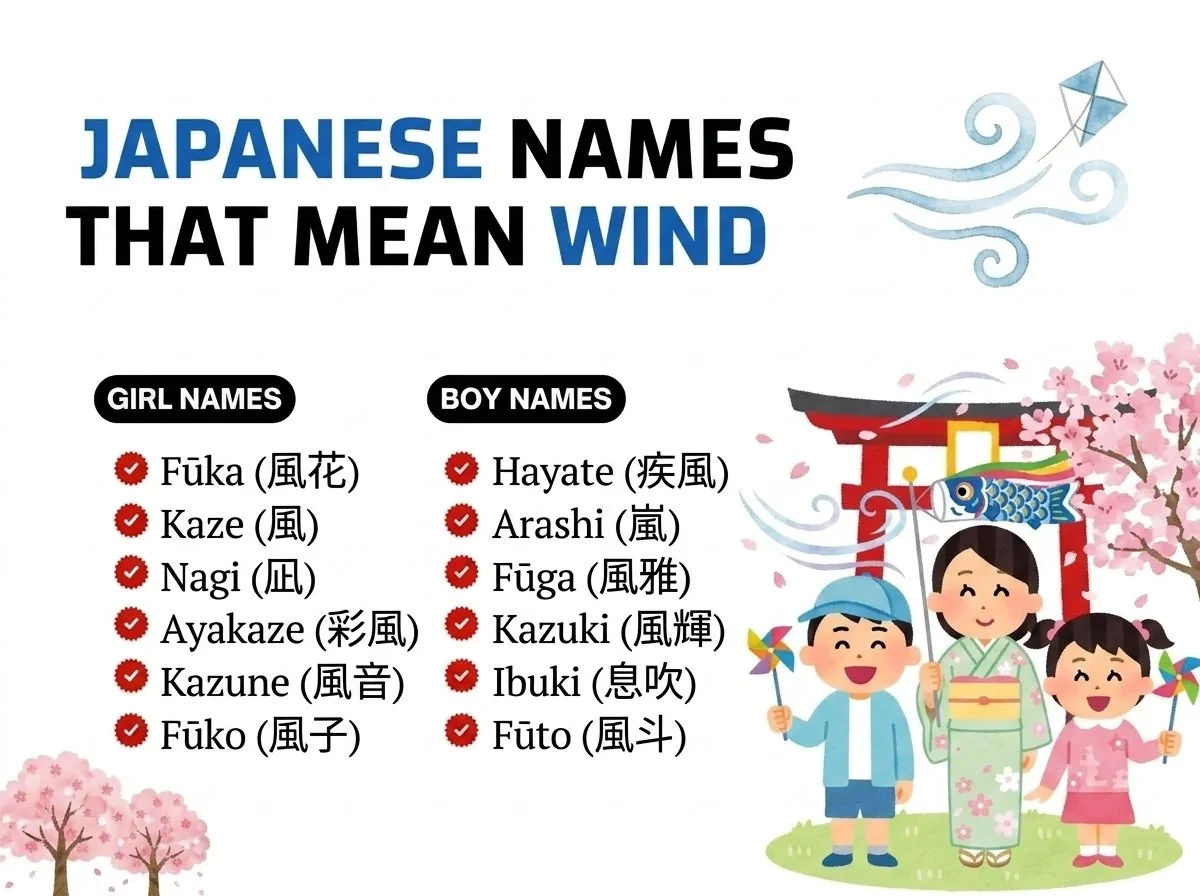
This guide lists 60+ names that mean wind. Here are the top picks; tap any name to jump to its full entry with meaning and origin.
Girl names
Boy names
Most common origins: Japanese. Also inside: names from Greek, Arabic, Sanskrit, Hawaiian, Norse and Turkish traditions.
Also explore: Baby names that mean wind. Part of our Nature & Element Names collection.
What are some Japanese names that mean wind?
Popular Japanese names that mean wind include Kaze (wind), Hayate (swift wind), Arashi (storm), Fūta (great wind), and Kaoru (fragrant breeze). These names draw from kanji characters like 風 (kaze) and 颯 (sō), which directly reference moving air. Wind names in Japanese carry connotations of freedom, change, and natural power.
Japanese Girl Names That Mean Wind
Wind names for girls in Japanese often pair the wind kanji 風 with characters for beauty, sound, or flowers. The result feels poetic without being overly delicate. Many of these names have a quiet confidence to them, like a breeze you feel before you hear.
| Name | Origin | Meaning | Pronunciation | Popularity |
|---|---|---|---|---|
| Fūko | Japanese | Wind child | FOO-koh | Soft |
| Fūka | Japanese | Wind flower | FOO-kah | Trending |
| Kazane | Japanese | Sound of wind | kah-ZAH-neh | Rare |
| Kazano | Japanese | Of the wind | kah-ZAH-noh | Unique |
| Kazaha | Japanese | Wind feather | kah-ZAH-hah | Rare |
| Sōka | Japanese | Swift wind flower | SOH-kah | Unique |
| Satsumi | Japanese | Swift wind beauty | sah-TSOO-mee | Rare |
| Kaoru | Japanese | Fragrant breeze | KAH-oh-roo | Classic |
| Fūga | Japanese | Refined wind | FOO-gah | Unique |
| Fubuki | Japanese | Blowing wind | foo-BOO-kee | Powerful |
| Fūshi | Japanese | Wind poem | FOO-shee | Mystic |
| Kazami | Japanese | Wind watcher | kah-ZAH-mee | Rare |
| Satsuki | Japanese | Swift wind hope | sah-TSOO-kee | Trending |
| Fūmi | Japanese | Wind truth | FOO-mee | Soft |
| Fūri | Japanese | Wind jasmine | FOO-ree | Unique |
Japanese Boy Names That Mean Wind
Boy wind names in Japanese carry a sense of forward motion. The kanji 颯 (sō), meaning sudden or swift wind, has become especially popular in recent decades. These names sound grounded and active, fitting for parents who want a name with energy and direction.
| Name | Origin | Meaning | Pronunciation | Popularity |
|---|---|---|---|---|
| Fūta | Japanese | Great wind | FOO-tah | Trending |
| Fūma | Japanese | True wind | FOO-mah | Classic |
| Fūto | Japanese | Wind star | FOO-toh | Unique |
| Sōta | Japanese | Great swift wind | SOH-tah | Trending |
| Sōma | Japanese | True swift wind | SOH-mah | Trending |
| Hayate | Japanese | Swift wind | hah-YAH-teh | Unique |
| Arashi | Japanese | Storm | ah-RAH-shee | Powerful |
| Fūto | Japanese | Wind person | FOO-toh | Rare |
| Fūma | Japanese | Wind horse | FOO-mah | Unique |
| Sōta | Japanese | Cleansing wind | SOH-tah | Trending |
| Fūki | Japanese | Wind hope | FOO-kee | Soft |
| Fūki | Japanese | Wind tree | FOO-kee | Rare |
| Fūga | Japanese | My wind | FOO-gah | Unique |
| Hayato | Japanese | Swift wind person | hah-YAH-toh | Classic |
| Sōki | Japanese | Swift wind radiance | SOH-kee | Rare |
Japanese Unisex Names That Mean Wind
Several Japanese wind names cross gender lines naturally. In Japan, a name's gender often depends on the kanji chosen rather than the sound itself. These unisex options give you room to let the name grow with your child without locking into one identity.
| Name | Origin | Meaning | Pronunciation | Popularity |
|---|---|---|---|---|
| Kaze | Japanese | Wind | KAH-zeh | Rare |
| Hayate | Japanese | Swift wind | hah-YAH-teh | Unique |
| Kaoru | Japanese | Fragrant breeze | KAH-oh-roo | Classic |
| Arashi | Japanese | Storm | ah-RAH-shee | Powerful |
| Fubuki | Japanese | Blizzard | foo-BOO-kee | Powerful |
| Fūga | Japanese | Refined wind | FOO-gah | Unique |
| Kazane | Japanese | Sound of wind | kah-ZAH-neh | Rare |
| Fūka | Japanese | Wind flower | FOO-kah | Trending |
| Sō | Japanese | Sudden wind | SOH | Mystic |
| Fūri | Japanese | Wind jasmine | FOO-ree | Soft |
Wind Names Across Cultures
Wind is one of the few natural forces that appears in naming traditions on every inhabited continent. Ancient cultures personified wind as gods, messengers, and life-givers. That shared human experience means you can find genuine wind names in dozens of languages, each with a distinct sound and story.
Greek Names That Mean Wind
Greek mythology gave us some of the most specific wind names in any language. The Anemoi were four wind gods, each tied to a cardinal direction.
| Name | Meaning | Gender |
|---|---|---|
| Zephyr | West wind | Boy |
| Anemone | Daughter of the wind | Girl |
| Boreas | North wind | Boy |
| Notus | South wind | Boy |
| Eurus | East wind | Boy |
| Aura | Breeze | Girl |
Arabic Names That Mean Wind
Arabic wind names often connect to gentle breezes and desert air currents. The word "nasim" appears frequently in poetry and song.
| Name | Meaning | Gender |
|---|---|---|
| Nasim | Breeze | Unisex |
| Rih | Wind | Girl |
| Samum | Hot desert wind | Boy |
| Saba | Morning breeze | Girl |
| Nasima | Gentle breeze | Girl |
Sanskrit Names That Mean Wind
In Hindu tradition, Vayu is the god of wind and breath. Sanskrit wind names carry deep spiritual weight tied to prana, the life force carried on air.
| Name | Meaning | Gender |
|---|---|---|
| Vayu | Wind god | Boy |
| Anila | Wind | Boy |
| Pavana | Purifying wind | Boy |
| Anila | Wind | Girl |
| Marut | Storm wind | Boy |
Hawaiian Names That Mean Wind
Hawaiian wind names are tied to specific islands and valleys. Each wind had its own name and personality in traditional Hawaiian knowledge.
| Name | Meaning | Gender |
|---|---|---|
| Makani | Wind | Unisex |
| Aheahe | Gentle breeze | Girl |
| Kona | Leeward wind | Boy |
Norse Names That Mean Wind
Norse wind names carry a colder, sharper energy. They connect to the harsh northern gales that shaped Scandinavian life.
| Name | Meaning | Gender |
|---|---|---|
| Kári | Wind | Boy |
| Vindr | Wind | Boy |
Turkish Names That Mean Wind
Turkish wind names feel modern and direct. The word "rüzgar" is both a common noun and a popular given name.
| Name | Meaning | Gender |
|---|---|---|
| Rüzgar | Wind | Boy |
| Yel | Wind | Unisex |
| Esin | Breeze | Girl |
Names That Mean Breeze
Breeze names feel lighter and gentler than their stormier cousins. They suggest warmth, ease, and a quiet kind of strength. These names work well for parents who want a nature connection without anything too intense.
- Nasim (Arabic)
- Aura (Greek)
- Saba (Arabic)
- Anila (Sanskrit)
- Aheahe (Hawaiian)
- Esin (Turkish)
- Kaoru (Japanese)
- Zephyrine (Greek)
- Nasima (Arabic)
- Bree (English)
Names That Mean Storm
Storm names carry raw power. They suit parents drawn to bold, dramatic meanings. In Japanese, Arashi is the most direct storm name, while other cultures offer equally striking options.
- Arashi (Japanese)
- Tempest (English)
- Raiden (Japanese, thunder and lightning)
- Storm (English)
- Taranis (Celtic)
- Indra (Sanskrit)
- Hadad (Semitic)
- Fubuki (Japanese)
- Tor (Norse)
- Marek (Slavic, warlike storm)
Names That Mean Gale
Gale names sit between breeze and storm in intensity. They suggest strong, steady wind rather than chaos. These are less common in naming traditions, which makes them feel fresh.
- Gale (English)
- Kári (Norse)
- Samum (Arabic)
- Boreas (Greek)
- Notus (Greek)
- Vayu (Sanskrit)
- Rüzgar (Turkish)
- Makani (Hawaiian)
- Hayate (Japanese)
- Marut (Sanskrit)
How to Choose the Right Wind Name
Sound matters more than you might think. A name like Arashi hits hard with three syllables and a strong "sh" ending, while Kaze is short and clean. Say your top choices out loud with your last name to hear how they land.
Cultural connection deserves honest thought. If Japanese heritage matters to your family, a kanji-based name like Fūta or Kazane carries real weight. If you simply love the meaning, that is valid too. Just learn the origin before you commit.
- Say the full name out loud several times
- Check the initials for any awkward combinations
- Think about natural nicknames your child might adopt
- Research the cultural origin and any alternate meanings
- Consider how the name sounds on a toddler and a grown adult
- Look up current popularity if you want something less common
Frequently Asked Questions
What is the most popular Japanese name meaning wind?
In Japan, Sōta (颯太) and Fūta (風太) rank among the more popular wind-related boy names in recent years. For girls, Fūka (風花) sees steady use. The kanji 颯 (sō) has grown especially trendy in modern Japanese baby naming.
What does wind mean in Japanese naming culture?
Wind (kaze) in Japanese names symbolizes freedom, change, and invisible strength. It connects to seasonal awareness, a core value in Japanese culture. The wind kanji 風 also appears in words for style, manner, and atmosphere, giving it layered meaning beyond weather.
What are some rare Japanese wind names?
Kazane (wind sound), Kazaha (wind feather), and Fūshi (wind poem) are all rare choices that feel distinctive. The single-kanji name Sō (sudden wind) is uncommon outside Japan and carries a sharp, modern energy.
What is a good middle name to pair with Arashi?
Arashi pairs well with short, grounded middle names. Arashi Ken, Arashi Ren, or Arashi Jin all flow naturally. If you want a non-Japanese middle name, Arashi James or Arashi Cole keeps the rhythm balanced.
Are Japanese wind names used for both boys and girls?
Yes. Names like Kaoru, Hayate, and Kaze are genuinely unisex in Japan. The gender often depends on which kanji characters parents select rather than the pronunciation itself. This flexibility is one of the strengths of Japanese naming.
Can non-Japanese families use Japanese wind names?
Absolutely. Names like Kaoru and Kaze are easy to pronounce in English and carry clear, positive meanings. The key is to understand the cultural context and choose a name whose meaning resonates with your family, not just its sound.
The final word
Japanese wind names range from the gentle whisper of Kaoru to the full force of Arashi. Whether you lean toward a quiet breeze or a sweeping gale, the kanji system gives you unusual control over the exact shade of meaning your child carries. Wind names endure because they capture something we all feel but cannot hold. If you are drawn to other nature meanings, you might also enjoy exploring Japanese Names That Mean Snow and Winter.
Sources & further reading
Name meanings can differ between languages, spellings and sources. These independent references are worth checking alongside this guide, and our research approach explains how we work.
- Behind the Name: Japanese given namesA browsable list of Japanese given names with their meanings.
- Wikipedia: NanoriWhy the same kanji can be read several ways in names.
Reference links last checked September 2026.
Names that mean wind in other styles:
More in Japanese Names Meaning:
- 80+ Japanese Names Meaning Mountain (With Meanings)
- 50+ Japanese Names Meaning Ice (With Meanings)
- 60+ Japanese Names Meaning Earth (With Meanings)
- 55+ Japanese Names Meaning Flower (With Meanings)
- 50+ Japanese Names Meaning Water (With Meanings)
- 60+ Japanese Names Meaning Snow (With Meanings)
- 40+ Japanese Names Meaning Blood (With Meanings)
- 65+ Japanese Names Meaning Red (With Meanings)
Browse everything in Nature & Element Names.