Ice holds a quiet power in Japanese culture. The kanji 氷 (kōri) evokes stillness, clarity, and the sharp beauty of winter mornings in Hokkaido. Unlike snow names, which are everywhere in Japan, ice names are genuinely rare. That rarity is exactly what makes them striking. If you want a Japanese name that feels cool, crisp, and completely unexpected, this is the corner of the naming world to explore.
Quick answer: names that mean ice
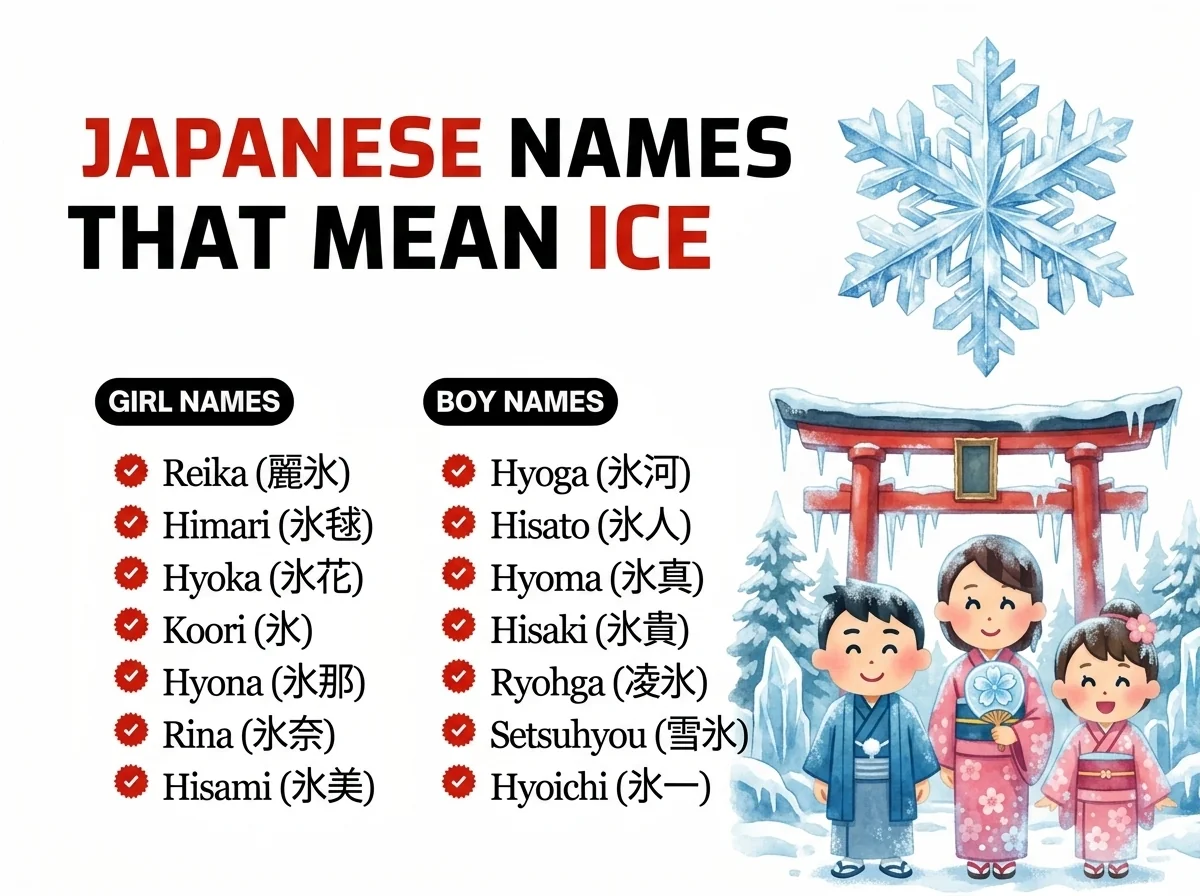
This guide lists 50+ names that mean ice. Here are the top picks; tap any name to jump to its full entry with meaning and origin.
Girl names
Boy names
Most common origins: Japanese. Also inside: names from Norse and Turkish traditions.
Part of our Nature & Element Names collection.
What Are Some Japanese Names That Mean Ice?
Some of the most authentic Japanese names that mean ice include Hyōka (氷華, ice flower), Hyōga (氷河, glacier), Hiyu (氷優, ice and gentleness), Kohri (氷, ice), and Himika (氷美香, ice beauty fragrance). These names use the kanji 氷, which directly translates to ice. Most combine it with a second kanji to soften or expand the meaning, creating names that feel both wintry and graceful.
Japanese Girl Names That Mean Ice
Girl names built around 氷 carry a crystalline quality. They sound delicate but have real backbone. The "hyō" and "hi" readings give these names a breathy, almost whispered quality that pairs well with longer surnames. Many parents who choose ice names for daughters are drawn to the idea of quiet strength rather than overt prettiness.
| Name | Origin | Meaning | Pronunciation | Popularity |
|---|---|---|---|---|
| Hyōka | Japanese | Ice flower | HYOH-kah | Rare |
| Himika | Japanese | Ice, beauty, fragrance | hee-MEE-kah | Unique |
| Hiyu | Japanese | Ice, gentleness | HEE-yoo | Soft |
| Kohina | Japanese | Ice, sun, greens | koh-HEE-nah | Rare |
| Hiyori | Japanese | Ice, jasmine | hee-YOH-ree | Unique |
| Himi | Japanese | Ice, beauty | HEE-mee | Rare |
| Hiyoka | Japanese | Ice, sunlight, flower | hee-YOH-kah | Unique |
| Hiyoko | Japanese | Ice, child | hee-YOH-koh | Rare |
| Himena | Japanese | Ice, love | hee-MEH-nah | Soft |
| Hiyuna | Japanese | Ice, gentle, graceful | hee-YOO-nah | Rare |
| Kohri | Japanese | Ice | KOH-ree | Mystic |
| Hyōmi | Japanese | Ice, beauty | HYOH-mee | Rare |
| Hiyumi | Japanese | Ice, reason, beauty | hee-YOO-mee | Unique |
| Hiyoka | Japanese | Ice, flower | hee-YOH-kah | Rare |
| Himari | Japanese | Ice, jasmine | hee-MAH-ree | Soft |
Japanese Boy Names That Mean Ice
Boy names with the ice kanji tend to sound grounded and a little austere. The "hyō" reading gives them a strong opening syllable that commands attention. These names work especially well for parents who want something nature-connected without leaning into the softer side of Japanese naming traditions. Several of these carry a martial or philosophical undertone when you look at the second kanji.
| Name | Origin | Meaning | Pronunciation | Popularity |
|---|---|---|---|---|
| Hyōga | Japanese | Glacier, ice river | HYOH-gah | Powerful |
| Hyōma | Japanese | Ice, truth | HYOH-mah | Rare |
| Hiyato | Japanese | Ice, soar | hee-YAH-toh | Unique |
| Hyōta | Japanese | Ice, great | HYOH-tah | Rare |
| Hiyuki | Japanese | Ice, snow | hee-YOO-kee | Mystic |
| Hyōgo | Japanese | Ice, enlightenment | HYOH-goh | Rare |
| Hiyū | Japanese | Ice, courage | hee-YOO | Powerful |
| Hyōken | Japanese | Ice, healthy | HYOH-ken | Rare |
| Hyōichi | Japanese | Ice, one | HYOH-ee-chee | Unique |
| Kōri | Japanese | Ice | KOH-ree | Mystic |
| Hyōsuke | Japanese | Ice, helper | HYOH-soo-keh | Classic |
| Hyōtarō | Japanese | Ice, eldest son | HYOH-tah-roh | Rare |
| Hiyato | Japanese | Ice, person | hee-YAH-toh | Unique |
| Hyōji | Japanese | Ice, govern | HYOH-jee | Rare |
| Hyōsei | Japanese | Ice, life | HYOH-say | Powerful |
Japanese Unisex Names That Mean Ice
Unisex ice names in Japanese often rely on shorter, two-mora readings that don't lean heavily masculine or feminine. The kanji 氷 pairs naturally with neutral second characters like 優 (gentle), 悠 (leisurely), or 理 (reason). These names feel modern and clean. They work across gender lines without feeling forced, which is harder to pull off than most people realize.
| Name | Origin | Meaning | Pronunciation | Popularity |
|---|---|---|---|---|
| Hiyu | Japanese | Ice, gentle | HEE-yoo | Soft |
| Hyō | Japanese | Ice | HYOH | Mystic |
| Hiyori | Japanese | Ice, reason | hee-YOH-ree | Unique |
| Kohri | Japanese | Ice | KOH-ree | Rare |
| Hiyū | Japanese | Ice, leisurely | hee-YOO | Soft |
| Hyōma | Japanese | Ice, truth | HYOH-mah | Rare |
| Hiyuki | Japanese | Ice, snow | hee-YOO-kee | Mystic |
| Hiyomi | Japanese | Ice, beauty | hee-YOH-mee | Unique |
| Hyōsei | Japanese | Ice, birth | HYOH-say | Rare |
| Hiyu | Japanese | Ice, distant | HEE-yoo | Soft |
Ice Names Across Cultures
Ice as a naming concept shows up in surprisingly few cultures compared to fire, water, or sun. Most ancient societies lived in warm climates, so ice simply wasn't part of their daily vocabulary. Where it does appear, the names tend to come from northern regions where frozen landscapes shaped daily life and mythology.
Norse Names Related to Ice
Old Norse gives us some of the oldest ice-related names in the European tradition. The element "ís" appears in several historical names from Iceland and Scandinavia.
| Name | Meaning | Gender |
|---|---|---|
| Ísleif | Ice descendant | Boy |
| Ísdís | Ice goddess | Girl |
| Ísgerður | Ice enclosure | Girl |
| Ísarr | Ice warrior | Boy |
| Ísól | Ice sun | Girl |
Turkish Names Related to Ice
Turkish naming traditions occasionally draw from winter imagery, though ice-specific names remain uncommon.
| Name | Meaning | Gender |
|---|---|---|
| Buz | Ice | Unisex |
| Buzay | Ice moon | Girl |
| Aybuz | Moon ice | Girl |
Inuit Names Related to Ice
Inuit languages have dozens of words for different types of ice, and several appear in traditional naming practices across Arctic communities.
| Name | Meaning | Gender |
|---|---|---|
| Siku | Ice | Boy |
| Nilak | Freshwater ice | Unisex |
| Qinu | Frost on ice | Boy |
Names That Mean Frost and Glacier
Frost names sit right next to ice in the naming world. They share that cold, crystalline energy but feel slightly softer. In Japanese, the kanji 霜 (shimo) covers frost and appears in a handful of traditional names. Glacier names are rarer still and tend to come from cultures with dramatic mountain landscapes.
- Shimoko (Japanese, frost child)
- Shimo (Japanese, frost)
- Hyōga (Japanese, glacier)
- Siku (Inuit, sea ice)
- Ísleif (Norse, ice descendant)
- Frost (English, frost)
- Eira (Welsh, snow and ice)
- Jökull (Icelandic, glacier)
- Nilak (Inuit, freshwater ice)
- Shira (Japanese, frost white)
Names That Mean Frozen and Winter Cold
Frozen names push the ice concept further into the territory of deep winter. These names often overlap with winter names and carry a heavier, more dramatic feel. They suit parents who want something bold and atmospheric rather than gentle.
- Fuyuko (Japanese, winter child)
- Tōka (Japanese, frozen flower)
- Kōri (Japanese, ice)
- Fuyu (Japanese, winter)
- Hiyuki (Japanese, ice snow)
- Reika (Japanese, cold flower)
- Yuki (Japanese, snow)
- Fuyumi (Japanese, winter beauty)
- Tōya (Japanese, frozen night)
- Samui (Japanese, cold)
How to Choose the Right Ice Name
Sound matters more than most parents expect. A name like Hyōga has weight and drama, while Hiyu feels light and approachable. Try pairing your favorite with your last name out loud before you commit.
Cultural connection is worth thinking about too. If your family has Japanese heritage, a kanji-based ice name carries real meaning. If not, consider whether you are comfortable explaining the origin regularly.
- Say the full name out loud three times before deciding
- Check how the initials look written down
- Think about nicknames your child might naturally get
- Research the specific kanji combination, not just the sound
- Consider how the name ages from toddler to adult
- Look up current usage in Japan if authenticity matters to you
Frequently Asked Questions
What is the most popular Japanese name that means ice?
Hyōka (氷華, ice flower) is probably the most widely recognized Japanese ice name, especially for girls. That said, ice names are genuinely uncommon in Japan overall. Snow names like Yuki are far more popular. If you want an ice name that still feels familiar, Hyōka is your best starting point.
What does ice mean in Japanese naming culture?
The kanji 氷 (kōri or hi) represents ice directly. In Japanese naming, it conveys clarity, stillness, and quiet strength. It is not a negative symbol. Ice in Japanese aesthetics connects to purity and the beauty of winter, similar to how names that mean snow are perceived.
What are some rare Japanese ice names?
Kohri (氷), Hyōgo (氷悟, ice enlightenment), and Hiyumi (氷由美, ice reason beauty) are all quite rare even within Japan. These names use less common kanji pairings and are unlikely to be shared with classmates.
What is a good middle name to pair with Hyōka?
Hyōka pairs well with short, soft middle names like Rei, Mei, or Ren. Since Hyōka already has two strong syllables, a one-syllable middle name keeps the full name from feeling heavy. Avoid middle names that also start with "H" to prevent a tongue-twister effect.
Are Japanese ice names still used today?
Yes, but sparingly. Modern Japanese parents tend to favor warmer nature imagery like sun, flower, and light. Ice names are a niche choice. That said, the trend toward unique kanji combinations means ice names are actually appearing slightly more often than they did a generation ago.
Can non-Japanese families use Japanese ice names?
There is no rule against it, but context matters. If you choose a name like Hiyu or Hyōka, be prepared to share its meaning and origin respectfully. Names with simpler pronunciations like Hiyu tend to travel better across languages and cultures.
The final word
Japanese names that mean ice occupy a small, fascinating corner of the naming world. They are not common, and that is precisely their appeal. Whether you lean toward the crystalline softness of Hyōka or the glacial strength of Hyōga, these names carry a quiet confidence that louder nature names often lack. Ice endures in naming because it represents something we all recognize: beauty that holds its ground. If this direction interests you, you might also enjoy exploring Japanese names that mean moon for a similarly poetic feel.
Sources & further reading
Name meanings can differ between languages, spellings and sources. These independent references are worth checking alongside this guide, and our research approach explains how we work.
- Behind the Name: names with the meaning “ice”Given names from many languages that share this meaning.
- Behind the Name: Japanese given namesA browsable list of Japanese given names with their meanings.
- Wikipedia: NanoriWhy the same kanji can be read several ways in names.
Reference links last checked September 2026.
More in Japanese Names Meaning:
- 55+ Japanese Names Meaning Flower (With Meanings)
- 50+ Japanese Names Meaning Hope (With Meanings)
- 65+ Japanese Names Meaning Blue (With Meanings)
- 60+ Japanese Names Meaning Love (With Meanings)
- 21 Japanese Names Meaning Fox (With Meanings)
- 40+ Japanese Names Meaning Warrior (With Meanings)
- 55+ Japanese Names Meaning Evil (With Meanings)
- 65+ Japanese Names Meaning Red (With Meanings)
Browse everything in Nature & Element Names.