The fox holds a complicated place in Japanese culture. Kitsune are shape-shifters, tricksters, and sacred messengers of the Shinto deity Inari. This duality makes fox names genuinely rare in Japanese naming tradition. Most parents historically avoided the fox kanji (狐) because of its mischievous associations. Yet the names that do exist carry extraordinary depth, drawing from centuries of folklore, Noh theater, and shrine culture. If you are drawn to fox symbolism, understanding this context matters more than finding a long list.
Quick answer: names that mean fox
This guide lists 21 names that mean fox. Here are the top picks; tap any name to jump to its full entry with meaning and origin.
Girl names
Boy names
Most common origins: Japanese. Also inside: names from Germanic, English, Latin, Spanish, Norse and Celtic traditions.
Also explore: Baby names that mean fox. Part of our Animal Names collection.
What Japanese names mean fox?
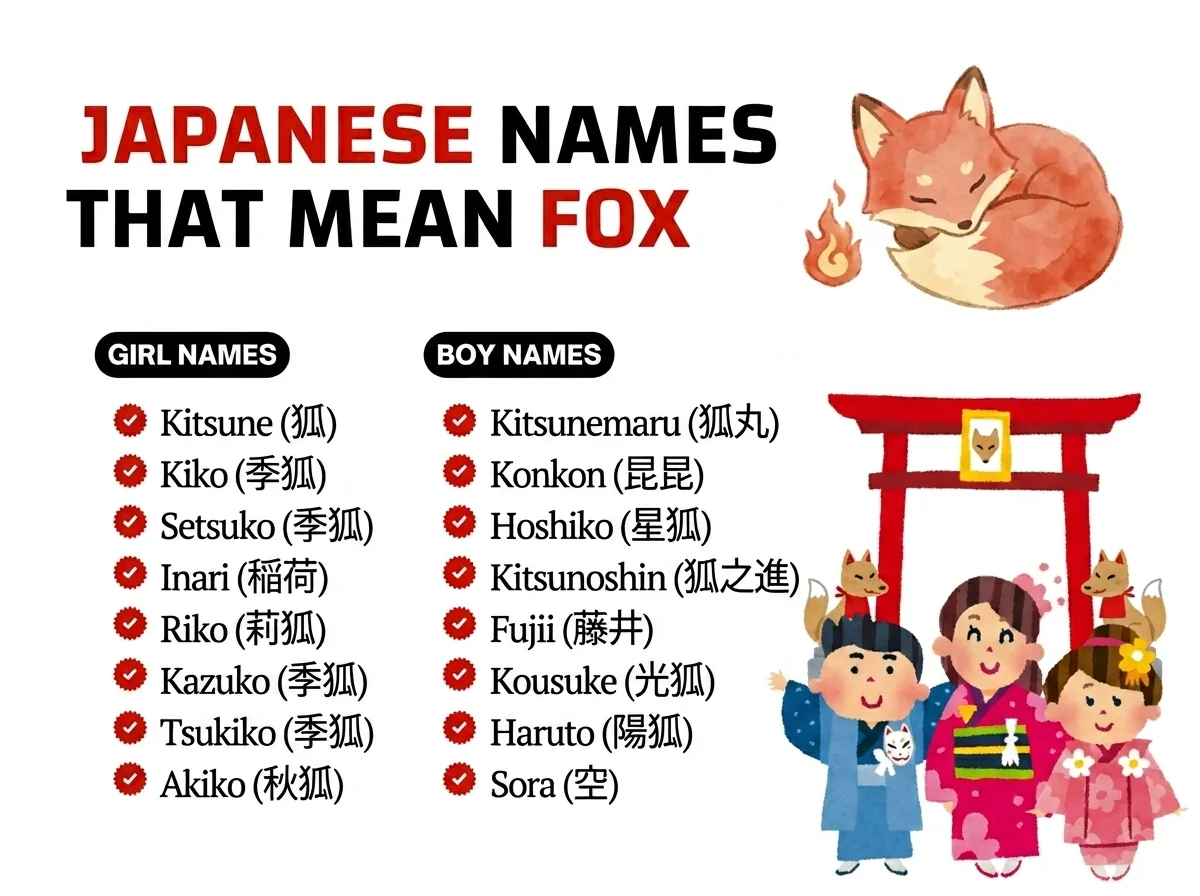
The most recognized Japanese names that mean fox include Inari, Tamamo, Kuzunoha, Kitsune, and Kon. These names draw directly from Shinto mythology and legendary kitsune tales rather than everyday naming conventions. Fox names remain rare in Japan because the kitsune carries complex spiritual associations that most families historically chose to avoid in personal names.
Japanese Girl Names That Mean Fox
Fox names for girls in Japanese almost always trace back to legendary kitsune women. These are figures from centuries-old tales of fox spirits who took human form, fell in love, and navigated the boundary between the spirit world and the mortal one. The names feel literary and steeped in folklore. They suit families with a deep appreciation for Japanese mythology and a willingness to carry a name with real narrative weight.
| Name | Origin | Meaning | Pronunciation | Popularity |
|---|---|---|---|---|
| Tamamo | Japanese | From Tamamo-no-Mae, the legendary nine-tailed fox | tah-MAH-moh | Mystic |
| Kuzunoha | Japanese | Legendary kitsune mother of Abe no Seimei | koo-zoo-NOH-hah | Rare |
| Inari | Japanese | Shinto deity whose sacred messengers are foxes | ee-NAH-ree | Unique |
| Kitsune | Japanese | Literally "fox" in Japanese | kee-TSOO-neh | Rare |
| Kon | Japanese | The traditional cry of a fox in Japanese folklore | kohn | Soft |
Japanese Boy Names That Mean Fox
Genuine Japanese boy names meaning fox are even scarcer than their feminine counterparts. The kitsune in Japanese folklore is more commonly depicted in feminine form, particularly in the famous tales of fox wives and fox courtesans. The few masculine options tend to be shared with the girls' list because these mythological names cross gender lines naturally in modern usage.
| Name | Origin | Meaning | Pronunciation | Popularity |
|---|---|---|---|---|
| Inari | Japanese | Shinto deity of rice and prosperity, served by foxes | ee-NAH-ree | Unique |
| Kitsune | Japanese | Directly translates to "fox" | kee-TSOO-neh | Rare |
| Kon | Japanese | Onomatopoeia for a fox's call in Japanese tradition | kohn | Soft |
Unisex Japanese Names That Mean Fox
The gender fluidity of these names reflects the nature of the kitsune itself. In Japanese folklore, fox spirits shift between male and female forms effortlessly. The names that survive from these traditions carry that same flexibility. None of these names feel locked to one gender, which makes them a natural fit for families seeking something truly neutral.
| Name | Origin | Meaning | Pronunciation | Popularity |
|---|---|---|---|---|
| Inari | Japanese | Fox-associated Shinto kami of harvest and fertility | ee-NAH-ree | Unique |
| Kitsune | Japanese | The Japanese word for fox | kee-TSOO-neh | Rare |
| Kon | Japanese | Fox's cry; also a reading of the fox kanji 狐 | kohn | Soft |
| Tamamo | Japanese | From the nine-tailed fox legend of Tamamo-no-Mae | tah-MAH-moh | Mystic |
Fox Names Across Cultures
The fox appears in naming traditions far beyond Japan, though it shows up more often in surnames and literary references than in everyday given names. Across cultures, the fox symbolizes cleverness, adaptability, and survival. This shared symbolism explains why fox-related names tend to carry a sharp, quick energy regardless of their origin.
English and Germanic Names That Mean Fox
The fox in English naming comes through Old and Middle English roots, often tied to the animal's reddish coloring or cunning reputation.
| Name | Meaning | Gender |
|---|---|---|
| Todd | Middle English "tod" meaning fox | Boy |
| Fox | Direct English word for the animal | Unisex |
| Kit | Young fox; also a diminutive of Christopher | Unisex |
| Reynard | Germanic; the fox hero of medieval European fables | Boy |
| Renard | French form of Reynard, meaning "fox" | Boy |
Spanish and Latin Names That Mean Fox
The Spanish word for fox gave rise to one of the most recognizable fox names in the world.
| Name | Meaning | Gender |
|---|---|---|
| Zorro | Spanish for "fox" | Boy |
| Vulpes | Latin for "fox," the scientific genus name | Unisex |
Celtic and Norse Names That Mean Fox
Fox references in Celtic and Norse naming are subtle, often buried in older linguistic roots.
| Name | Meaning | Gender |
|---|---|---|
| Sionnach | Irish Gaelic for "fox" | Boy |
| Rev | Old Norse root associated with "fox" | Boy |
Names That Mean Fox Spirit
The concept of the fox spirit extends beyond the literal animal. In Japanese tradition, the kitsune is a yōkai, a supernatural being that gains additional tails and power as it ages. Names in this category evoke the mystical, otherworldly side of fox lore rather than the creature itself.
The fox spirit in Japanese culture can be benevolent (zenko, serving Inari) or mischievous (yako, the wild fox). This duality gives these names a layered quality that appeals to parents who want depth over simplicity.
- Inari (Shinto deity served by fox spirits)
- Tamamo (the nine-tailed fox spirit of legend)
- Kuzunoha (fox spirit who lived as a human wife)
- Myoubu (a court rank given to fox spirits in Inari's service)
- Kitsune (the word for fox spirit itself)
- Tenko (celestial fox, the most powerful form a kitsune can achieve)
- Byakko (white fox, considered sacred and divine in Shinto belief)
- Genko (black fox, associated with mystery in East Asian folklore)
- Reiko (can be written with the "spirit" and "fox" kanji, though this is a modern creative reading)
- Yako (wild fox spirit, the untamed counterpart to Inari's messengers)
Names That Mean Fox Fire
Kitsunebi, or fox fire, is one of the most vivid images in Japanese folklore. These ghostly flames are said to be produced by foxes, particularly during the cold months. The phenomenon connects to real atmospheric events but took on a supernatural life in Edo-period woodblock prints and ghost stories.
Names in this category are more atmospheric than literal. They capture the eerie glow and mystery of fox fire rather than translating directly to it.
- Kagaribi (bonfire, evoking the glow of kitsunebi)
- Hotaru (firefly, sharing the imagery of small wandering lights)
- Akari (light or glow, capturing the luminous quality of fox fire)
- Homura (flame or blaze, a more intense fire reference)
- Hikari (light, the broader concept behind fox fire's glow)
- Kasumi (mist, the atmospheric setting where fox fire appears)
- Yūhi (evening sun, the twilight hour when kitsunebi is said to appear)
- Kagerou (heat haze, the shimmering distortion associated with fox fire)
- Tomoshibi (lamplight, a gentle flame echoing the kitsunebi glow)
- Oborozuki (hazy moon, the kind of night sky linked to fox spirit sightings)
How to Choose the Right Fox Name
Sound matters more than you might think with Japanese fox names. Many of these names have vowel-heavy structures that flow smoothly in Japanese but can feel unfamiliar in English-speaking contexts. Say the full name out loud several times before committing.
Cultural context is equally important with fox names specifically. The kitsune carries trickster energy in Japanese folklore, and some families may want to understand that connotation before choosing a name like Kitsune or Tamamo.
- Say the name with your last name to check the rhythm
- Research the specific legend behind the name before choosing it
- Consider whether you want a direct fox meaning or a subtler mythological connection
- Think about how the name will sound in your primary language, not just in Japanese
- Check whether the name has strong fictional associations that might overshadow its real meaning
- Ask a native Japanese speaker about the name's feel if you are choosing from outside the culture
Frequently Asked Questions
What is the most popular Japanese name meaning fox?
Inari is the most widely recognized Japanese name connected to foxes. It references the Shinto deity whose messengers are kitsune. While still uncommon as a given name, it appears more frequently than literal fox names like Kitsune, which are almost never used in everyday Japanese naming.
What does fox mean in Japanese?
The Japanese word for fox is kitsune (狐). The kanji 狐 combines the radical for "animal" with a phonetic component. In Japanese folklore, kitsune are intelligent, magical beings that gain additional tails as they age, with the nine-tailed fox (kyūbi no kitsune) being the most powerful form.
What are some rare Japanese fox names?
Kuzunoha and Tamamo are among the rarest authentic Japanese fox names. Kuzunoha comes from the legend of the fox wife who mothered the famous onmyoji Abe no Seimei. Tamamo references Tamamo-no-Mae, the nine-tailed fox who disguised herself as a court lady. Both names are deeply literary and almost never encountered in modern Japan.
What is a good middle name to pair with Inari?
Inari pairs well with short, grounded middle names that balance its three-syllable flow. Options like Inari James, Inari Mae, or Inari Sora work nicely. The key is avoiding another long vowel-heavy name that might blur together when spoken aloud.
Are fox names popular in Japan?
Fox names are genuinely rare in Japan. The kitsune carries complex associations with trickery and the supernatural, which historically made parents hesitant to use the fox kanji in their children's names. Most Japanese fox-related names survive through mythology and literature rather than through active naming trends.
Is Kitsune used as a real given name in Japan?
Kitsune is almost never used as a legal given name in Japan. While it is the direct Japanese word for fox, the cultural weight of the kitsune as a shape-shifting trickster makes it an unusual choice for a child. It appears far more often in anime, manga, and fiction than on birth certificates.
The final word
Japanese fox names are a small but fascinating corner of the naming world. The handful of genuine options, from Inari to Kuzunoha, carry centuries of Shinto belief and folklore within their syllables. Their rarity is part of what makes them meaningful. A fox name is not a casual choice. It connects your child to one of the most enduring and complex creatures in Japanese mythology. If you want to explore more animal-inspired Japanese naming traditions, Japanese Names That Mean Moon offers a gentler contrast with far more options.
Sources & further reading
Name meanings can differ between languages, spellings and sources. These independent references are worth checking alongside this guide, and our research approach explains how we work.
- Behind the Name: Japanese given namesA browsable list of Japanese given names with their meanings.
- Wikipedia: NanoriWhy the same kanji can be read several ways in names.
Reference links last checked September 2026.
Names that mean fox in other styles:
More in Japanese Names Meaning:
- 28 Japanese Names Meaning Cat (With Meanings)
- 45+ Japanese Names Meaning Anger (With Meanings)
- 30+ Japanese Names Meaning Death (With Meanings)
- 55+ Japanese Names Meaning Shadow (With Meanings)
- 55+ Japanese Names Meaning Angel (With Meanings)
- 55+ Japanese Names Meaning Dragon (With Meanings)
- 40+ Japanese Names Meaning Space (With Meanings)
- 40+ Japanese Names Meaning Blood (With Meanings)
Browse everything in Animal Names.