Cats hold a special place in Japanese culture. From the beckoning maneki-neko in shop windows to the legendary bakeneko of folklore, felines have shaped Japanese art, literature, and spiritual life for centuries. Yet when it comes to personal names, the word for cat (neko, 猫) appears far less often than you might expect. Japanese naming tradition favors nature kanji like flowers, seasons, and virtues over animal references. That makes genuine cat names rare, distinctive, and deeply tied to cultural identity rather than everyday use.
Quick answer: names that mean cat
This guide lists 28 names that mean cat. Here are the top picks; tap any name to jump to its full entry with meaning and origin.
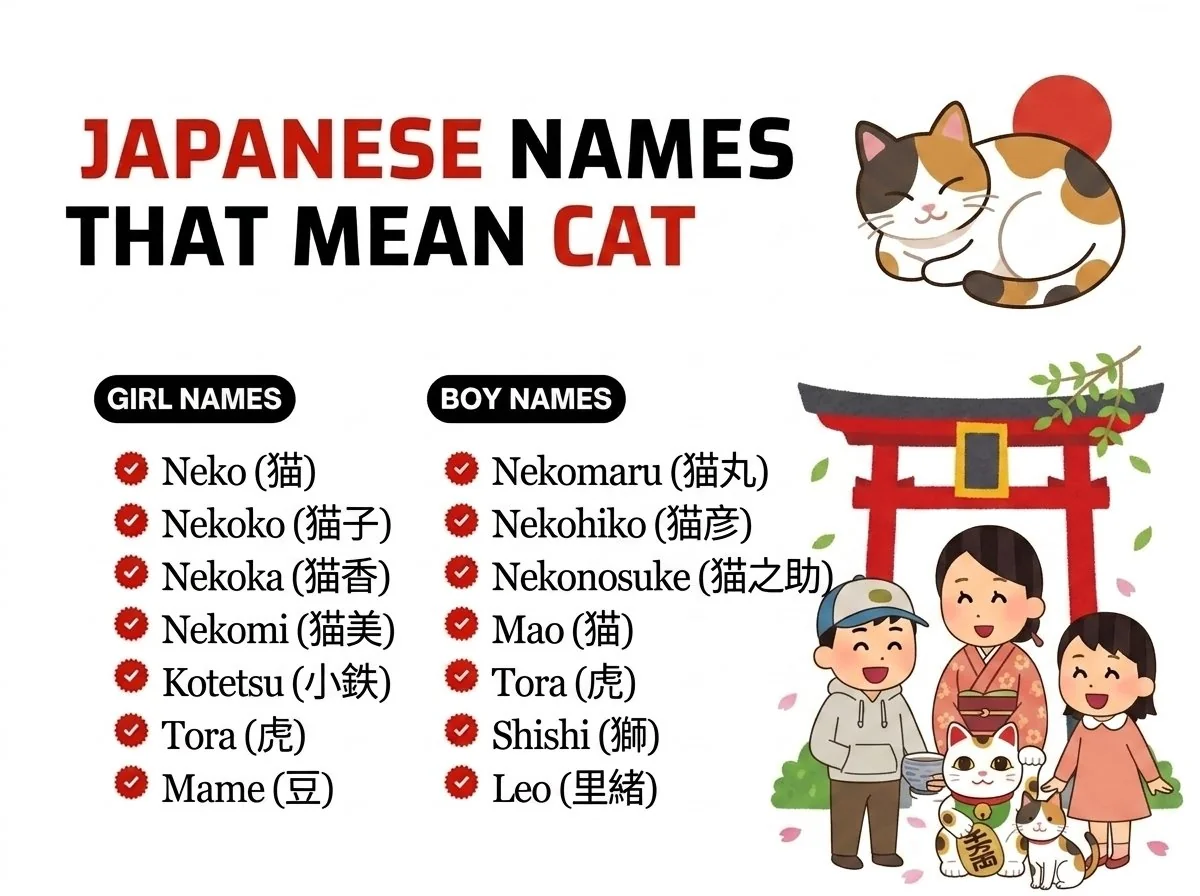
Girl names
Boy names
- Tora — Tiger
- Kotarō — Tiger boy
- Toraichi — First tiger
- Toranosuke — Tiger's helper
- Taiga — Tiger (modern)
Most common origins: Japanese.
Also explore: Baby names that mean cat. Part of our Animal Names collection.
What are some Japanese names that mean cat?
The most direct Japanese name meaning cat is Neko (猫), though it remains uncommon as a human given name. Myō (猫) offers a Buddhist reading of the same kanji. Culturally, Tama (玉) is Japan's most iconic cat name, and Tora (虎) brings in big cat energy meaning "tiger." Names like Mike (三毛) reference calico cats, while Maneki (招) connects to the famous lucky cat tradition.
Girl Names That Mean Cat
Japanese girl names connected to cats carry a quiet, playful charm. Many come from the tradition of naming beloved household cats, which then crossed over into human use. The direct kanji for cat (猫) is rare in girls' names, so most options draw from cat culture, color associations, or feline folklore instead. These names feel intimate and distinctly Japanese.
| Name | Origin | Meaning | Pronunciation | Popularity |
|---|---|---|---|---|
| Neko | Japanese | Cat | NEH-koh | Rare |
| Myō | Japanese | Cat (Buddhist reading) | MYOH | Mystic |
| Tama | Japanese | Jewel; Japan's most famous cat name | TAH-mah | Classic |
| Mike | Japanese | Calico; three colors | MEE-keh | Unique |
| Koneko | Japanese | Kitten; small cat | koh-NEH-koh | Rare |
| Maneki | Japanese | Beckoning; from the lucky cat | mah-NEH-kee | Unique |
| Shiro | Japanese | White; classic white cat name | SHEE-roh | Soft |
| Kuro | Japanese | Black; classic black cat name | KOO-roh | Dark |
| Mikan | Japanese | Tangerine; beloved orange cat name | MEE-kahn | Unique |
| Hime | Japanese | Princess; popular cat name | HEE-meh | Trending |
Boy Names That Mean Cat
Boy names in the feline category lean heavily toward big cats. Tigers, leopards, and lions appear throughout Japanese masculine naming tradition, especially in samurai-era names where the tiger kanji (虎) symbolized courage and ferocity. Direct "house cat" names are nearly absent for boys. What you will find are strong, grounded names rooted in the broader feline family.
| Name | Origin | Meaning | Pronunciation | Popularity |
|---|---|---|---|---|
| Tora | Japanese | Tiger | TOH-rah | Classic |
| Kotarō | Japanese | Tiger boy | koh-TAH-roh | Trending |
| Toraichi | Japanese | First tiger | toh-RAH-ee-chee | Rare |
| Toranosuke | Japanese | Tiger's helper | toh-rah-noh-SKEH | Rare |
| Taiga | Japanese | Tiger (modern) | TY-gah | Trending |
| Hyō | Japanese | Leopard; panther | HYOH | Powerful |
| Shishi | Japanese | Lion | SHEE-shee | Powerful |
| Kuro | Japanese | Black; black cat association | KOO-roh | Dark |
| Myō | Japanese | Cat (Buddhist reading) | MYOH | Mystic |
| Neko | Japanese | Cat | NEH-koh | Rare |
Unisex Japanese Names That Mean Cat
Gender-neutral cat names in Japanese tend to be short, punchy, and drawn from everyday cat culture rather than formal naming registers. Many of these work equally well for any child and carry a warmth that feels more personal than performative. They suit families who want a name with personality and a story behind it.
| Name | Origin | Meaning | Pronunciation | Popularity |
|---|---|---|---|---|
| Neko | Japanese | Cat | NEH-koh | Rare |
| Tama | Japanese | Jewel; iconic cat name | TAH-mah | Classic |
| Mike | Japanese | Calico; three colors | MEE-keh | Unique |
| Kuro | Japanese | Black; cat association | KOO-roh | Dark |
| Shiro | Japanese | White; cat association | SHEE-roh | Soft |
| Maneki | Japanese | Beckoning; lucky cat | mah-NEH-kee | Unique |
| Myō | Japanese | Cat (Buddhist reading) | MYOH | Mystic |
| Tora | Japanese | Tiger | TOH-rah | Powerful |
The Cultural Roots of Cat Names in Japan
Cats arrived in Japan around the 6th century, likely brought from China to protect Buddhist scrolls from mice. Over the centuries, they evolved from practical guardians into spiritual symbols, literary muses, and national icons. This deep cultural history explains why cat references show up in Japanese life everywhere except, ironically, in formal given names. The gap between cultural importance and naming frequency is one of the most interesting quirks of Japanese onomastics.
Maneki-Neko and Lucky Cat Names
The maneki-neko, or beckoning cat, is one of Japan's most recognizable symbols. These ceramic figures with raised paws sit in shop windows and restaurants to invite prosperity. The tradition dates to the Edo period, with several competing origin stories involving cats that supposedly saved samurai or merchants from disaster. Names like Maneki draw directly from this tradition, carrying connotations of fortune and welcome.
Bakeneko and Nekomata in Folklore
Japanese folklore is rich with cat yokai. The bakeneko is a shape-shifting cat spirit said to develop supernatural powers after living a long life or growing to a certain size. The nekomata, its more dangerous cousin, sprouts a second tail and can control the dead. These creatures appear in kabuki theater, ukiyo-e prints, and modern anime. While no parent names a child "bakeneko," the mystical cat energy influences how Japanese culture views feline names as carrying hidden power.
Tama and the Stationmaster Cat Legacy
In 2007, a calico cat named Tama was appointed stationmaster of Kishi Station on the Kishigawa Line in Wakayama Prefecture. She wore a tiny conductor's hat and attracted thousands of tourists, single-handedly rescuing the struggling railway from financial ruin. When she passed in 2015, she was honored with a Shinto funeral and elevated to the status of a goddess. Tama remains the single most famous cat name in modern Japan and a powerful example of how deeply cats are woven into Japanese public life.
Cats in Japanese Literature
Natsume Soseki's 1905 novel Wagahai wa Neko de Aru ("I Am a Cat") is one of the most celebrated works in Japanese literature. Told from the perspective of a sardonic housecat observing human foibles, the novel cemented the cat as a symbol of detached wisdom in Japanese culture. This literary tradition gives cat-related names an intellectual weight that goes beyond cuteness.
Names That Mean Lucky Cat
The lucky cat tradition is uniquely Japanese and deeply tied to the maneki-neko. Names in this category reference fortune, beckoning, and the specific imagery of the raised-paw cat figurine. They carry an optimistic energy that feels distinctly different from Western "lucky" names.
- Maneki (beckoning)
- Fuku (fortune)
- Tama (jewel; lucky cat icon)
- Kichi (good luck)
- Sachi (happiness; blessed)
- Yuki (fortune; also snow)
- Kei (blessing)
- Shō (auspicious)
- Megumi (blessing)
- Raku (comfort; ease)
Names That Mean Big Cat or Wildcat
Big cat names carry a completely different energy from house cat names. In Japanese tradition, the tiger (tora) has been a masculine symbol of bravery since the samurai era, while the leopard and lion appear in Buddhist iconography. These names feel bold and commanding rather than soft and playful.
- Tora (tiger)
- Hyō (leopard)
- Shishi (lion)
- Kotarō (tiger boy)
- Taiga (tiger, modern)
- Toraichi (first tiger)
- Toranosuke (tiger's helper)
- Byakko (white tiger)
- Raion (lion, katakana)
- Yato (wild; untamed)
Names That Mean Cat Spirit
Cat spirits occupy a fascinating space in Japanese mythology. These names reference the supernatural feline beings of folklore and carry a mystical, otherworldly quality. They suit families drawn to Japanese spiritual traditions and yokai culture.
- Myō (cat; Buddhist reading)
- Rei (spirit)
- Ayakashi (phantom)
- Yū (ghost; spirit)
- Tamamo (jewel spirit; from Tamamo-no-Mae, the fox spirit sometimes conflated with cat lore)
- Kage (shadow)
- Yami (darkness)
- Inori (prayer)
- Seirei (spirit)
- Kasumi (mist)
How to Choose the Right Cat Name
Sound matters more than you think. A name like Tora hits hard and fast, while Maneki rolls gently across three syllables. Say your top choices out loud with your family name and listen for rhythm and flow.
Cultural connection is equally important. If your family has Japanese heritage, a name like Kotarō or Tama carries genuine weight. If you are drawn to Japanese culture from the outside, take time to understand the folklore and history behind the name before committing.
- Say it out loud with your last name
- Check the initials
- Think about natural nicknames
- Research the cultural origin before committing
- Consider how it sounds on a child and an adult
- Check current popularity if you want something less common
Frequently Asked Questions
What is the most popular Japanese name meaning cat?
Tama (玉) is the most widely recognized cat name in Japan, though its literal kanji meaning is "jewel." Its association with cats is so strong that nearly every Japanese person connects the name to felines first. For a direct translation, Neko (猫) is the literal word for cat but is rarely used as a human given name.
What does cat mean in different languages?
The Japanese word for cat is "neko" (猫). In Greek, it is "gata." In Arabic, "qitt." In Sanskrit, "marjara." In Turkish, "kedi." Each language carries its own cultural associations with felines, from the sacred cats of ancient Egypt to the lucky cats of Japan.
What are some rare Japanese cat names?
Myō (猫), the Buddhist reading of the cat kanji, is exceptionally rare as a given name. Koneko (子猫), meaning "kitten," is almost never used for humans. Maneki (招), drawn from the lucky cat tradition, is distinctive and virtually unheard of outside of cat culture references.
What is a good middle name to pair with Tama?
Tama pairs well with longer middle names since it is only two syllables. Tama Sakura, Tama Hana, or Tama Yuki all flow naturally. If you prefer a non-Japanese middle name, Tama Rose or Tama Louise create a gentle cross-cultural balance.
Are Japanese cat names still popular?
Direct cat names like Neko remain rare in Japan for human children. However, big cat names like Tora and Taiga are genuinely popular for boys and have seen a resurgence in recent years. The cultural love of cats in Japan has never faded, even if formal naming conventions keep feline references subtle.
Can I use a Japanese cat name if I am not Japanese?
You can, but approach it with respect and understanding. Learn the cultural context behind the name, especially if it connects to Shinto or Buddhist traditions. Names like Tora (tiger) have crossed into broader international use, while more culturally specific names like Maneki carry deeper roots that deserve acknowledgment.
The final word
Japanese names that mean cat are genuinely rare, and that scarcity is part of what makes them special. Whether you choose the direct simplicity of Neko, the cultural warmth of Tama, or the bold energy of Tora, you are tapping into a tradition that stretches from ancient Buddhist temples to modern train stations. Cats have quietly shaped Japanese life for over a thousand years, and a name drawn from that legacy carries real depth. If feline symbolism speaks to you, you might also enjoy exploring names that mean fox from Japanese folklore.
Sources & further reading
Name meanings can differ between languages, spellings and sources. These independent references are worth checking alongside this guide, and our research approach explains how we work.
- Behind the Name: names with the meaning “cat”Given names from many languages that share this meaning.
- Behind the Name: Japanese given namesA browsable list of Japanese given names with their meanings.
- Wikipedia: NanoriWhy the same kanji can be read several ways in names.
Reference links last checked September 2026.
Names that mean cat in other styles:
More in Japanese Names Meaning:
- 50+ Japanese Names Meaning Ice (With Meanings)
- 65+ Japanese Names Meaning Blue (With Meanings)
- 60+ Japanese Names Meaning Earth (With Meanings)
- 60+ Japanese Names Meaning Love (With Meanings)
- 60+ Japanese Names Meaning Snow (With Meanings)
- 80+ Japanese Names Meaning Mountain (With Meanings)
- 21 Japanese Names Meaning Fox (With Meanings)
- 40+ Japanese Names Meaning Warrior (With Meanings)
Browse everything in Animal Names.