Popular Japanese names meaning strong include Takeshi, Tsuyoshi, and Riki for boys, alongside Rin, Masako, and Takeko for girls. These names draw from kanji like 剛 (sturdy), 力 (power), and 凛 (dignified resolve). Strength holds deep roots in Japanese naming tradition, shaped by samurai values and the cultural ideal of quiet inner fortitude.
Strength in Japanese culture runs deeper than physical power. It connects to resilience, steady determination, and the samurai ideal of inner fortitude known as bushido. When Japanese parents choose a name tied to strength, they often reach for kanji that suggest steadfast character rather than brute force.
Japanese names that mean strong carry this layered meaning. A name like Takeshi does not just say "strong." It evokes martial discipline and unwavering resolve. Whether you have Japanese heritage or simply admire the culture's thoughtful approach to naming, these choices offer real depth.
Quick answer: names that mean strong
This guide lists 40+ names that mean strong. Here are the top picks; tap any name to jump to its full entry with meaning and origin.
Girl names
Boy names
Most common origins: Japanese.
Also explore: Baby names that mean strong · Last names that mean strong. Part of our Strength, Power & Royalty Names collection.
Japanese Girl Names That Mean Strong
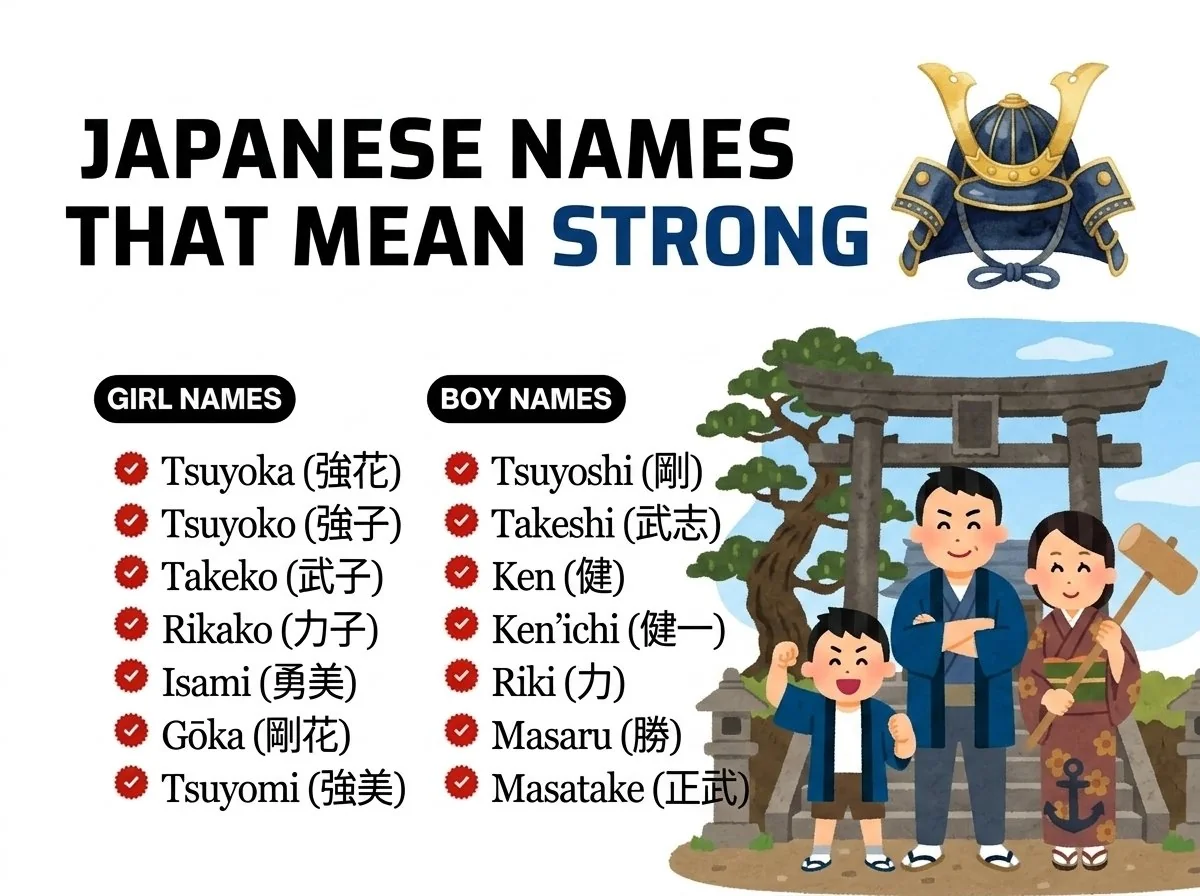
Girl names tied to strength are less common in Japanese tradition, where feminine naming historically leaned toward beauty, nature, and grace. That makes the ones that do exist feel especially intentional. These names carry a quiet confidence. They suit parents who want a name with backbone but without harshness. Many use kanji like 凛 (dignified) or 勝 (victory), giving them a grounded, self-assured energy.
| Name | Origin | Meaning | Pronunciation | Popularity |
|---|---|---|---|---|
| Rin | Japanese | Dignified, strong-willed | REEN | Trending |
| Masako | Japanese | Victorious child | MAH-sah-koh | Classic |
| Takeko | Japanese | Strong, martial child | TAH-keh-koh | Rare |
| Tsuyoko | Japanese | Strong child | TSOO-yoh-koh | Rare |
| Isako | Japanese | Courageous, strong child | EE-sah-koh | Rare |
| Rikako | Japanese | Powerful child | REE-kah-koh | Rare |
| Sōko | Japanese | Robust, strong child | SOH-koh | Rare |
| Kenko | Japanese | Healthy, strong child | KEN-koh | Rare |
| Katsuko | Japanese | Winning, strong child | KAHT-soo-koh | Rare |
| Rina | Japanese | Dignified and strong-willed | REE-nah | Trending |
| Takemi | Japanese | Strong beauty | TAH-keh-mee | Unique |
| Tsuyomi | Japanese | Strong and beautiful | TSOO-yoh-mee | Unique |
| Isami | Japanese | Courageous strength | EE-sah-mee | Rare |
| Takeha | Japanese | Strong leaf | TAH-keh-hah | Unique |
| Sōka | Japanese | Robust flower | SOH-kah | Unique |
Japanese Boy Names That Mean Strong
Boy names meaning strong form one of the largest categories in Japanese naming tradition. Samurai families historically chose names built from kanji like 武 (martial), 剛 (sturdy), and 力 (power) to express their hopes for a son's character. Many of these names remain in active use today. They sound grounded and direct. Most are two or three syllables, which gives them a solid, confident rhythm that pairs well with surnames of any length.
| Name | Origin | Meaning | Pronunciation | Popularity |
|---|---|---|---|---|
| Takeshi | Japanese | Strong, sturdy, martial | TAH-keh-shee | Classic |
| Tsuyoshi | Japanese | Strong, firm | TSOO-yoh-shee | Classic |
| Riki | Japanese | Power, strength | REE-kee | Trending |
| Ken | Japanese | Strong, healthy, robust | KEN | Classic |
| Gō | Japanese | Strong, sturdy | GOH | Powerful |
| Takeru | Japanese | Strong, fierce | TAH-keh-roo | Trending |
| Kenta | Japanese | Strong and big | KEN-tah | Trending |
| Kenji | Japanese | Strong second son | KEN-jee | Classic |
| Sōta | Japanese | Robust, strong | SOH-tah | Trending |
| Rikuto | Japanese | Strength, power | REE-koo-toh | Trending |
| Takeo | Japanese | Strong man, warrior man | TAH-keh-oh | Classic |
| Katsuo | Japanese | Victorious, strong man | KAHT-soo-oh | Rare |
| Isamu | Japanese | Courageous strength | EE-sah-moo | Classic |
| Masaru | Japanese | To overcome, victory | MAH-sah-roo | Classic |
| Tsutomu | Japanese | Strength through effort | TSOO-toh-moo | Rare |
Japanese Unisex Names That Mean Strong
Gender-neutral strength names in Japanese tend to be shorter, often just one or two syllables. They lean on single kanji that carry enough weight to stand alone. Names in this category feel modern and clean. Many have gained popularity as Japanese naming conventions have shifted toward simpler, more flexible choices that work across genders.
| Name | Origin | Meaning | Pronunciation | Popularity |
|---|---|---|---|---|
| Rin | Japanese | Dignified, strong-willed | REEN | Trending |
| Sō | Japanese | Swift, strong wind | SOH | Unique |
| Yū | Japanese | Brave, courageous strength | YOO | Soft |
| Ken | Japanese | Strong, healthy | KEN | Classic |
| Riki | Japanese | Power, strength | REE-kee | Powerful |
| Sō | Japanese | Vigorous, brisk | SOH | Unique |
| Take | Japanese | Martial, strong | TAH-keh | Rare |
| Katsu | Japanese | Victorious, strong | KAHT-soo | Rare |
| Gō | Japanese | Sturdy, strong | GOH | Powerful |
| Tsuyoshi | Japanese | Strong, firm | TSOO-yoh-shee | Classic |
The Cultural Roots of Japanese Strength Names
Strength holds a specific place in Japanese naming philosophy that differs from Western traditions. In many European cultures, a "strong" name might reference a warrior or a king. In Japan, strength is more often tied to character, endurance, and inner composure. The kanji system allows parents to layer meaning into a single name in ways that alphabetic languages simply cannot match.
Kanji and the Architecture of Strength
Every Japanese name is built from kanji, and the choice of character changes everything. The reading "Takeshi" can be written as 剛 (sturdy), 武 (martial), or 健 (healthy). Each version carries a different shade of strength. Parents spend considerable time selecting the exact kanji because the written form is considered just as important as the spoken sound. This is why two children with the same name pronunciation can have entirely different meanings on paper.
Bushido and the Samurai Naming Legacy
The samurai code of bushido deeply influenced how Japanese families approached naming. Strength was not about aggression. It was about loyalty, self-control, and the willingness to endure hardship without complaint. Names like Takeshi and Isamu emerged from this tradition. They were meant to shape a child's identity from birth, embedding the family's values directly into the name the child would carry for life.
Modern Shifts in Strength Naming
Contemporary Japanese parents still value strength, but the expression has evolved. Shorter names like Rin and Riki have gained ground over longer traditional forms like Tsuyoshi. The modern preference leans toward names that suggest quiet resilience rather than overt martial power. This shift mirrors broader changes in Japanese society, where inner strength and adaptability are prized over rigid toughness.
Japanese Names That Mean Powerful
Power and strength overlap but are not identical in Japanese naming. "Powerful" names tend to use kanji like 力 (chikara, raw power) or 威 (i, majesty and authority). These names feel slightly more commanding than the broader "strong" category. They suit parents looking for a name with real presence and weight behind it.
- Riki (力)
- Rikuto (力斗)
- Rikako (力子)
- Takeo (武男)
- Takeshi (武)
- Takeru (武)
- Masaru (勝)
- Katsuo (勝男)
- Gō (剛)
- Isamu (勇)
Japanese Names That Mean Resilient
Resilience in Japanese naming often connects to kanji suggesting endurance, perseverance, and the ability to withstand difficulty. These names carry a quieter kind of strength. They reference the ability to keep going rather than the ability to overpower. This is a deeply respected trait in Japanese culture, tied to concepts like gaman (patient endurance).
- Tsuyoshi (剛)
- Tsuyoko (強子)
- Ken (健)
- Kenta (健太)
- Kenji (健二)
- Sōta (壮太)
- Sōko (壮子)
- Tsutomu (力)
- Kenko (健子)
- Masako (勝子)
Japanese Names That Mean Brave
Bravery and strength share deep roots in Japanese naming, though bravery leans more toward courage in the face of fear. The kanji 勇 (yū/isa) is the primary character here. These names feel slightly more adventurous than pure strength names. They carry a sense of boldness and willingness to act, which makes them appealing to parents who value initiative alongside resilience.
- Isamu (勇)
- Isako (勇子)
- Isami (勇美)
- Yū (勇)
- Yūki (勇気)
- Yūta (勇太)
- Yūto (勇斗)
- Yūko (勇子)
- Hayato (隼人)
- Takeo (武男)
How to Choose the Right Japanese Strength Name
Sound matters more than most people realize. A name like Takeshi has a completely different rhythm than Rin. Say your top choices out loud with your family surname. Pay attention to how the syllables flow together and whether the name feels natural in your daily language.
Cultural connection is equally important. If you have Japanese heritage, consider asking family members about naming traditions in your specific region. If you are drawn to Japanese names from outside the culture, take time to understand the kanji meanings and the weight they carry.
- Say the full name aloud several times before deciding
- Check how the initials look written down
- Think about natural nicknames your child might adopt
- Research the specific kanji behind each name, not just the reading
- Consider how the name sounds on both a child and an adult
- Look up current popularity in Japan if you want something less common
Frequently Asked Questions
What is the most popular Japanese name meaning strong?
Takeshi is the most widely recognized Japanese boy name meaning strong, built from kanji like 剛 (sturdy) or 武 (martial). For girls, Rin (凛) has become the most popular strength-related name in modern Japan, consistently ranking in the top baby name lists over the past decade.
What does "strong" mean in Japanese naming tradition?
In Japanese naming, "strong" extends beyond physical power. It encompasses inner resolve, resilience, and moral fortitude. The concept is closely tied to bushido values and the cultural ideal of gaman, which emphasizes patient endurance. Kanji like 剛, 健, and 凛 each represent a different facet of strength.
What are some rare Japanese names that mean strong?
Tsuyoko (強子), Takeha (武葉), and Sōka (壮花) are rare Japanese girl names meaning strong. For boys, Tsutomu (力) and Katsuo (勝男) are uncommon but authentic choices. These names are rarely heard outside Japan, which gives them a distinctive quality.
What is a good middle name to pair with Takeshi?
Takeshi pairs well with short, clean middle names. Takeshi Ren, Takeshi Ken, or Takeshi Sō all maintain a Japanese feel. If you prefer an English middle name, Takeshi James or Takeshi Cole work because the single-syllable rhythm balances the three-syllable first name.
Are Japanese strength names still popular today?
Yes, though the style has shifted. Traditional names like Tsuyoshi and Takeo are less common among newborns now. Modern parents favor shorter strength names like Rin, Riki, and Sōta. The meaning remains valued, but the delivery has become more streamlined and contemporary.
Can non-Japanese families use Japanese names meaning strong?
Many families outside Japan choose Japanese names for their children, especially names like Rin and Ken that translate easily across languages. The key is to approach the choice with genuine respect for the culture. Learn the kanji, understand the meaning, and be prepared to share the name's origin when asked.
The final word
Japanese naming tradition offers a remarkably nuanced approach to the concept of strength. From the commanding presence of Takeshi to the quiet dignity of Rin, these names carry meanings shaped by centuries of cultural values, samurai philosophy, and the expressive power of kanji. The best strength names endure because they speak to something universal: the hope that a child will grow up resilient, grounded, and sure of who they are. If you are exploring other powerful naming traditions, you might also enjoy browsing names that mean warrior across cultures and languages.
Sources & further reading
Name meanings can differ between languages, spellings and sources. These independent references are worth checking alongside this guide, and our research approach explains how we work.
- Behind the Name: names with the meaning “strong”Given names from many languages that share this meaning.
- Behind the Name: Japanese given namesA browsable list of Japanese given names with their meanings.
- Wikipedia: NanoriWhy the same kanji can be read several ways in names.
Reference links last checked September 2026.
Names that mean strong in other styles:
More in Japanese Names Meaning:
- 65+ Japanese Names Meaning Red (With Meanings)
- 40+ Japanese Names Meaning Blood (With Meanings)
- 40+ Japanese Names Meaning Mischievous (With Meanings)
- 40+ Japanese Names Meaning Warrior (With Meanings)
- 45+ Japanese Names Meaning Anger (With Meanings)
- 30+ Japanese Names Meaning Death (With Meanings)
- 21 Japanese Names Meaning Fox (With Meanings)
- 55+ Japanese Names Meaning Shadow (With Meanings)
Browse everything in Strength, Power & Royalty Names.